Walking onto a frozen lake for the first time can feel intimidating, but ice fishing is one of the most affordable and approachable ways to keep catching fish all winter. The water you fished in summer is still full of life, and with a modest kit you can drill a hole, drop a line, and pull up panfish, walleye, or trout while the rest of the lake sits quiet.
The good news for beginners is that you do not need a sled full of expensive electronics to start. A handful of well-chosen items will keep you safe, comfortable, and catching fish. This guide walks through exactly what gear you need, what each piece does, and where it is smart to spend versus save.
Safety Gear Comes First
Before any rods or lures, your first investment is staying safe on the ice. Cold water is unforgiving, and a few cheap items dramatically lower your risk.
- Ice picks (ice claws): Two handled spikes worn around your neck. If you go through, you jab them into the ice and pull yourself out. They cost a few dollars and can save your life.
- A spud bar or ice chisel: Use it to test ice thickness as you walk by chopping ahead of yourself near the start of the season.
- A flotation suit or life jacket: Modern ice fishing bib-and-jacket suits double as flotation. Early and late season, this is worth every penny.
- A length of rope: Keep a throw rope handy in case a partner needs help.
As a general rule, new clear ice should be at least 4 inches thick before you walk on it on foot. Always check thickness yourself rather than trusting someone else.
How to Cut Through the Ice
You cannot fish without a hole, and an auger is how you make one. Beginners have three main choices.
- Hand auger: Affordable, quiet, and light. Drilling a few holes through a foot of ice is real exercise, but a sharp 6-inch hand auger is plenty for a first season targeting panfish.
- Electric auger: Battery powered, light, and easy to start in the cold. Prices have dropped a lot, making these a popular middle ground.
- Gas auger: Powerful and fast for thick ice and many holes, but heavy, loud, and more maintenance.
For most beginners, a hand auger or a small electric auger in a 6 to 8 inch diameter is the sweet spot. A 6-inch hole handles panfish and most walleye, while 8 inches gives more room for bigger fish.
Rods, Reels, and Line
Ice rods are short, usually 24 to 36 inches, because you are fishing straight down through a hole right at your feet. You do not need many to start.
- Panfish setup: An ultralight or light rod paired with a small spinning reel and 2 to 4 pound test monofilament. This handles bluegill, crappie, and perch.
- Walleye and trout setup: A medium-light rod with 4 to 8 pound test gives you backbone for larger fish.
Many beginners do well with a basic rod-and-reel combo sold specifically for ice fishing. As you progress, you may add a spring bobber for detecting light bites, but it is not essential on day one.
Line Tips for Cold Weather
Cold makes line stiff and prone to coiling. Fresh monofilament works well for beginners and resists freezing better than some braids. If you use braid, a fluorocarbon leader helps near the fish.
Lures, Bait, and Terminal Tackle
Ice fishing presentations are small and subtle. Stock a compact box with a few proven options.
- Tungsten jigs: Small and dense, they sink fast and stay in the strike zone. Tip them with live bait.
- Spoons: Small flutter and jigging spoons attract walleye and perch with flash and motion.
- Live bait: Waxworms, spikes (maggots), and minnows are the classic offerings. Bring a small insulated container so bait does not freeze.
- Tip-ups: These devices hold a baited line and flip a flag when a fish bites, letting you cover more holes. They are excellent for walleye and pike.
Keep hooks small, present bait slowly, and watch your line closely. Winter fish often bite gently.
Staying Warm and Comfortable
Comfort directly affects how long, and how well, you fish. Cold, miserable anglers leave early.
- Layering: Start with a moisture-wicking base layer, add insulation, and finish with a windproof outer shell. Avoid cotton, which traps moisture.
- Boots: Insulated, waterproof boots rated for low temperatures are essential.
- Hands and head: Bring quality gloves plus a spare pair, and always wear a warm hat.
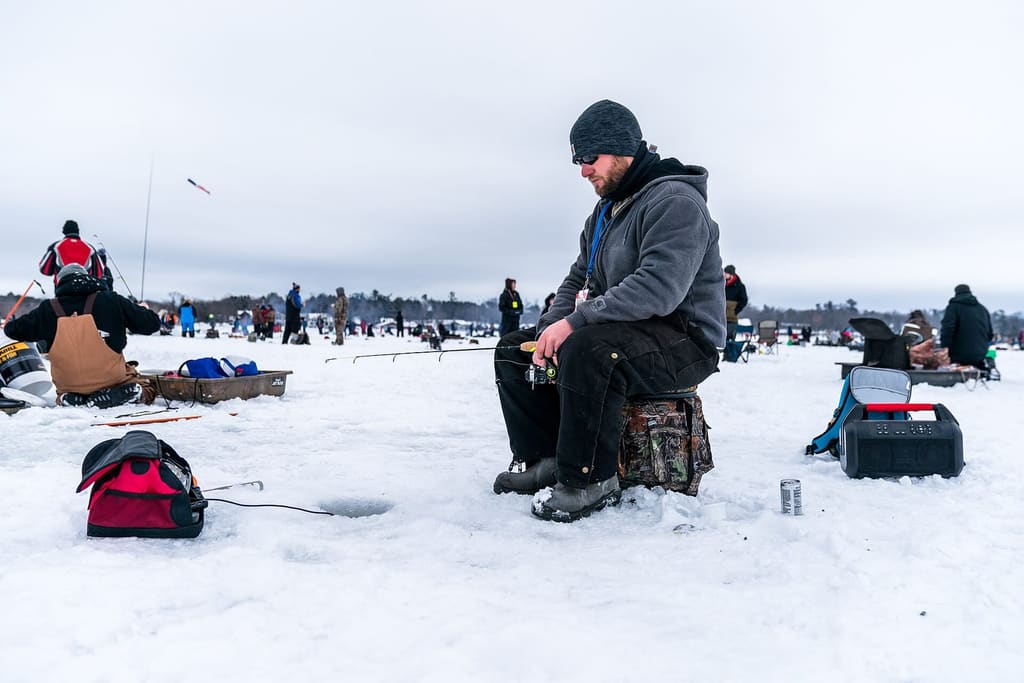
- A bucket or chair: A five-gallon bucket carries gear, doubles as a seat, and holds your catch.
- A skimmer (ice scoop): Clears slush and re-forming ice from your hole.
Shelters for Comfort
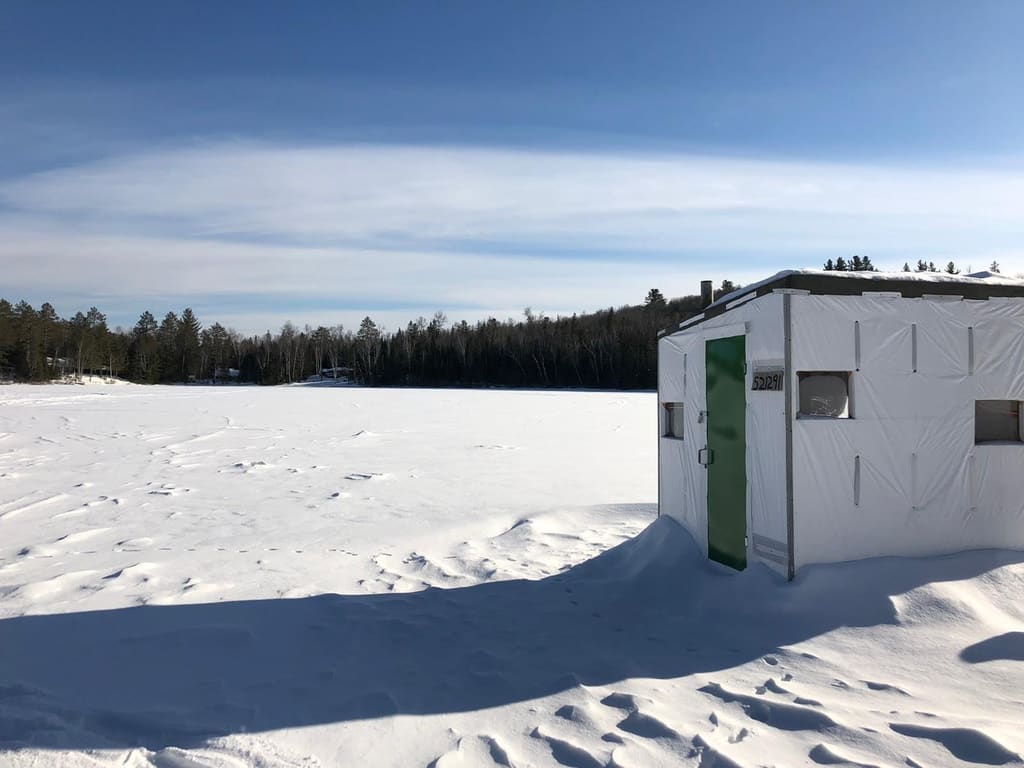
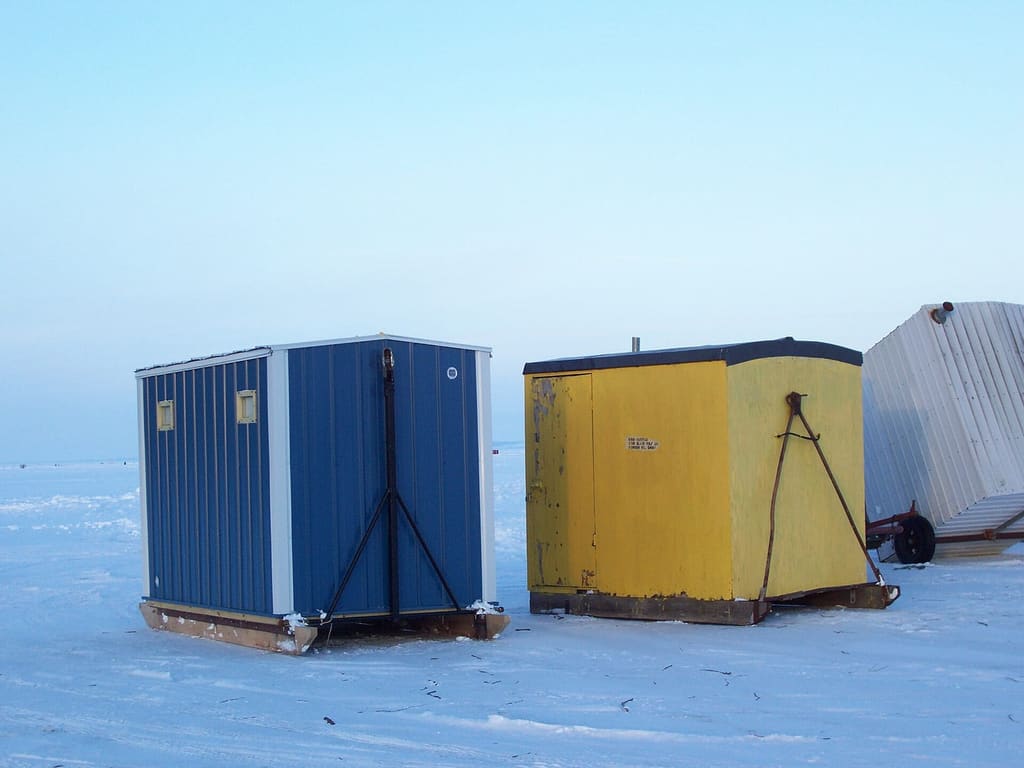
A portable ice shelter blocks wind and traps heat. Flip-over and pop-up hub styles are common. A shelter is not required to start, but it greatly extends how long you can fish on bitter days. Pair it with a portable heater for serious comfort, and always crack a vent for fresh air.
A Simple Beginner Checklist
Pack this and you are ready for your first outing:
- Ice picks and a throw rope
- Auger with sharp blades
- Ice scoop and a spud bar for testing thickness
- Short rod-and-reel combo with fresh line
- Small tackle box with tungsten jigs, spoons, and hooks
- Live bait in an insulated container
- Five-gallon bucket or folding chair
- Warm layers, insulated boots, gloves, and a hat
- Headlamp, since winter days are short
Final Thoughts
You do not need to buy everything at once. Start with the safety basics, an auger, one rod combo, and a small bait selection, then add a shelter and electronics as your interest grows. The most important gear is the kit that gets you safely out on solid ice and keeps you warm enough to enjoy it. Dress smart, test the ice, fish slow, and that first flag or thumping bite under your feet will hook you on winter angling for good.