Few fish have launched more anglers into a lifelong obsession than the largemouth bass. They are aggressive, widely available, and willing to crush a lure right at your feet in shallow water where you can watch the whole thing happen. From neighborhood ponds to giant reservoirs, largemouth bass give beginners the kind of explosive, visual strikes that keep you coming back.
The good news is that you do not need a boat or a tackle box full of gear to catch them. A basic spinning rod, a handful of proven lures, and an understanding of where bass like to hang out will put fish in your hands. This guide walks you through everything you need to recognize, find, and catch largemouth bass on your next trip.
How to Identify a Largemouth Bass
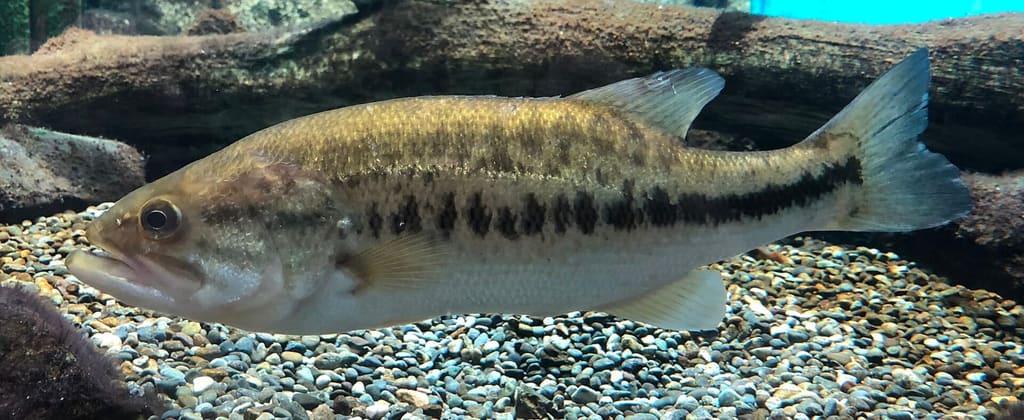
Largemouth bass (Micropterus salmoides) are members of the sunfish family, and once you know what to look for, they are easy to tell apart from their close cousin the smallmouth.
Key identification features:
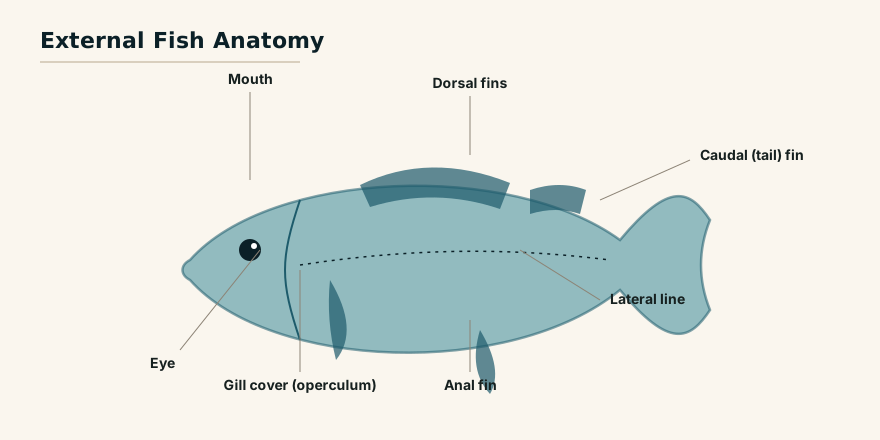
- A large mouth, with the jaw extending back past the rear edge of the eye when closed. This is the single most reliable field mark.
- A dark, often jagged horizontal stripe running along the side from head to tail.
- Coloring that ranges from dark olive-green on the back to a pale, whitish belly.
- A nearly separated dorsal fin, with a deep notch between the spiny front section and the soft rear section.
Smallmouth bass, by contrast, have a smaller mouth that does not reach past the eye, vertical bars instead of a horizontal stripe, and more of a bronze or brown color.
Range and Habitat
Largemouth bass are native to much of the eastern and central United States but have been stocked so widely that you can now find them across nearly all of North America and on several other continents. They thrive in warm, slow-moving, or still water.
Look for them in:
- Ponds and small lakes
- Reservoirs and their backwater coves
- Slow stretches of rivers and creeks
- Marshes, swamps, and drainage canals
Within any of these waters, bass are ambush predators that relate to cover and structure. Cover is anything they can hide near, such as weed beds, lily pads, fallen trees, docks, stumps, and brush piles. Structure refers to changes in the bottom, like points, drop-offs, ledges, and creek channels. When you are not sure where to start, target the most obvious shade and cover near the bank.
Diet and Forage
Largemouth bass are opportunistic predators that eat almost anything they can fit in that oversized mouth. Their diet shifts with their size and the season, but common forage includes:
- Baitfish such as shad, shiners, and small bluegill
- Crayfish
- Frogs and small snakes
- Insects and large aquatic bugs
- The occasional small bird or mammal at the surface
This broad diet is great news for anglers, because it means bass will strike a huge variety of lures. The takeaway for lure choice is simple: try to match the size, color, and movement of whatever the bass are likely feeding on in that water.
Seasonal Behavior
Bass behavior changes dramatically through the year, and following these patterns is the fastest way to improve your catch rate.
Spring
As water warms into the 55 to 65 degree range, bass move shallow to spawn. This is one of the best times of year to catch big fish, as they are in shallow water and feeding aggressively before and after the spawn. Focus on protected shallow flats and coves.
Summer
In hot weather, bass often go deeper during the day to find cooler, oxygen-rich water, then move shallow to feed in low light. Fish early mornings, evenings, and shady cover. Deep structure like points and ledges can hold big numbers of fish midday.
Fall
Cooling water triggers a feeding binge as bass fatten up for winter. They often chase baitfish into the shallows. This can be fast, exciting fishing with moving lures.
Winter
Cold water slows a bass’s metabolism. They feed less and hold in deeper, more stable areas. Slow your presentation way down and expect subtle bites.
Best Baits and Lures
You can catch bass on live bait such as nightcrawlers, shiners, and crayfish, but artificial lures are versatile and reusable. Here are reliable starting choices for beginners:
- Soft plastic worm, rigged weedless on a Texas rig. This is the most forgiving and consistent bass lure ever made. Fish it slowly along the bottom near cover.
- Spinnerbait, a flash-and-vibration lure you can cast and reel back through grass and around wood. Great for covering water and finding active fish.
- Squarebill crankbait, a shallow-diving lure that deflects off cover and triggers reaction strikes.
- Topwater frog or popper, for explosive surface strikes over weeds and in low light. Hard to beat for sheer fun.
- Jig, a heavier bottom-contact lure that imitates a crayfish and shines in colder water or heavy cover.
For colors, keep it simple. Use natural greens and browns in clear water and bright or dark, high-contrast colors in stained or muddy water.
Techniques That Work
You do not need advanced skills to start catching bass, just a few core habits:
- Fish slowly near cover. Beginners almost always reel too fast. Let a soft plastic sit, twitch it, and let it sit again.
- Make repeated casts to good targets. Bass are ambush feeders. Put your lure right next to that stump or dock post, and do it more than once.
- Set the hook firmly. When you feel a tap or your line jumps, reel up the slack and sweep the rod back hard.
- Work shade and low light. Bass dislike bright overhead sun. Overcast days and the first and last hours of daylight are prime time.
- Pay attention to what works. When you catch a fish, note the depth, cover, and lure, then repeat that pattern.
Size and Records
A typical largemouth bass runs between 1 and 4 pounds, with anything over 5 pounds considered a quality fish in most waters. Bass in the 8-pound-plus range are genuine trophies, and the largest fish tend to come from warm southern lakes with long growing seasons and abundant forage.
The all-tackle world record largemouth is a fish of 22 pounds 4 ounces, famously caught in Georgia in 1932 and later tied by a catch in Japan. Most anglers will never see a fish that large, and that is fine. Setting a personal best, whether that is your first 2-pounder or your first 5-pounder, is what makes bass fishing so rewarding.
Final Thoughts
Largemouth bass reward curiosity and time on the water more than expensive gear. Learn to read cover and structure, match your lure to the forage, and adjust to the season, and you will catch bass almost anywhere they swim. Start with a weedless soft plastic worm fished slowly near visible cover, stay observant, and let each fish teach you a little more about where the next one is hiding.