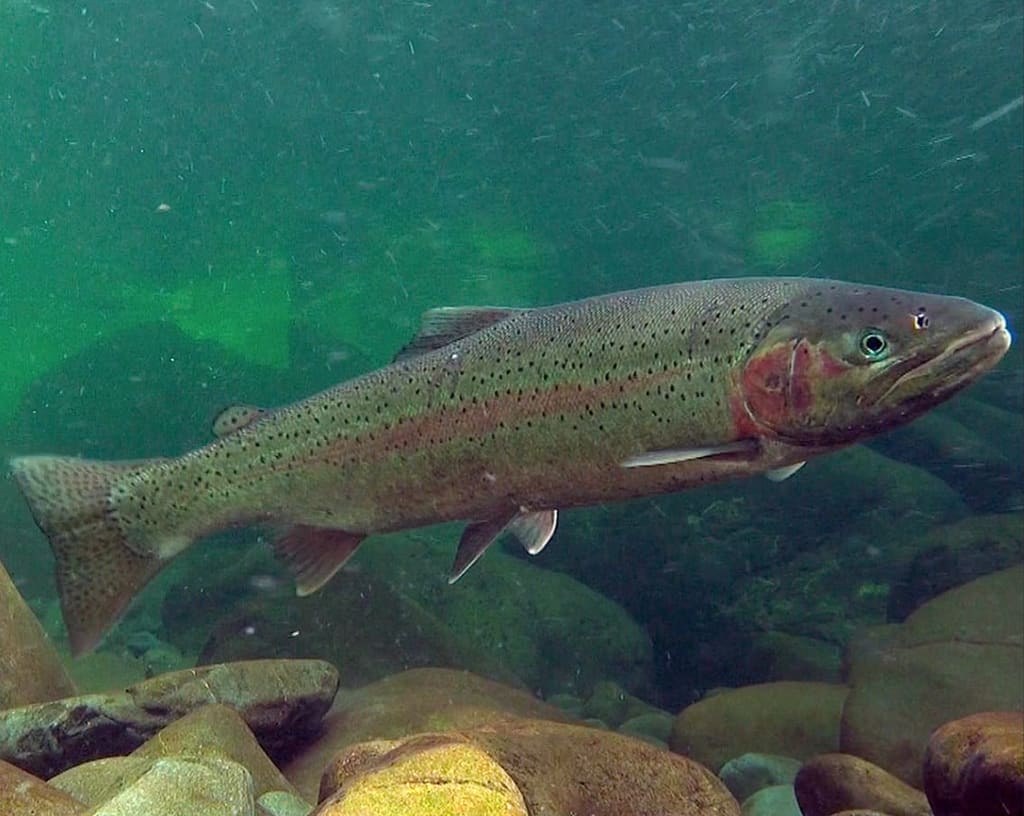
Few fish have introduced more people to the joy of angling than the rainbow trout. They are widespread, willing to bite, beautiful to look at, and forgiving of the mistakes every beginner makes. Whether you are dunking a worm in a stocked pond or drifting a fly through a mountain stream, the rainbow is often the fish that hooks you on fishing for life.
This guide covers everything a new angler needs: how to identify a rainbow trout, where they live, what they eat, how their behavior shifts through the seasons, and the baits, lures, and techniques that consistently put them in your net.
How to Identify a Rainbow Trout
Rainbow trout (Oncorhynchus mykiss) are members of the salmon family, and once you have seen a few, they are easy to recognize. Look for these key features:
- A broad pink to red horizontal stripe running from the gill plate to the tail, which is where the name comes from.
- Small black spots scattered across the back, sides, and tail fin.
- A silvery to olive-green body that fades to a lighter belly.
- A squarish tail and a small fleshy adipose fin near the tail, a hallmark of all trout and salmon.
Coloration varies a lot with habitat. Stream-born fish often show vivid color, while lake fish and fresh stockers can look pale and almost chrome. Steelhead are simply rainbow trout that migrate to the ocean (or a large lake) and return to spawn. They grow larger and turn bright silver, but they are the same species.
Range and Habitat
Rainbow trout are native to the cold waters of western North America and eastern Asia, but they have been stocked so widely that you can now find them across the United States, Canada, and on nearly every continent. For most beginners, that means there is good rainbow water within driving distance.
They thrive in cold, clean, well-oxygenated water. Ideal temperatures sit roughly between 50 and 60 degrees Fahrenheit, and they get stressed when water climbs much above the upper 60s. Look for them in:
- Cold mountain and foothill streams, especially in riffles, pools, and behind current breaks.
- Tailwaters below dams, where released water stays cold all year.
- Stocked ponds, lakes, and reservoirs managed by state agencies.
- Deeper, cooler layers of lakes during summer heat.
In moving water, rainbows hold where they can rest out of the main current while still grabbing food drifting past. Boulders, undercut banks, seams where fast and slow water meet, and the heads and tails of pools are classic spots.
Diet and Forage
Rainbow trout are opportunistic feeders, which is great news for beginners because they will eat a wide range of offerings. Their natural diet includes:
- Aquatic insects such as mayflies, caddisflies, midges, and stoneflies, in both larval and adult stages.
- Terrestrial insects that fall into the water, like ants, beetles, and grasshoppers.
- Small crustaceans such as scuds and crayfish.
- Worms washed in by rain and runoff.
- Small fish, including minnows and fry, especially as the trout grow larger.
- Fish eggs during spawning seasons.
Understanding this menu helps you choose bait and lures that imitate what the fish are already eating. When trout are keyed in on tiny insects, a giant lure may get ignored, and when they are chasing baitfish, a small fly might be too subtle.
Seasonal Behavior
Rainbow trout behavior changes with water temperature through the year, and matching your approach to the season makes a real difference.
Spring
Spring is prime time. As water warms toward that 50 to 60 degree sweet spot, rainbows feed aggressively. Many wild rainbows spawn in spring, moving into smaller tributaries and shallow gravel areas. Insect hatches pick up, and stocking trucks roll out, so fish are active and willing.
Summer
Heat is the enemy. As surface water warms, trout retreat to cooler, deeper water or move toward cold inflows, springs, and shaded runs. Fish early in the morning and late in the evening when temperatures drop and insects are active.
Fall
Cooling water reignites the bite. Rainbows feed heavily to prepare for winter, and you will often find them shallow again, chasing insects and baitfish. Fall offers some of the most comfortable and productive trout fishing of the year.
Winter
Trout slow down but still feed, especially in tailwaters and lakes that stay ice-free. Presentations need to be slower and more subtle, since cold fish are reluctant to chase. Midday, when water is at its warmest, is often the best window.
Best Baits and Lures
You do not need a huge tackle box to catch rainbow trout. A handful of proven options covers most situations.
Natural and Prepared Baits
- Nightcrawlers and red worms, fished under a small float or on a bottom rig.
- Prepared dough baits in bright colors, especially effective for stocked rainbows.
- Salmon eggs and single eggs, deadly during and after spawning periods.
- Live or preserved minnows for larger fish.
Lures
- Inline spinners in small sizes, which flash and vibrate to trigger strikes.
- Small spoons that imitate fleeing baitfish.
- Soft plastic grubs and trout swimbaits on light jig heads.
- Small crankbaits and minnow-style plugs for bigger, predatory rainbows.
Flies
- Nymphs such as the Pheasant Tail, Hare’s Ear, and various midge patterns.
- Dry flies like the Adams or Elk Hair Caddis during a hatch.
- Streamers such as the Woolly Bugger when fish are eating baitfish.
Techniques That Work
You can catch rainbow trout many ways. These three approaches will cover most beginner situations.
- Float fishing with bait. Suspend a worm or dough bait under a small bobber so it drifts naturally and stays off the bottom. Watch the float and set the hook on any twitch or dip.
- Casting and retrieving lures. Cast a spinner or spoon past likely holding water and reel it back at a steady pace, varying speed until you find what triggers strikes. Cover water until you locate active fish.
- Drifting in current. In streams, cast slightly upstream and let your bait or fly tumble naturally with the current through riffles and pools. A drag-free, natural drift is the key to fooling stream trout.
Use light line, generally 4 to 6 pound test, and a light or ultralight rod. Rainbows have good eyesight in clear water, so finesse and natural presentation beat heavy, clumsy rigs. Stay low, move quietly, and approach from downstream when wading so you do not spook fish.
Size and Records
A typical stocked or wild stream rainbow runs about 8 to 16 inches and one to a few pounds, which is a perfectly satisfying catch on light tackle. In lakes and tailwaters with abundant food, rainbows grow much larger, and sea-run or lake-run steelhead can reach well into the double digits in pounds.
At the extreme end, the all-tackle world record rainbow trout weighed about 48 pounds, caught in Canada in 2009. That fish was exceptional, and no beginner should expect anything close to it. A healthy wild rainbow of 14 inches from a clear creek is a trophy worth celebrating in its own right.
Final Thoughts
The rainbow trout earns its reputation as the angler’s favorite by being accessible, eager, and gorgeous. They live close to most of us, eat a wide variety of baits and lures, and reward simple, careful presentations. Start with a worm under a float or a small spinner, fish cold clean water in spring or fall, respect the regulations, and handle your fish gently. Do that, and the rainbow trout may well become the fish that turns you into an angler for life.
.png)