Few inshore gamefish reward an angler the way striped bass do. They prowl crashing surf, slide into back bays on a rising tide, and stack up below dam tailraces in freshwater rivers. A striper can be a 14-inch schoolie that eats a fly on a fall blitz or a 40-pound cow that surfs a single wave behind your jig in the dark. That range is exactly why so many coastal anglers organize their entire season around this one fish.
Stripers are reachable from the beach, a kayak, a skiff, or a boat, and they respond to bait, plugs, jigs, and flies. Learn their movements and you will catch them. Here is the practical knowledge you need to put more bass on the sand and in the net.
Identification
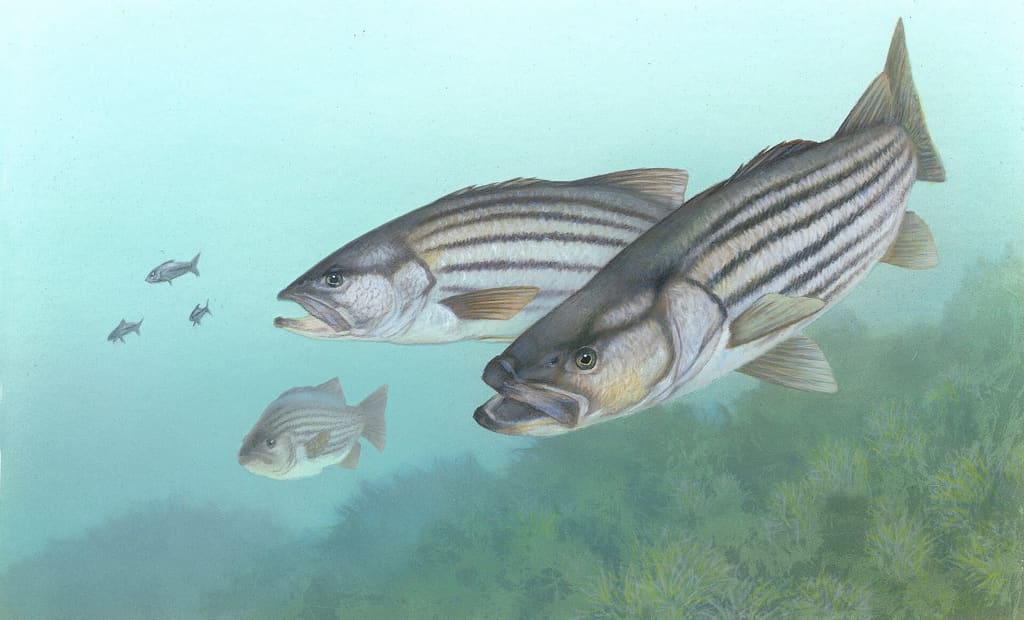
The striped bass (Morone saxatilis) is built like a heavy-shouldered torpedo: a silvery-white belly, brassy to dark-olive back, and the unmistakable feature that gives the fish its name - seven or eight continuous dark horizontal stripes running along its flanks. The lateral stripes are usually unbroken, which helps separate true stripers from hybrids.
A few traits to confirm your catch:
- Two separate dorsal fins, the front one spiny
- A long, streamlined body deeper at the shoulder
- Stripes that are crisp and continuous, not staggered or broken
- A projecting lower jaw and a large mouth
Be aware of hybrids. The “wiper” (a striped bass and white bass cross) is stocked in many freshwater impoundments and shows broken, offset stripes and a stockier, deeper body. White perch and white bass are smaller cousins with similar coloration but lack the long, multiple continuous stripes.
Range and Habitat
Striped bass are native to the Atlantic coast of North America, from the Canadian Maritimes down through the mid-Atlantic and into the Gulf of Mexico in pockets. The Chesapeake Bay and the Hudson River are two of the most important spawning systems on the East Coast, and they feed migratory populations that run the Northeast each year. On the Pacific coast, stripers were introduced to San Francisco Bay in the 1880s and established a thriving fishery there. Inland, they have been stocked into reservoirs and rivers across much of the country as landlocked populations.
Stripers are anadromous - they live in saltwater but run up rivers to spawn in fresh or brackish water. Look for them in:
- Surf zones with structure, troughs, and moving water
- Tidal estuaries, marsh creeks, and bay flats
- Rocky points, jetties, and rip lines
- River mouths and tailraces below dams
- Bridge and pier shadow lines after dark
Diet and Forage
Stripers are opportunistic predators that key heavily on whatever baitfish is abundant. Matching the local forage is often the single most important decision you make. Common targets include:
- Atlantic menhaden (bunker or pogies)
- Sand eels and silversides (spearing)
- Herring and alewives, especially in spring
- Mullet during the fall run
- Bay anchovies, peanut bunker, and squid
- Crabs, worms, clams, and eels
Stripers feed hardest around moving water and low-light periods. When you see birds working, bait flipping, or slicks on the surface, fish are usually feeding below.
Seasonal Behavior
Striped bass run on a calendar, and reading it is half the game.
Spring
As water warms into the low 50s Fahrenheit, bass move up rivers and into bays to spawn. Post-spawn fish are hungry and feed aggressively on herring and early bunker. Back bays and estuaries warm first and hold the earliest action.
Summer
In the heat, bass seek cooler, oxygen-rich water. They go deeper, hold near structure with current, and feed hardest at dawn, dusk, and through the night. Daytime fishing slows in shallow, warm water, so shift your hours.
Fall
This is prime time. The fall run sees bass gorging ahead of their southward migration, blitzing bait in the surf and along the beaches. Mullet, peanut bunker, and sand eels trigger feeding frenzies you can sometimes spot from a quarter mile away by the diving birds.
Winter
Migratory fish move south or stage in deeper holes. In many northern areas the fishery closes down, while southern wintering grounds and warm-water discharges can stay productive.
Best Baits and Lures
You can catch stripers a dozen ways. Build a kit that covers the common situations.
Live and natural baits:
- Live eels, deadly after dark for big fish
- Live bunker (livelining) around bait schools
- Bloodworms and sandworms on a fish-finder rig
- Fresh clam or cut bunker in the surf
Lures:
- Bucktail jigs, the most versatile striper lure ever made, tipped with a soft-plastic trailer or pork rind
- Soft-plastic paddletails and jerk shads on lead heads
- Swimming plugs and metal-lip swimmers for working the surf at night
- Topwater spooks and poppers during blitzes and low light
- Soft plastic swim shads in 5 to 7 inch sizes to match bunker
- Metal jigs and tins for distance casting and deeper water
Techniques
Surf Fishing
Read the beach at low tide so you know where the troughs, cuts, and sandbars sit. Fish those features when the tide covers them. A long surf rod, a fish-finder rig with cut bait, or a bag of bucktails and metals will all produce. The hours around dawn, dusk, and an incoming tide are usually best.
Working the Tides
Stripers are ambush feeders that use current to their advantage. Position yourself so your bait or lure sweeps naturally with the flow, the way a real baitfish would. The moving water around a tide change - especially the first couple of hours of a flood - often turns fish on.
Night Fishing
Big bass feed confidently in the dark. Live eels, dark metal-lip swimmers, and slow-rolled soft plastics shine after sunset. Fish the shadow lines of bridges and piers, where bass stage in the dark band waiting to ambush bait drifting from the light.
Jigging and Live-Lining from a Boat
When you mark bait and fish on the sounder, vertical jigging with bucktails or livelining a bunker right into the school is hard to beat. Keep your drag set sensibly; a big striper’s first run is powerful.
Size and Records
A typical surf or bay striper runs from schoolie size, around 14 to 24 inches, up to solid keeper-class fish in the 28 to 40 inch range. Fish over 40 inches and 40 pounds are the trophies most anglers chase for years. Stripers can live well over a decade and the largest females, the egg-bearing “cows,” push past 50 pounds.
The all-tackle world record is a 81.88-pound striped bass caught off Westbrook, Connecticut, in 2011 by Greg Myerson. A fish anywhere near that class is the catch of a lifetime, but the beauty of striper fishing is that a hard-pulling 30-incher from the beach at dawn is a genuinely great fish you can realistically catch.
Final Thoughts
Striped bass reward anglers who pay attention. Match the bait, fish the moving water, work the low-light windows, and learn the rhythm of your local beaches and bays through the seasons. Do that and the schoolies will keep your rod bent while you wait for the cow that makes the whole year worth it. Stay mobile, stay observant, and respect the regulations that keep this fishery strong for the next trip and the next generation.