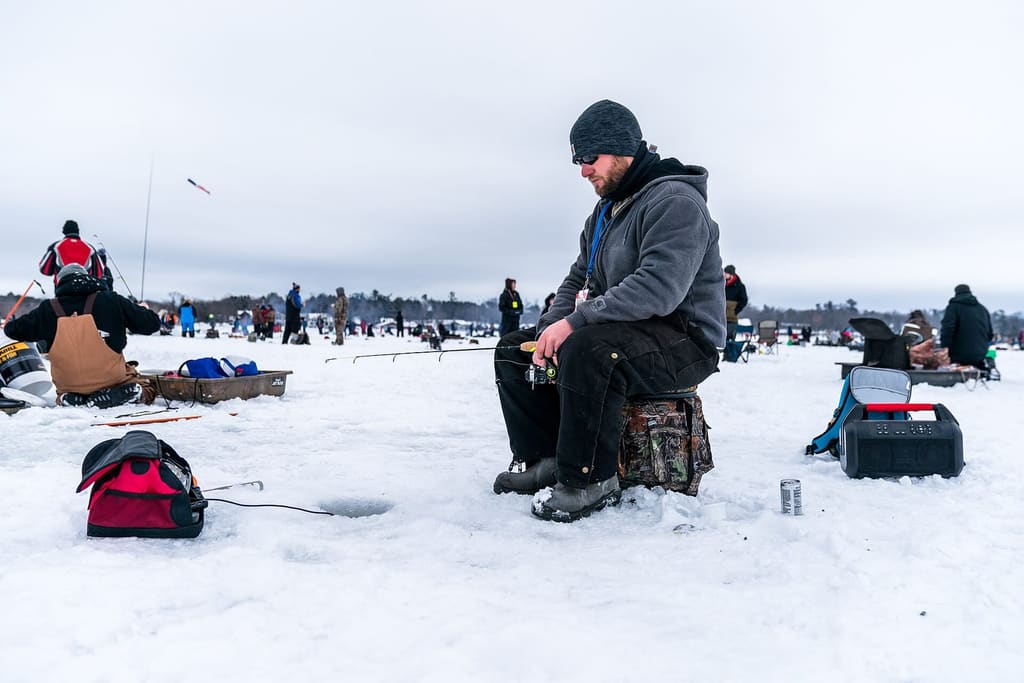
Open water lets you cover miles of shoreline in an afternoon. The ice does not. You are stuck working through a hole the size of a dinner plate, and the fish are spread across acres of frozen water you cannot see into. The anglers who consistently catch fish through the ice are not lucky. They have simply learned to find fish before they ever drop a line, and to keep moving until the fish prove they are home.
Locating fish under the ice is a process of elimination. You start with where fish should be based on the season and the lake, confirm it with electronics, and refine it hole by hole. Master that loop and your catch rate climbs no matter what species you are chasing.
Start With the Map, Not the Auger
Before you set foot on the ice, study a contour map of the lake. A good lake map turns a featureless white expanse into a readable landscape. You are hunting for structure: the underwater shapes that concentrate fish.
Key features to mark before you go:
- Drop-offs and breaklines where shallow water tumbles into deep
- Points and underwater humps that rise from the basin
- Inside turns in the breakline, which act like funnels
- Flats adjacent to deep water, especially with remaining green weeds
- Creek channels, inlets, and the first deep hole off a feeder stream
Free apps and printed lake maps both work. Mark three or four likely spots before the trip so you arrive with a plan instead of wandering. Fish relate to the same structure under ice that they use in open water, so your summer knowledge of a lake is not wasted.
Match Location to the Ice-Fishing Season
Winter is not one long period. Where fish hold shifts as the season progresses, and chasing last month’s pattern is a common reason anglers come home empty.
Early Ice
First safe ice is often the best fishing of the year. Fish are still relating to late-fall locations: green weed edges, shallow flats, and the tops of points in 5 to 15 feet of water. Panfish and pike especially stay shallow while the weeds still produce oxygen and hold bugs and baitfish.
Midwinter
As weeds die off and oxygen drops in the shallows, fish slide deeper and become less aggressive. Look to deeper basin edges, the bases of drop-offs, and main-lake structure in 15 to 30 feet. Schools of perch and crappie often suspend over deep flats and roam, so this is the time to stay mobile.
Late Ice
Lengthening days and meltwater push fish back toward the shallows. Inlets, creek mouths, and the first warm runoff draw baitfish and predators. Fish stage near spawning areas, and shallow bays can light up again.
Drill Aggressively and Drill in Patterns
The single biggest mistake on the ice is committing to one hole and waiting. Think of holes as casts. You would never make one cast over open water and call it a day, so do not do it through the ice.
A productive approach:
- Drill a line of holes across the structure you marked, for example from the shallow flat down across the breakline into deeper water.
- Space them roughly 10 to 20 feet apart so you can check several depths.
- Drill them all before you start fishing, so you can move quietly without spooking fish you are about to reach.
- Work each hole for only a few minutes unless you mark fish or get bites.
This run-and-gun method lets you find the exact depth and structure the fish are using that day. Once two or three holes in a row produce, you have found the zone. Concentrate there.
Let Electronics Do the Searching
Sonar is the biggest advantage ice anglers have. A flasher or an ice-mode fishfinder shows you the bottom depth, your lure, and any fish that comes through, all in real time. It turns blind fishing into sight fishing.
What your sonar tells you at each hole:
- Exact depth, so you can confirm you are on the breakline or hump you marked
- Whether fish are present, suspended, or glued to the bottom
- How fish react to your lure, so you can adjust your jigging cadence on the spot
- The presence of a baitfish layer, which predators will not be far from
If a hole shows nothing on the screen after a few minutes, move on without guilt. The screen is telling you the truth. A clean column means it is time to try the next hole. When you do mark a fish, watch how it responds. A mark that rises to meet your lure and then drops away wants a different presentation than one that charges in.
Read the Subtle Clues
Even without a screen, the ice gives up information if you pay attention.
- Other anglers and old holes cluster on proven spots. A field of abandoned holes over a hump is a map drawn by people who fished it before you.
- Cracks, pressure ridges, and current near inlets can concentrate oxygen and baitfish.
- The bottom composition you feel through your auger and jig matters. Hard bottom transitions to soft, and the edge between them often holds fish.
- Time of day shifts location. Low-light dawn and dusk pull fish shallower and onto the tops of structure; bright midday often pushes them deeper or tighter to cover.
Keep a simple log of which holes and depths produced, and over a few trips you will build a mental map of the lake that no app can match.
Safety Comes First, Always
None of this matters if the ice is not safe. Locating fish often tempts you toward inlets, current, and pressure ridges, which are exactly the spots where ice is thinnest and least predictable. Carry ice picks, check thickness with a spud bar as you move, and never trust the same thickness across an entire lake.
Final Thoughts
Finding fish under the ice rewards effort and curiosity over patience alone. Show up with a plan from a contour map, match your spots to the season, drill plenty of holes, and let your electronics or careful observation tell you when to stay and when to move. The anglers who out-fish everyone on a frozen lake are usually the ones putting in the most footsteps. Stay mobile, trust the clues, and the fish will tell you where they are.