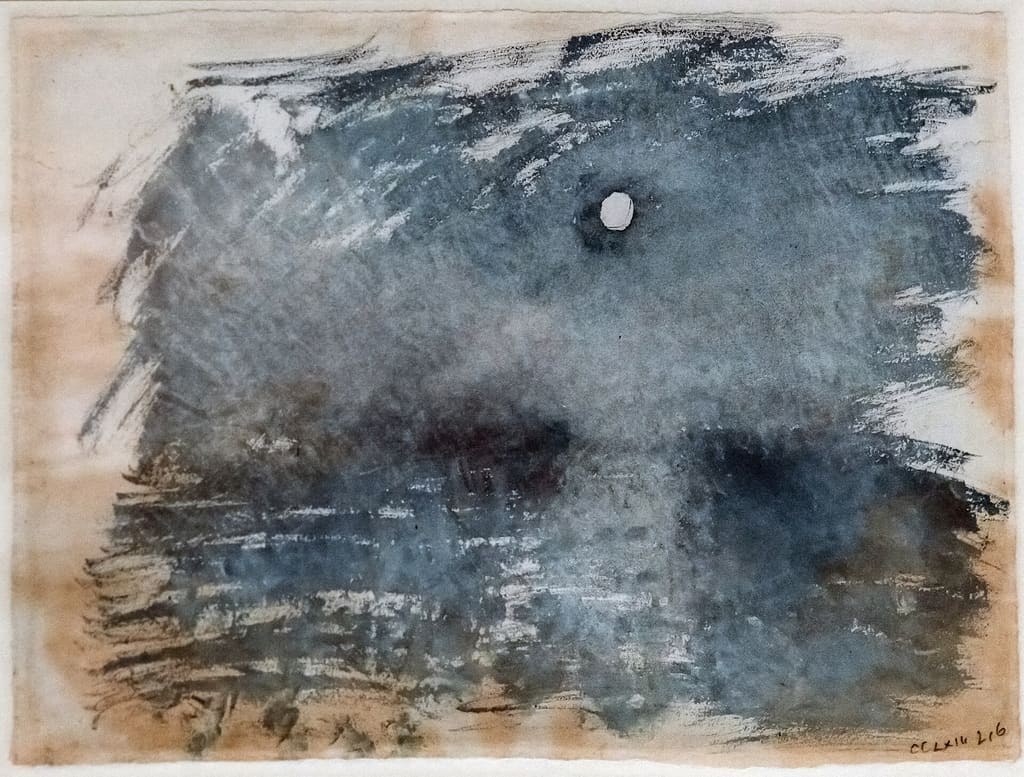
Few topics spark more debate at the boat ramp than the moon. Some anglers swear the full moon shuts down the daytime bite, while others plan every serious trip around the lunar calendar. If you are new to fishing, it can be hard to tell what is real and what is campfire folklore.
The honest answer is that the moon does influence fish behavior, but usually less than the weather, water temperature, and your own skill on the water. This guide explains what the moon actually does, where its effects are strongest, and how to use that knowledge without overthinking it.
What the Moon Actually Does to Water
The moon affects fishing in two main ways: through light and through gravity.
Moonlight changes how much fish can see at night. A bright full moon lets predators hunt after dark, which can mean fish are full and sluggish during the following day. A dark new moon makes nighttime feeding harder, which can push more feeding activity into daylight hours.
Gravity is the bigger story in saltwater. The moon’s pull creates tides, and tides move enormous volumes of water. Moving water stirs up bait, concentrates it in current seams, and signals predators to feed. The phase of the moon controls how strong those tides are.
In freshwater lakes and ponds, gravitational tides are too small to matter for fishing. There, the moon mostly works through light and through the broader timing patterns anglers call solunar periods.
Spring Tides vs Neap Tides
If you fish saltwater, this is the part of the moon story that really earns your attention.
- Spring tides happen around the new moon and full moon, when the sun and moon line up and their gravity combines. These produce the highest highs and lowest lows, and the strongest current.
- Neap tides happen around the first and last quarter moons, when the sun and moon pull at right angles. These produce smaller tidal swings and weaker current.
Stronger current is not automatically better. The best fishing usually happens when there is enough water movement to position bait, but not so much that fish struggle to hold or feed. Many inshore anglers find the early and late stages of a tide more productive than the peak of a strong spring tide.
The Solunar Theory
You will see fishing apps and printed tables that predict major and minor feeding periods based on the position of the moon. This is the solunar theory, first popularized in the 1920s.
The idea is that fish feed more actively during four daily windows tied to the moon: two major periods, when the moon is directly overhead or underfoot, and two shorter minor periods, when the moon is rising or setting.
What you should know about solunar tables:
- They are a planning aid, not a guarantee. Plenty of fish are caught outside the predicted windows.
- They line up well with dawn and dusk surprisingly often, and those low-light periods are productive for their own reasons.
- They are most useful for picking which hours to fish hard, not whether to go at all.
Treat solunar predictions as one input among several rather than a rule that overrides everything else.
Full Moon vs New Moon: What to Expect
There is no single right answer here, because the effect depends on the species and the water you fish. Still, some general patterns hold up well enough to plan around.
Around the full moon
- Strong tides in saltwater, which can mean excellent fishing when timed well.
- Active nighttime feeding, so the daytime bite may be slower, especially at midday.
- Good conditions for night fishing, since predators can see and hunt in the moonlight.
Around the new moon
- Strong tides again, since spring tides happen at both the full and new moon.
- Dark nights that push more feeding into daylight.
- Often a reliable choice for daytime anglers who fish the tide changes.
Around the quarter moons
- Weaker neap tides and gentler current.
- A more even spread of feeding across the day in many fisheries.
- A solid default for beginners who just want consistent, manageable conditions.
What Matters More Than the Moon
It is easy to blame a slow day on the moon, but several factors usually have a bigger impact on whether fish bite.
- Weather and barometric pressure. A falling barometer ahead of a front often triggers strong feeding. A stable high after a front can shut fish down for a day or two.
- Water temperature. Each species has a comfort range. Temperature drives metabolism, location, and how aggressively fish feed.
- Time of day. Dawn and dusk are productive across almost every freshwater and saltwater fishery, regardless of moon phase.
- Bait and presentation. Matching the forage and fishing the right depth will out-produce perfect lunar timing with the wrong lure.
- Location. Putting your bait where the fish actually are beats every calendar trick combined.
How to Use Moon Phase on Your Next Trip
You do not need a complicated system. Here is a simple, practical approach for beginners.
- Pick your days around life first. Fish when you can. A decent day on the water beats a perfect lunar window you skipped.
- If you have flexibility, check the tide in saltwater. Aim to be on the water during a moving tide, and try to fish a tide change.
- Glance at a solunar window. If a major period lines up with dawn or dusk, plan to fish hard then.
- Watch the weather. Favor days with a falling barometer or stable mild conditions over the dead calm right after a strong front.
- Keep a simple log. Note the date, moon phase, tide, weather, and what you caught. After a season, your own records will teach you more about your home water than any general rule.
Final Thoughts
The moon is real, and it does shape fish behavior, mostly through tides in saltwater and through light at night everywhere. But it is one piece of a larger puzzle. Weather, temperature, time of day, and good presentation will decide most of your trips long before the lunar calendar does.
Use the moon as a planning aid, not a superstition. Fish the tide changes, favor low light and falling pressure, keep a simple log, and go fishing when you can. Over time you will develop a feel for how the moon plays into your own waters, which is worth far more than any one-size-fits-all chart.
_The_Full_Moon_over_Water_-_c.1823-6_-_William_Turner_-_Tate_Britain.jpg)