Hook sizing is the most confusing labeling system in fishing, and it confuses experienced anglers too. A size 8 hook is smaller than a size 4. A 4/0 hook is bigger than a 1/0. And a size 1 sits right in the middle, with a 1/0 immediately above it. Nothing about this is intuitive, and no amount of staring at a packet on a peg wall makes it click.
The system is a historical leftover, not a design. Once you understand the two scales and where they meet, picking a hook takes seconds. This page explains the numbering, walks through the hook styles you’ll actually encounter, and gives you a species-to-size table you can reference before a trip.
The Two Scales, and Why They Run Opposite
There are two separate numbering systems in play, and they meet in the middle.
The plain-number scale (larger number = smaller hook). This runs from the tiny end upward: 32, 30, 28 … 12, 10, 8, 6, 4, 2, 1. A size 22 is a fly-tying hook you can barely see. A size 8 suits a bluegill. A size 1 is a decent-sized hook for a walleye. As the number goes down, the hook gets bigger.
The aught scale (larger number = larger hook). Written with a slash-zero and spoken “aught” - 1/0 is “one aught,” 5/0 is “five aught.” This runs 1/0, 2/0, 3/0, 4/0 and up past 20/0 for the biggest offshore hooks. Here, as the number goes up, the hook gets bigger.
They join at size 1. The full sequence from smallest to largest reads:
32 → 20 → 12 → 10 → 8 → 6 → 4 → 2 → 1 → 1/0 → 2/0 → 3/0 → 4/0 → 6/0 → 10/0
Size 1 is the pivot. Below it, numbers descend as hooks grow. Above it, aught numbers ascend as hooks grow. Note that odd sizes largely disappear on the plain scale above the very small end - you’ll find 2, 4, 6, 8 but rarely 3, 5, 7.
What “Size” Actually Measures
Hook size nominally refers to the gap - the distance between the point and the shank. But two hooks with the same gap can differ substantially in:
- Shank length. Long-shank hooks are easier to unhook and better for baits like worms; short-shank hooks hide better in a bait.
- Wire diameter. Heavy wire resists straightening on big fish; fine wire penetrates easier and hurts live bait less.
- Bend shape. Round, sproat, and offset bends all hold differently.
So “what size hook” is really the beginning of the question. The style matters just as much.
Hook Types You’ll Actually Use
Baitholder Hooks
A standard J-hook with one or two small barbs on the shank that keep soft bait from sliding down. The default all-purpose bait hook, and the one most beginners start with. Good for worms, cut bait, and dough baits. The shank barbs make them harder to unhook cleanly, so they’re less suited to catch-and-release.
Typical range: size 8 up to 2/0.
Circle Hooks
A distinctive design where the point curves sharply back toward the shank. You do not set a circle hook. When a fish takes the bait and swims off, the hook slides to the corner of the jaw and rotates into place under steady pressure. Setting it hard will usually pull it straight out of the fish’s mouth.
Circle hooks dramatically reduce gut-hooking, which is why they’re mandated for some species and fisheries. They’re the standard for live and cut bait fishing, and increasingly required in saltwater regulations.
Typical range: 1/0 up to 10/0 and beyond.
Octopus Hooks
Short shank, round bend, and an eye that’s usually turned up or down. Compact and light, so they’re ideal when you want the hook hidden in a small live bait or when using bait rigs like a slip-sinker setup. Popular for walleye, trout, salmon, and inshore saltwater.
Typical range: size 6 up to 5/0.
Worm Hooks (Wide Gap and EWG)
Designed for soft plastics. The offset or extra-wide gap accommodates the bulk of the plastic body so the point still has room to reach the fish. The bend near the eye locks the plastic in place. This is the hook for Texas rigs, weightless soft plastics, and most bass plastics work.
Typical range: 1/0 up to 6/0, matched to the bait’s bulk rather than the fish’s size.
Treble Hooks
Three points on one shank. Standard on crankbaits, topwaters, spoons, and jerkbaits, where multiple points increase hookup odds on a fish swiping at a moving lure. They’re also harder on fish and harder on the angler - treble hooks in a landing net or a thumb are a genuinely bad afternoon.
Many anglers swap the rear treble for a single hook or crimp the barbs on lures they fish around heavy cover or in release fisheries.
Typical range: size 12 up to 2/0, usually dictated by the lure rather than chosen freely.
Others Worth Knowing
- Aberdeen - long shank, light wire, designed to bend rather than break so you can pull free of snags. Panfish and crappie standard.
- Jig hooks - integrated into a lead head; size is usually expressed as jig weight rather than hook number.
- Siwash - long straight shank with an open eye, used to replace trebles on spoons and spinners.
Practical Species-to-Size Chart
Use these as starting points. Match the hook to the bait size first and the fish second - a bait too big for the hook fouls the point, and a hook too big for the bait kills its action.
| Species | Common Hook Sizes | Typical Style | Notes |
|---|---|---|---|
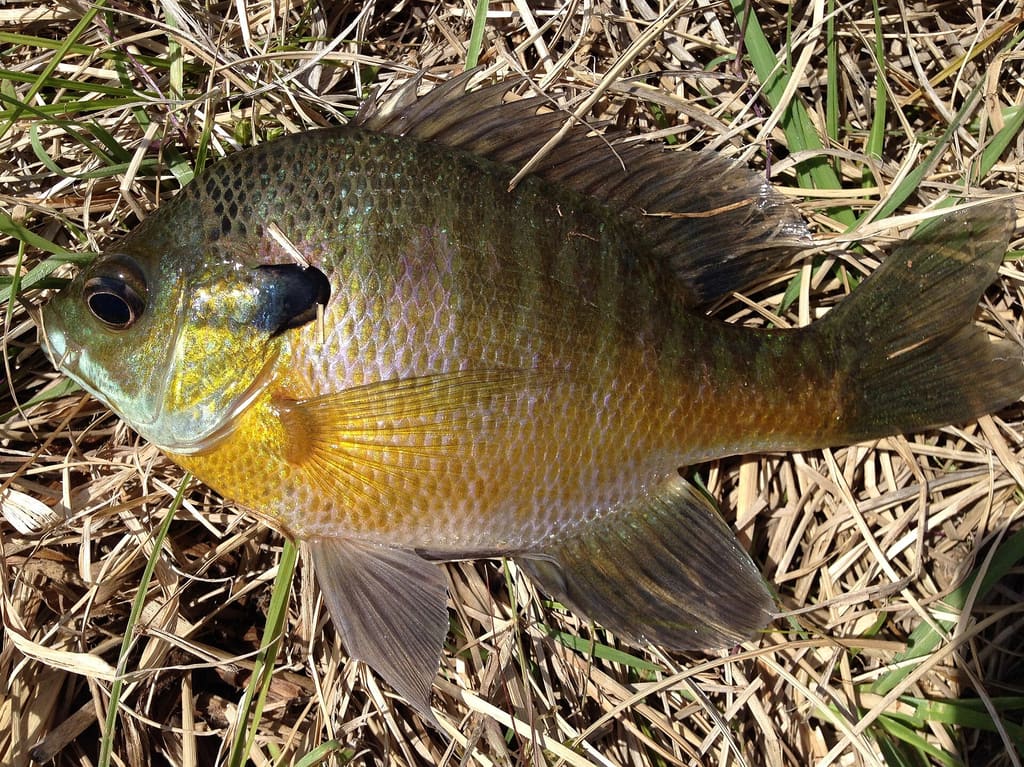
| Bluegill / sunfish | 10 – 6 | Baitholder, Aberdeen | Small mouths; go smaller than feels right |
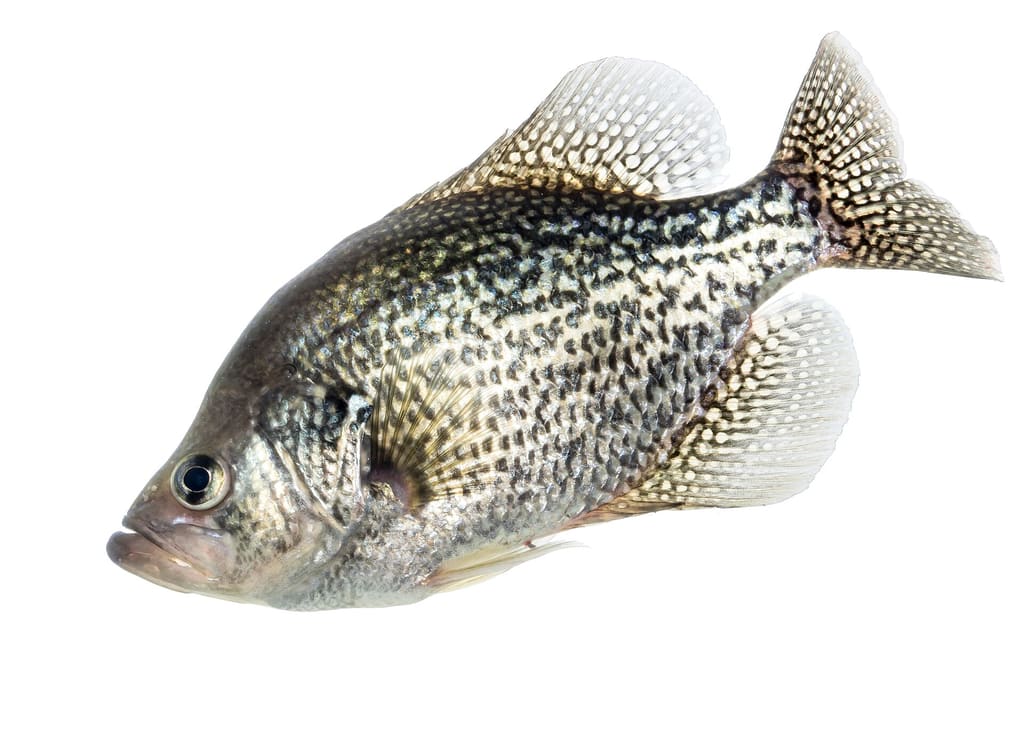
| Crappie | 6 – 2 | Aberdeen, light wire | Paper-thin mouths, use light wire |
| Yellow perch | 8 – 4 | Baitholder, octopus | |
| Trout (stream) | 12 – 8 | Baitholder, octopus, fine wire | Small hooks for natural bait drift |
| Trout (stocked/lake) | 10 – 6 | Treble or baitholder | Treble for dough bait |
| Smallmouth bass | 2 – 2/0 | Octopus, wide gap | |
| Largemouth bass (live bait) | 1/0 – 4/0 | Octopus, circle | Size to the baitfish |
| Largemouth bass (plastics) | 2/0 – 5/0 | EWG / worm hook | Match to plastic bulk, not fish size |
| Walleye | 4 – 2/0 | Octopus, slow-death, jig | |
| Northern pike | 2/0 – 5/0 | Single or treble, wire leader | Leader is essential |
| Channel catfish | 2/0 – 5/0 | Circle, baitholder | Circle hooks strongly preferred |
| Flathead / blue catfish | 5/0 – 10/0 | Circle, heavy wire | Big live baits |
| Carp | 8 – 4 | Wide gap, short shank | Hair rigs common |
| Striped bass | 3/0 – 8/0 | Circle, octopus | Size to bait |
| Redfish / speckled trout | 1/0 – 4/0 | Circle, octopus | Check local circle hook rules |
| Flounder | 1 – 3/0 | Kahle, circle | |
| Snapper / grouper | 4/0 – 9/0 | Circle, heavy wire | |
| Panfish on flies | 14 – 8 | Fly hooks | Different sizing convention |
Saltwater work has its own considerations around corrosion and hook strength - our guide to saltwater fishing for beginners covers those.
How to Choose in Practice
Work through it in this order:
- Start with the bait or lure. The hook has to fit what’s going on it. A nightcrawler on a size 10 hook is a mess; a small minnow on a 4/0 is worse.
- Consider the mouth. Panfish have tiny mouths and need small hooks regardless of how ambitious they are. Catfish and bass can inhale a large hook easily.
- Match the wire to the fight. Light wire for finesse, delicate mouths, and easy penetration. Heavy wire for anything that pulls hard or lives in cover.
- Consider your line. A heavy hook on light line makes casting awkward and can straighten your terminal knot’s advantage. Balance the whole rig - our guide to setting up a fishing rod covers matching the components.
- When unsure, go one size smaller. A slightly small hook still hooks fish. A hook too large for the bait or the mouth doesn’t.
Keeping Hooks Sharp
Hook size means nothing if the point is dull. A hook that won’t catch on your thumbnail under light pressure won’t reliably penetrate a fish’s jaw either. Check points after every fish, after contacting rock or timber, and at the start of every trip. A small hook file or a fine ceramic stone restores most points in a few strokes; replace hooks that are rolled over or rusted.
Common Questions
Why is a size 4 hook bigger than a size 8?
It’s a legacy of how hooks were originally graded, and nobody ever fixed it. The plain-number scale was built descending from small hooks, so higher numbers denote finer and smaller hooks - the same convention you see in wire gauges, where a higher gauge number means thinner wire. When manufacturers needed sizes beyond the largest plain number, they started a second, ascending scale with the aught designation rather than renumbering the whole system. That’s why size 1 and 1/0 sit adjacent in the middle with the scales running in opposite directions.
What size hook should I use for bass?
It depends more on your bait than on the bass. For soft plastics, match the hook to the plastic’s bulk: a 3 to 4 inch worm takes a 2/0 or 3/0 extra-wide-gap hook, while a 10 inch worm or a bulky creature bait wants a 4/0 or 5/0. For live bait such as shiners and shad, a 2/0 to 4/0 octopus or circle hook sized to the baitfish is standard. For crankbaits and topwaters you’re generally using whatever trebles came on the lure, though upgrading dull factory hooks to sharper equivalents in the same size is one of the cheapest improvements you can make.
Are circle hooks better than J-hooks?
They’re better for a specific job, not universally. Circle hooks excel with live and cut bait fished on a slack or lightly loaded line, where a fish may swallow the bait before you react - the design pulls the hook to the jaw corner instead of the gut, which sharply reduces mortality on released fish. That’s why regulations increasingly require them. They’re a poor fit for artificial lures you’re actively working, for techniques that need an immediate hookset, and for anglers who can’t break the reflex to swing. Use circles for bait, J-hooks and wide gaps for lures.
Final Thoughts
The numbering is genuinely bad design, but it’s only two scales meeting at size 1: descending numbers get bigger up to 1, then aught numbers get bigger from 1/0 onward. Learn that, and everything else about hook selection is practical rather than cryptic.
Match the hook to the bait first, respect the fish’s mouth, pick a style suited to the technique, and keep the point sharp. Bookmark the table above and check local hook regulations before you head out.


.jpg)