If there is one fish that has hooked more first-time anglers than any other, it is the bluegill. They are abundant, eager to bite, found in nearly every pond and lake across the country, and they pull harder for their size than almost anything else that swims in fresh water. You do not need a boat, expensive gear, or years of experience to catch them. A simple rod, a bobber, and a worm will do the job on most days.
Bluegill are also a genuinely fun fish for seasoned anglers. Big “bull” bluegill are wary, selective, and surprisingly tough to fool. Whether you are taking a child fishing for the first time or hunting a personal-best slab, the bluegill rewards patience and a little knowledge of its habits. This guide covers everything you need to start catching them consistently.
How to Identify a Bluegill
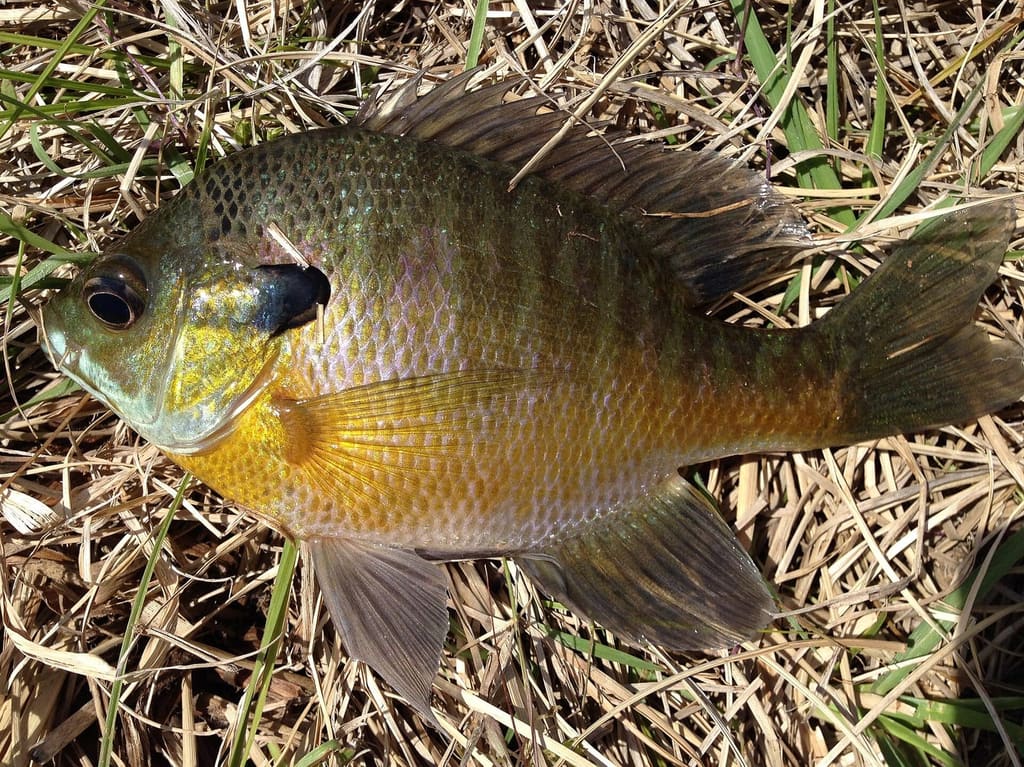
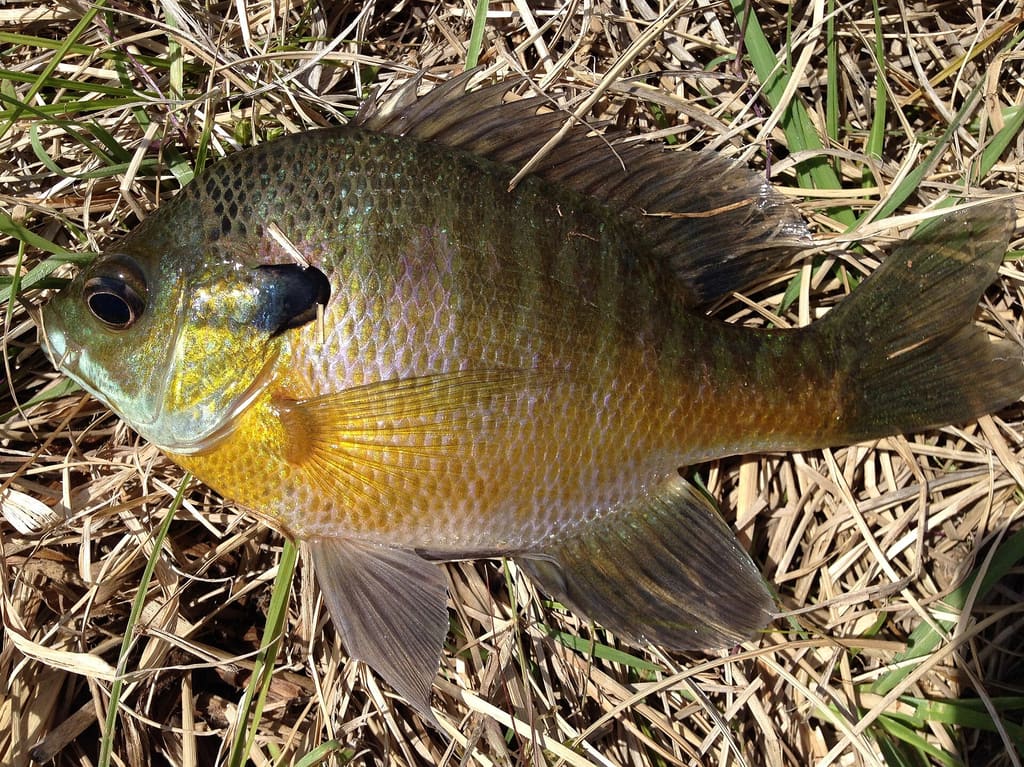
Bluegill belong to the sunfish family, and they share water with several look-alikes such as pumpkinseed, redear, and green sunfish. A few reliable features set the bluegill apart.
- A solid black “ear flap” at the rear edge of the gill cover, with no red or orange spot on the tip (a red spot points to a pumpkinseed or redear).
- A dark blotch at the base of the soft rear portion of the dorsal fin.
- Vertical bars along a deep, flat, plate-shaped body.
- A small mouth, which is why small baits work best.
- Breeding males show vivid coloring: a coppery-orange breast, a blue-purple sheen on the gill cover, and a deep olive back.
Coloration varies a lot with water clarity, season, and spawning condition, so use body shape and the plain black ear flap as your most dependable clues.
Range and Habitat
Bluegill are native to much of the eastern and central United States and have been stocked so widely that they now live in ponds, lakes, reservoirs, and slow rivers across nearly every state. If a body of water holds bass, it almost certainly holds bluegill too.
They favor warm, calm water with cover. Look for them around:
- Weed beds, lily pads, and submerged vegetation
- Docks, piers, and laydowns (fallen trees)
- Shallow flats and gradual shorelines, especially near deeper water
- Brush piles and rocky points
Bluegill are a schooling fish. When you catch one, there are almost always more in the same spot, so it pays to stay put and keep casting once you find them.
Diet and Forage
Bluegill are opportunistic feeders with small mouths, which shapes everything about how you target them. Their diet is dominated by:
- Aquatic insects and larvae
- Worms and grubs
- Small crustaceans and zooplankton
- Tiny minnows and fish fry
- Snails and other invertebrates
Because they feed on small prey, downsized baits and lures almost always outproduce big offerings. A bluegill will inhale a half a nightcrawler all day but may only nip at a full one. Matching that small forage is the single biggest key to consistent success.
Seasonal Behavior and Where They Hold
Bluegill location changes through the year, and understanding the pattern saves a lot of guesswork.
Spring
As water warms into the high 60s and low 70s, bluegill move shallow to spawn. Males fan out circular nests in colonies on firm bottom in one to four feet of water. This is the easiest time of year to catch numbers of them. Look for clusters of light, saucer-shaped beds near shore and cast right to them.
Summer
After the spawn, the biggest bluegill often pull back to deeper water and the edges of weed lines, especially during midday heat. Fish early morning and evening in the shallows, then move out to eight to fifteen feet around weed edges, brush, and drop-offs when the sun is high.
Fall
Cooling water pulls bluegill back toward the shallows to feed before winter. They roam more than in summer, so cover water until you locate an active school. Fall fish tend to be aggressive and fatten up well.
Winter
In the North, bluegill become a prime ice-fishing target. They hold near deeper basins and the edges of remaining vegetation. Tiny tungsten jigs tipped with a wax worm or spike, fished on light line, are the standard approach through the ice.
Best Baits and Lures
You do not need a large tackle box for bluegill. A handful of proven options covers nearly every situation.
Live and natural bait
- Worms and nightcrawlers (use a small piece, not the whole worm)
- Crickets and grasshoppers
- Mealworms and wax worms
- Small grubs and maggots
Artificial lures
- Small jigs from 1/32 to 1/16 ounce, in white, chartreuse, black, or pink
- Tiny soft-plastic grubs, tubes, and split-tail bodies
- Small inline spinners such as a 1/16-ounce model
- Tiny crankbaits and beetle-style baits
- Foam spiders and small poppers on a fly rod for surface action
Proven Techniques
The beauty of bluegill fishing is that the simplest methods are often the most effective.
-
Bobber and bait. The classic setup. Hook a piece of worm on a size 8 hook, clamp on a small split shot, and set a bobber so the bait hangs just above the bottom or at the depth where fish are holding. Watch the float and set the hook on a clean dip. Adjust depth until you find the active zone.
-
Tight-line a small jig. Cast a 1/32-ounce jig near cover, let it sink, and retrieve with a slow lift-and-drop. Most strikes come as the jig falls, so watch your line for any twitch or pause.
-
Fly fishing. Bluegill are one of the most rewarding fly-rod fish for beginners. A small popper or foam spider worked slowly across the surface in warm months produces explosive, visible strikes.
-
Vertical jigging. Around docks, brush, or through the ice, drop a small jig straight down and use subtle shakes to trigger bites. Keep your line tight and watch for the slightest tap.
When you catch a fish, fan your casts to the same area before moving. Schools can be tightly packed, and staying on a productive spot often produces a steady run of bites.
Size and Record Notes
Most bluegill you catch will run from a palm-sized four inches up to about eight inches. A bluegill of nine inches or more is a true trophy in most waters, and any fish that hits a full ten inches is the catch of a season for most anglers.
The all-tackle world record bluegill weighed 4 pounds 12 ounces, caught in Alabama in 1950, and it has stood for decades. To put that in perspective, a one-pound bluegill is an outstanding fish anywhere. Bigger waters with strong forage and lighter fishing pressure tend to grow the largest “bull” bluegill, and targeting the deeper edges away from the bank is often how you separate the slabs from the small ones.
Final Thoughts
Bluegill earn their reputation as the perfect beginner species because they are forgiving, plentiful, and genuinely fun to catch. Start with a bobber and a small piece of worm, fish around cover, and downsize your tackle, and you will be catching fish before you know it. As you gain confidence, chase the bigger bulls in deeper water and try a fly rod for surface strikes. Few fish offer this much action for so little effort, and a day spent catching bluegill is one of the best ways there is to fall in love with fishing.