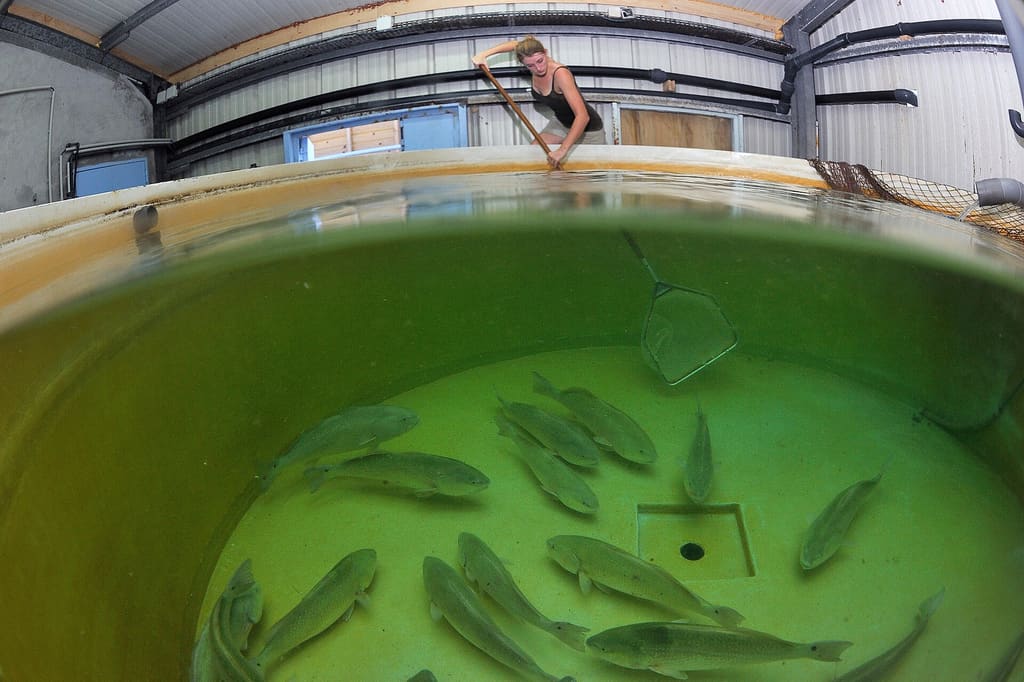
Few fish have done more to build the modern inshore saltwater scene than the redfish, formally the red drum (Sciaenops ocellatus). They pull hard, eat almost anything, push into water shallow enough to expose their backs, and live within easy reach of boat ramps, jetties, and wadeable flats from the mid-Atlantic around to Texas. A redfish does not require offshore weather windows or expensive electronics. It rewards observation, a careful approach, and a decent cast.
This profile covers what you need to consistently put redfish in the net: how to identify them, where they live across the seasons, what they eat, and the baits, lures, and techniques that work. The fishing ranges from beginner-simple to genuinely technical, which is exactly why so many anglers never get tired of chasing them.
Identification
Redfish are easy to recognize once you know the markers. The body is elongated, slightly bronze to coppery-gold on the back, fading to a pale or whitish belly. Color varies with water clarity and habitat; fish from clear flats often look brighter copper, while those from murky bays can appear gray or dusky.
The signature feature is the tail spot. Nearly every red drum carries at least one black, eyelike spot at the base of the tail, and many carry several scattered along the back half of the body. Biologists believe the spot functions as a decoy that draws a predator’s strike toward the tail instead of the head. A fish with multiple spots is normal and not a different species.
Key points to confirm an ID:
- Coppery to bronze back with a clean white belly
- One or more black ocellated spots near the tail base
- A blunt, slightly downturned mouth set low on the head, suited to feeding on the bottom
- No barbels on the chin, which separates it from the black drum
The downturned, bottom-oriented mouth is a strong clue to behavior: redfish spend a lot of time rooting along the bottom for crabs and shrimp, which is why you often see them tailing in shallow water.
Range and Habitat
Red drum occur along the U.S. Atlantic coast from roughly Massachusetts south through Florida, and throughout the Gulf of Mexico to the Texas-Mexico border. The strongest, most consistent fisheries run from the Carolinas through Florida and across the Gulf states.
Within that range, redfish are an estuary and nearshore fish for most of their lives. Look for them in:
- Shallow grass flats and sand flats
- Oyster bars and shell bottom
- Marsh edges, creek mouths, and drains that flush bait on falling tides
- Mangrove shorelines and dock structure
- Passes, jetties, and beachfront sloughs
- Deeper bay holes and channels in cold weather
Younger and slot-sized fish (often called rats and slot reds) live primarily inside the estuary. As they mature, larger fish, the bull reds, move toward passes, beaches, and nearshore waters to spawn, then push back into and around the inlets in fall.
Diet and Forage
Redfish are opportunistic bottom-oriented predators. Their diet shifts with season and location, but the staples are consistent:
- Shrimp
- Crabs, especially small blue crabs and fiddler crabs
- Mullet and other small baitfish such as menhaden and pinfish
- Marine worms and the occasional small flounder or pinfish
That broad menu is good news for anglers. A redfish will eat a live shrimp, a cut piece of mullet, a soft-plastic paddle tail, a gold spoon, and a crab-pattern fly, sometimes all in the same morning. Match what is naturally present. If mullet are flooding a marsh edge, a baitfish profile shines; if you are working oyster bars on a falling tide, a crab or shrimp imitation tends to be the better call.
Seasonal Behavior and Where They Hold
Redfish are catchable year-round across most of their range, but where they sit changes with water temperature.
Spring
Warming water pushes fish onto flats and marsh edges to feed after winter. They spread out and become more aggressive as the forage base rebuilds. Mid-morning, once the sun warms the shallows, is often prime.
Summer
Fish feed hard early and late to avoid midday heat. Look to deeper grass edges, shaded mangroves, and dock lines during bright afternoons. Low-light periods and moving tides are your best windows. Tailing fish on flooded grass during high tides are a classic summer target.
Fall
This is the season many anglers wait for. Bait migrates, water cools, and bull reds stack up near passes, inlets, and beaches to spawn. Schools of large fish can be found crashing bait. Inside the estuary, slot fish feed aggressively to put on weight before winter.
Winter
Cold water concentrates fish. They school tightly in deeper bay holes, channels, and dark mud-bottom basins that hold heat. Fishing slows down and slows literally; work baits methodically along the bottom. On warm, sunny winter afternoons, fish may slide back onto shallow dark flats to sun themselves, creating excellent sight-fishing.
Best Baits and Lures
You can catch redfish on a wide range of offerings. Reliable choices:
Live and natural baits
- Live or fresh dead shrimp, free-lined or under a popping cork
- Finger mullet, live or cut
- Live blue crab quarters for larger fish
- Cut menhaden or other oily baitfish on the bottom
Artificial lures
- Soft-plastic paddle tails and jerk shads on jig heads, in natural and gold-flake colors
- Gold weedless spoons, a time-tested flats producer
- Topwater walking baits early and late, especially over grass
- Popping corks rigged above a soft plastic or shrimp imitation to call fish in dirty water
Fly fishing
- Crab and shrimp patterns for tailing and cruising fish
- Baitfish patterns such as Clouser-style flies when reds are chasing mullet
A popping cork deserves special mention. The chug and rattle imitate feeding activity and shrimp popping at the surface, drawing redfish from a distance in stained water. It is one of the most forgiving and productive setups for newer anglers.
Proven Techniques
How you fish matters as much as what you throw.
- Sight fishing the shallows. In clear, calm water, pole or wade quietly and look for tails, wakes, and backs breaking the surface. Lead cruising fish by several feet and let the bait drop into their path. Never cast directly on top of a fish in skinny water; the splash will spook it.
- Working tide and structure. Fish feed hardest on moving water. Target falling tides at creek mouths and oyster bars where current sweeps shrimp and crabs to waiting fish. Position so your cast moves naturally with the current.
- Covering water with a search bait. When fish are scattered, fan-cast a paddle tail or gold spoon along grass edges and shorelines to locate active fish, then slow down once you get bit.
- Fishing schools in fall. When bull reds pod up near passes and beaches, a well-placed cut bait on the bottom or a heavy jig into the school will get hammered. Use heavier tackle; these fish are powerful.
Size, Records, and Handling
Most redfish caught inside the estuary fall in the 18 to 30 inch, roughly 2 to 10 pound range, the so-called slot fish that are the bread and butter of inshore anglers. Bull reds near passes and beaches commonly run 30 to 45 inches and can exceed 40 pounds. The species can live several decades, and the largest fish are old, important spawners.
The all-tackle world record red drum is a 94 pound, 2 ounce fish caught off Avon, North Carolina in 1984, a mark that has stood for decades and reflects the giant-bull-red fishery of the Outer Banks.
Because big redfish are the breeders that sustain the population, careful catch and release of oversize fish is the norm. Support the body horizontally, minimize air time, and revive the fish in the water before release.
Final Thoughts
Redfish earn their popularity. They are accessible from shore, boat, or kayak, they live close to home along thousands of miles of coast, and they will eat almost anything presented well. Learn to read the tide, approach quietly, and match your offering to the local forage, and you will catch them in every season. Respect the slot, release the big breeders carefully, and the fishery will keep delivering for the next generation of inshore anglers.
_en_bassin_de_maturation_(Ifremer_00554-66601_-_16974).jpg)