Flounder are one of the most rewarding fish a beginner can target. They live close to shore, they hit a wide range of baits, and they are excellent table fare. Because they ambush their prey from the bottom, you do not need a boat, expensive electronics, or long casts to catch them. A simple rig, the right spot, and a little patience are often enough.
This guide covers how to recognize a flounder, where they live and feed, how their behavior shifts through the seasons, and the baits, lures, and techniques that consistently put them in the cooler. Whether you are fishing a jetty, a sandy beach, or a tidal creek, the same core principles apply.
Identifying Flounder
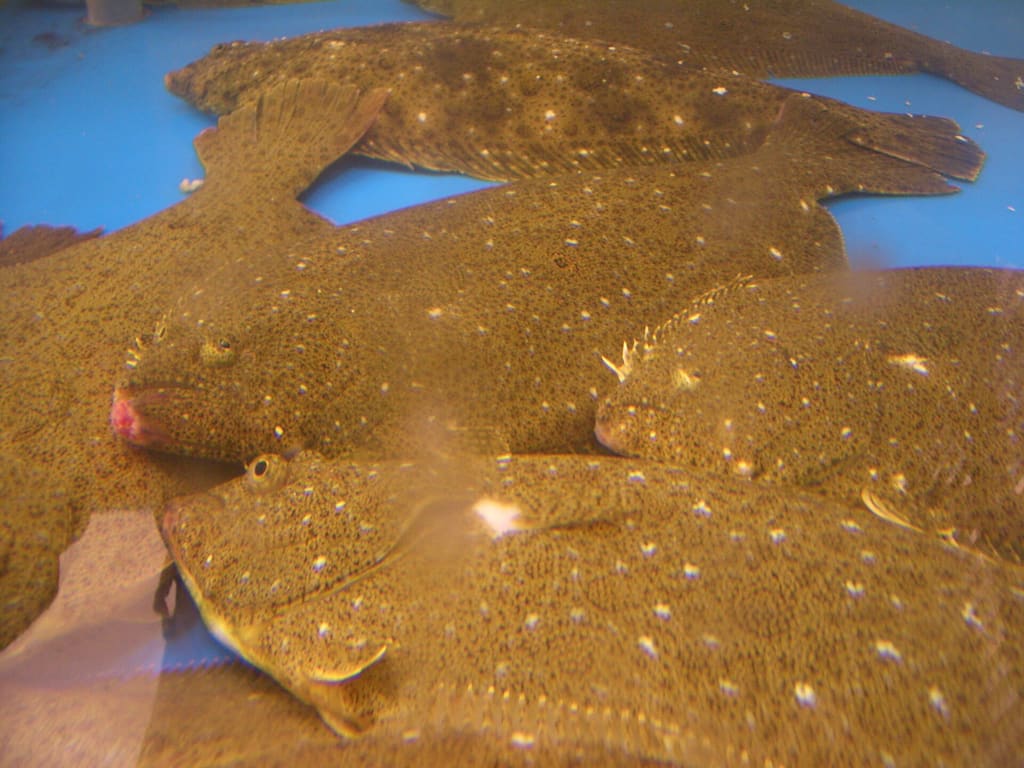
Flounder are flatfish, meaning they lie on one side of their body with both eyes on the upward-facing side. This shape lets them bury in sand and mud with only their eyes exposed, waiting to ambush passing prey.
Key features to look for:
- A flat, oval body that lies sideways on the bottom
- Both eyes on the same side of the head
- A wide mouth with sharp teeth, set toward one edge of the body
- Coloring on the top side that shifts to match the bottom, from sandy tan to mottled brown or olive
- A pale, often white underside
The most commonly targeted species inshore is the summer flounder, often called fluke. Southern flounder and gulf flounder are also popular along the southern coast. They behave similarly, so the techniques below work across all of them. Note that summer flounder are left-eyed, meaning their eyes sit on the left side when the mouth points toward you, while southern flounder identification can vary by region.
Range and Habitat
Flounder are found along both coasts of North America, with the heaviest fishing pressure on the Atlantic and Gulf coasts. Summer flounder range roughly from the Carolinas up through New England, while southern and gulf flounder dominate from the Carolinas down through the Gulf of Mexico.
They favor soft bottoms where they can bury and ambush. Look for them around:
- Sandy and muddy flats
- Channel edges and drop-offs
- Inlets and passes where current funnels bait
- Jetties, bridge pilings, and dock structure
- The mouths of tidal creeks and bays
The common thread is the combination of a soft bottom for hiding and nearby structure or current that delivers food. Flounder are ambush feeders, so they hold where moving water carries baitfish and shrimp right past their faces.
Diet and Forage
Flounder eat almost anything they can catch, but their diet is dominated by small baitfish and crustaceans. Understanding their forage tells you exactly what to put on your hook.
Primary forage includes:
- Mud minnows, mummichogs, and small finger mullet
- Peanut bunker and other small baitfish
- Shrimp
- Small crabs and squid
Because they ambush from below, flounder strike upward at prey passing overhead. This is why your bait or lure needs to move slowly along or just above the bottom. A bait racing through the middle of the water column will swim right over them.
Seasonal Behavior and Where They Hold
Flounder movement follows water temperature, and knowing the pattern helps you find them year-round in fishable waters.
Spring
As water warms, flounder move from deeper offshore wintering areas into bays, inlets, and creeks. Fish the warming shallows and creek mouths on incoming tides. Bites can be light early in the season.
Summer
This is prime time inshore. Flounder spread across flats, channel edges, and structure. Target moving water around tide changes, and focus on transitions where sand meets grass or where a flat drops into a channel.
Fall
The fall run is legendary among flounder anglers. As temperatures drop, flounder stage near inlets and passes before heading offshore for winter. Concentrations of fish moving through these chokepoints can produce the best fishing of the year.
Winter
In colder regions, flounder move offshore and inshore fishing slows dramatically. In the Gulf and far south, some inshore action continues through milder winters.
Best Baits and Lures
You can catch flounder on natural bait, artificial lures, or a combination of both. Beginners often find live or fresh bait the most forgiving, but soft plastics and jigs are deadly once you learn the retrieve.
Natural bait
- Live mud minnows or finger mullet are the gold standard
- Fresh strips of squid or cut bait add scent and durability
- Live shrimp work well, especially in southern waters
Artificial lures
- Soft plastic paddle tails and curly tails on a lead jig head
- Bucktail jigs, often tipped with a strip of squid or a soft plastic trailer
- Scented soft baits that mimic shrimp or minnows
A popular and effective combination is a bucktail jig tipped with a soft plastic or bait strip. The bucktail provides weight and flash while the trailer adds action and scent.
Proven Techniques
The single most important rule in flounder fishing is to keep your offering near the bottom and move it slowly. These methods all build on that idea.
-
Drifting. From a boat, drift across flats and channel edges so your bait drags naturally along the bottom with the current. This covers water and helps you find where fish are holding.
-
Slow bottom retrieve. From shore, cast out and retrieve a jig or rig in slow hops, letting it touch down between lifts. Imagine dragging the bait through a flounder’s strike zone just above the sand.
-
Bouncing a bucktail. Lift the rod tip to hop the jig off the bottom, then let it fall on a controlled line. Most strikes come on the fall.
-
Setting the hook. Flounder often grab a bait and hold it before swallowing. When you feel the initial bite, resist the urge to set immediately. Drop the rod tip, let the fish take it for a moment, then come tight and set firmly.
A medium spinning rod with a fast tip, 10 to 20 pound braided line, and a fluorocarbon leader covers most inshore flounder situations. A simple Carolina rig or a jig head is all the terminal tackle you need to start.
Size and Records
Most flounder caught inshore run between 14 and 20 inches and a pound or two. Fish over 5 pounds are considered excellent, and the largest flatfish, often called doormats, can exceed 8 to 10 pounds. The all-tackle world record summer flounder weighed over 22 pounds, but a fish anywhere near that size is the catch of a lifetime.
For eating and conservation, many anglers release the largest females, which produce the most eggs, and keep mid-sized fish within legal limits.
Final Thoughts
Flounder reward anglers who fish slow, stay near the bottom, and pay attention to the tide. They do not demand fancy gear or long runs offshore, which makes them an ideal target for newcomers and a reliable favorite for veterans. Start with a live mud minnow or a bucktail jig near a creek mouth on a moving tide, keep your bait crawling along the sand, and give the fish a moment before you set the hook. Master those basics and you will be filling the cooler with one of the best-eating fish that swims close to shore.