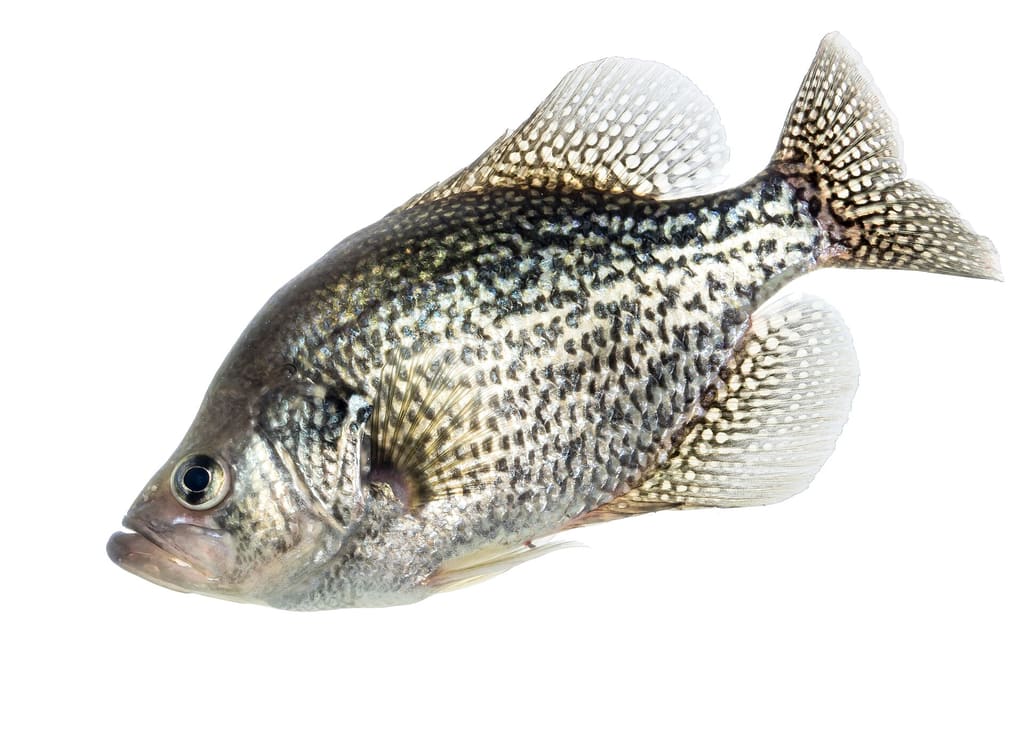
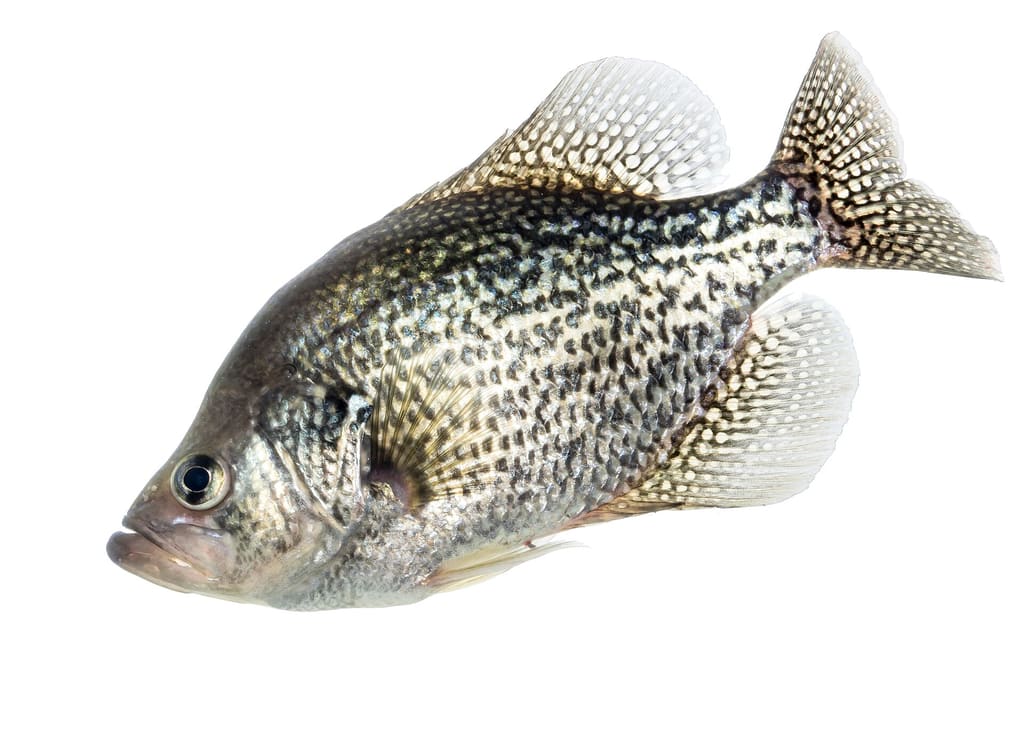
Ask a hundred crappie anglers what depth to fish and you will get a hundred answers, all of them correct on the day they were talking about. Crappie do not live at a fixed depth. They live at whatever depth has the right combination of temperature, oxygen, cover, and baitfish at that moment, and that combination moves through the year.
The good news is it moves predictably. If you know the season and the water temperature, you can narrow your starting depth to a range of a few feet before you make a cast. Then you let the fish correct you.
This guide walks through the seasonal depth progression, how to find fish with or without electronics, and the specific rigging that lets you hold a bait at a chosen depth instead of guessing. If you want the broader species picture first, our crappie fishing guide covers habitat, baits, and technique in general.
The One Rule That Matters Most
Before any seasonal chart, understand this: crappie feed upward. Their eyes are positioned to look up and forward, and they attack prey silhouetted above them. A crappie will rise several feet to take a bait. It will very rarely drop down to chase one.
Everything else in this article follows from that. Your bait should be at the level of the fish or slightly above it, never below. If your sonar shows fish at eighteen feet, you want your jig at sixteen or seventeen. Drop it to twenty and you will sit there watching fish on the screen and catching nothing.
Winter: Deep and Suspended
In cold water, crappie group tightly and move very little. They pull to the deepest stable water available with structure nearby, which in most reservoirs means creek channel bends, main lake ledges, deep brush, and bridge areas.
Depth varies enormously by lake. On a deep clear reservoir, winter crappie may sit at 25 to 40 feet. On a shallow lake that only reaches 18 feet, they will be at 14 to 18. The useful framing is not an absolute number but a relative one: find the deepest structure the lake offers, then look just above and around it.
They also suspend heavily in winter, often hanging in open water well off the bottom, positioned over the deepest part of a channel or basin. A school suspended at 22 feet over 35 feet of water is completely normal, and it is invisible to anyone fishing the bottom.
Winter presentation is slow. A small jig or a minnow held nearly motionless in front of the school, with the smallest possible movement, is the reliable approach. Cold fish will not chase.
Pre-Spawn: Staging on the Way In
As water climbs out of the 40s and into the low 50s Fahrenheit, crappie begin the migration toward spawning flats. They do not go all at once. They stage, meaning they hold at intermediate depths along the route and move shallower in stages as the water continues to warm.
Typical staging depths run roughly 8 to 15 feet, and the fish position on the features that connect deep water to shallow spawning areas:
- Secondary points inside creek arms
- Channel swings closest to spawning flats
- Deeper brush piles adjacent to shallow cover
- The first drop-off outside a spawning bay
- Standing timber on the edge of a flat
This is one of the most productive periods of the year because fish are concentrated, feeding aggressively, and still findable at predictable depths. As water warms through the 50s, expect the whole group to move progressively shallower, roughly a few feet per week in a normal spring.
Water temperature is the driver for nearly everything here, and understanding how it works is worth the read in our water temperature guide.
Spawn: Shallow and Simple
When surface water settles into roughly the low to mid 60s, crappie spawn. This is the shallowest and most straightforward depth window of the year.
Nesting fish are typically in 1 to 6 feet of water, in and around cover: laydowns, bank brush, reeds, dock posts, stumps, and shallow weed edges. Black crappie tend to spawn a bit shallower and in cleaner, more vegetated water than white crappie, but both are shallow.
Two practical notes. First, clarity shifts the depth. In very clear water, spawning fish may use 5 to 8 feet, while in muddy water they may be in 1 to 2 feet. Second, males arrive first and stay on the nests, while females move in and out from slightly deeper water, so the biggest fish are often just outside the shallowest bank cover rather than on it.
Depth control here is almost trivial. A jig under a small float set at two or three feet, pitched to cover, does most of the work.
Post-Spawn: The Awkward Window
The weeks after the spawn are the hardest crappie fishing of the year, and depth is why. Fish are scattered, recovering, and transitioning outward. They are not stacked in deep winter schools and they are not on shallow nests.
Look at intermediate depths, roughly 6 to 12 feet, on the same features you fished in the pre-spawn but working the other direction. First drops outside spawning bays, secondary points, isolated brush on flats. Expect to move a lot and catch fish in ones and twos rather than in bunches.
Summer: The Thermocline and Deep Brush
Summer depth is governed by the thermocline. In lakes deep enough to stratify, the water separates into a warm upper layer, a narrow band of sharp temperature change, and a cold lower layer that often has too little oxygen to hold fish.
Crappie will not live below the thermocline in a stratified lake. That single fact eliminates most of the water column and makes summer depth easier than it looks. Typical summer holding depths run roughly 12 to 25 feet, but the meaningful boundary is the thermocline itself, and fish will hold just above it or on structure that intersects it.
Two main summer patterns:
Deep brush and structure. Crappie pile into brush piles, standing timber, and bridge pilings at depth. They hold tight, so vertical presentation directly over the cover is far more effective than casting.
Open-water suspending. Schools suspend over creek channels and the main basin, following shad. These fish are frequently at a consistent depth across a large area, which is exactly what trolling or spider rigging is built to exploit.
Docks are the third summer pattern and the exception to the depth logic. Crappie shade up under docks in surprisingly shallow water, often 3 to 8 feet, because the shade provides what deep water otherwise would.
Fall: Following Bait Back Shallow
As surface water cools and the lake turns over, the thermocline breaks down and the water column becomes uniform. Crappie are suddenly free to use any depth, which is precisely why fall fishing feels inconsistent.
The organizing factor becomes baitfish. Shad move toward the backs of creek arms as water cools, and crappie follow. Depth ranges widely, roughly 6 to 18 feet, and the fish roam rather than sit.
Early fall often means scattered fish at moderate depth. Late fall pulls them progressively deeper as water continues to cool, until they settle into the winter pattern. Cover water, look for bait first, and expect to find fish grouped where bait is concentrated rather than tied to specific structure.
Finding the Depth Without Electronics
Sonar makes this straightforward, but you can dial in depth with nothing but a jig and patience. The countdown method is the whole trick.
- Cast past your target and let the jig fall on a controlled but not tight line.
- Count steadily as it sinks. One count per second is fine as long as you are consistent.
- Begin your retrieve at a chosen count, say ten.
- If you get no bite, cast again and add five counts. Repeat, going progressively deeper.
- When you get a bite, note the count and repeat it exactly.
To turn counts into feet, learn the sink rate of your jig. A 1/16 ounce jig with a small plastic body falls roughly a foot per second in still water; a 1/32 ounce jig falls slower, and a 1/8 ounce noticeably faster. Test it once beside a dock post of known depth and you will have a calibration you can use all season.
The same principle applies vertically. Mark your line, or count the length of pulls as you strip line off, so that when you find fish you can return to the exact depth on the next drop.
Depth Control With Jigs and Floats
Finding the depth is half the job. Holding a bait there is the other half.
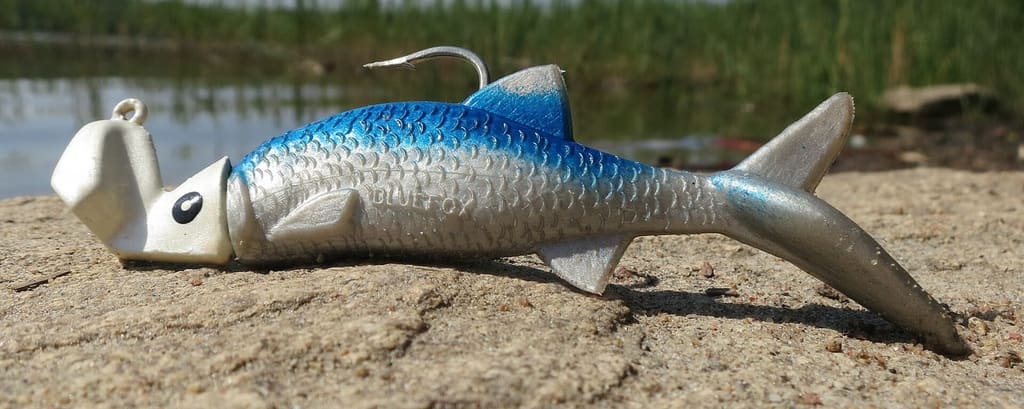
Jig weight is your primary control. A lighter jig falls slower and stays higher in the water column on a moving retrieve; a heavier jig gets down faster and holds depth better in wind or current. For crappie, 1/32 to 1/8 ounce covers the vast majority of situations. Going heavier than you need is the most common mistake, because a fast fall gives suspended fish less time to react.
Fixed floats work well down to about four or five feet, which makes them ideal for the spawn and for shallow dock fishing. Set the depth so the jig hangs just above the cover.
Slip floats are the real depth-control tool. A bobber stop on your line lets the float slide freely while casting, then the line stops at your set depth when the rig settles. You can fish 15 feet down with a slip float and still cast comfortably. Move the stop to change depth precisely, which lets you work a school from the top down.
Vertical presentation over deep brush gives the most control of all, because you are simply lowering to a known depth and holding. This is why long-rod dipping and spider rigging dominate deep-water crappie fishing.
Line diameter affects depth more than most anglers expect. Heavier line has more water resistance and holds a lure higher; lighter line lets a jig get down faster and stay there. On a trolled or slow-swum presentation, that difference is significant.
Common Questions
What depth should I start at if I know nothing about the lake?
Start with the season and work from there. In spring, begin in 2 to 6 feet around shallow cover in the backs of coves. In summer, start at 12 to 15 feet around brush or over a creek channel. In fall, try 8 to 15 feet near bait in creek arms. In winter, find the deepest structure available and fish just above it. Then run a countdown on your first ten casts, varying the depth on each one, and let the first bite reset your plan. A single fish tells you more than any general rule.
Why do I see crappie on sonar but never get bit?
The most common reason is that your bait is below them. Crappie feed upward and generally will not drop down to take a bait, so a jig sitting under a school is invisible to those fish. Raise your presentation until it sits a foot or two above the marks. The second most common reason is speed. Crappie usually bite on the fall or while a bait hangs nearly still, so if you are moving the jig steadily, slow down or stop entirely and let it hover in front of them.
Does the same depth work all day?
Not usually. Light penetration pushes crappie deeper as the sun climbs and lets them rise in low light, so a school at eight feet at sunrise may be at fourteen by midday and back up in the evening. Wind, cloud cover, and water clarity all shift this too. Expect to adjust downward through the morning and upward again late in the day, and recheck your depth any time the bite stops without the fish leaving your screen.
Final Thoughts
Depth is the variable that decides most crappie trips, more than lure color, more than brand of jig, more than anything else in the tackle box. Learn the seasonal progression so you know roughly where to start, learn a countdown so you can search efficiently, and rig with a slip float or a vertical presentation so you can hold a bait exactly where the fish are.
Then remember the one rule: fish above them, never below.
.jpg)