Kayak fishing puts you in the skinny water, hidden coves, and current seams that bank anglers can only stare at and boat anglers float right past. It is the most affordable way to fish from a watercraft, and once you learn to read your hull and manage your gear, a kayak becomes the most versatile fishing platform you own.
The catch is that a kayak is unforgiving of sloppy preparation. There is no live well to lean on, no big casting deck, and no second person to grab a paddle when you drop yours. Getting started well means setting up a stable, organized boat and building a few water-management habits before you ever wet a line. Here is how to do it right.
Choose the Right Kayak for the Water You Fish
The single biggest mistake new kayak anglers make is buying the wrong hull for their home water. Match the boat to the conditions first, then worry about features.
- Sit-on-top hulls are the standard for fishing. They self-bail through scupper holes, are nearly impossible to swamp, and let you stand, re-enter from deep water, and move freely. Almost every dedicated fishing kayak is a sit-on-top.
- Wider hulls (34 to 40 inches) trade speed for stability. If you want to stand and sight-cast flats or throw a baitcaster, prioritize width.
- Longer, narrower hulls track straighter and cover distance faster, which matters on big reservoirs, bays, and anywhere you paddle a mile to the spot.
- Pedal drives free your hands to fish and hold position against wind better than a paddle. They cost more and draw more water, so they are weaker in shallow, weedy, or rocky areas.
If you fish small ponds and slow rivers, a 10 to 11 foot wide sit-on-top is plenty. For open water and wind, lean toward 12 feet or a pedal drive.
Rig It Simple, Then Build Up
New anglers tend to bolt on every accessory at once and end up with a cluttered, snag-prone deck. Start with a clean, functional base and add only what you reach for repeatedly.
A solid starter setup is short:
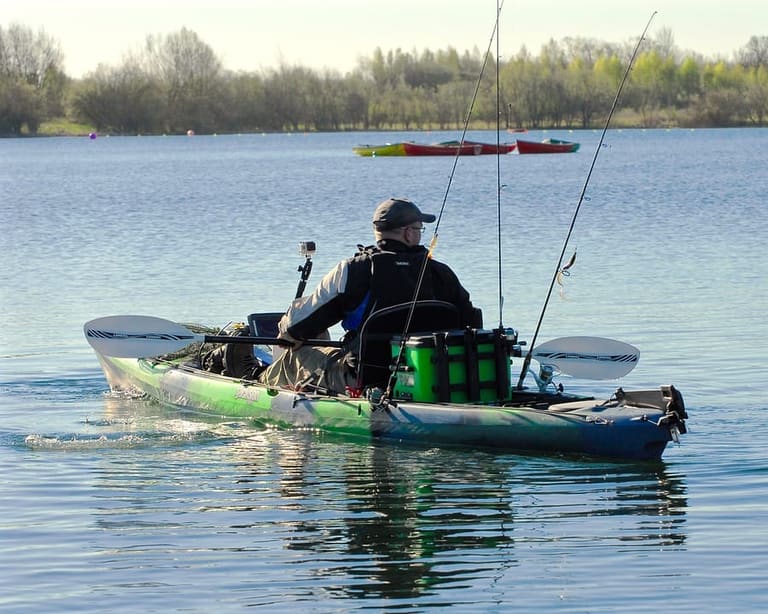
- A milk-crate or molded gear crate behind the seat with two or three rod tubes. This holds tackle, a small box, and spare rods in one grab-and-go unit.
- One flush-mount or adjustable rod holder within easy reach for trolling or staging a rod while you re-tie.
- A leash on every rod and on the paddle. Capsizes happen, and unleashed gear sinks instantly.
- An anchor system sized to your water. A 1.5 to 3 pound folding grapnel anchor on a trolley works in current and wind; a stake-out pole is faster and quieter in water under 6 feet.
Resist the urge to mount a fish finder day one. Learn to handle the boat first, then add electronics once you know where your wiring and transducer will not interfere with paddling.
Master Balance and Boat Control
Stability in a kayak is a skill, not just a hull spec. Keep your weight centered and low, and let your hips, not your shoulders, absorb the boat’s movement. When a wake or gust hits, loosen your hips and stay relaxed; a stiff upper body is what tips people over.
If you want to stand and fish, practice in calm, waist-deep water first. Plant your feet shoulder-width on the centerline, rise using your legs, and keep a slight bend in your knees. Fight a fish from a seated position until standing feels automatic.
Two control habits pay off immediately:
- Position with the wind, not against it. Set up your drift so the wind pushes you across the structure you want to fish, and use the anchor or stake-out to pause on productive spots.
- Use a paddle leash religiously. A loose paddle floating away from a hooked-up kayak is a genuinely dangerous situation.
Pack Safety Gear and Wear It
A kayak is a small, low-profile craft, and the water does not care how experienced you are. Treat safety gear as non-negotiable.
- Wear a fishing-specific PFD at all times, not stowed under the seat. Fishing PFDs have high backs that clear the seat and pockets for pliers and tools.
- Carry a whistle or sound signal attached to your PFD.
- Dress for the water temperature, not the air. Cold water removes body heat fast and can incapacitate you in minutes. In cold-water seasons, wear a wetsuit or drysuit even on a warm afternoon.
- Tell someone your launch point and return time, and carry a charged phone in a waterproof case plus a small light if there is any chance you finish near dusk.
Learn to Launch, Land, and Re-Enter
Getting on and off the water cleanly prevents most beginner spills. At a gradual shoreline or ramp, float the boat in a few inches of water, straddle it, sit down, then push off and bring your feet in. Reverse the process to land, keeping your weight low the whole time.
Practice a deep-water re-entry before you need it. With a sit-on-top, swim to the side, kick your legs to the surface behind you, pull yourself across the seat on your belly, and rotate to sit. Doing this once in warm, calm water builds the muscle memory that matters when it counts.
Fish Smarter From the Seat
Once the boat is dialed in, lean into what a kayak does better than any other platform. You can slip silently into water that spooks easily, hold tight to laydowns and docks, and work shorelines methodically.
- Cast parallel to structure so your lure stays in the strike zone longer; the kayak lets you set up these angles precisely.
- Troll while you paddle or pedal to cover water and locate fish, then anchor up on a productive stretch.
- Keep a measuring board and a way to handle fish boatside, since you have no deck to lay them on. A lip grip and a small net make releases cleaner.
Final Thoughts
Kayak fishing rewards preparation more than gear. A stable hull matched to your water, a clean and leashed setup, a worn PFD, and a few practiced boat-handling habits will put you on fish that other anglers cannot reach. Start on calm, familiar water, build your skills before you build your rig, and the kayak will quickly become the most-used boat in your fleet.