Hooking a fish is the part everyone practises. Unhooking it is the part that decides whether that fish swims off strong, and whether you drive a treble into your own thumb doing it. It is a genuine skill, and it is one of the few in fishing where being slow and deliberate beats being quick.
Two things go wrong most often. Beginners handle fish in ways that injure them without realising — dry hands, a hard squeeze, a dangling grip that wrecks a jaw. And they panic with a hook that will not come out, digging at it with fingers while the fish thrashes on a hot dock board.
Both are fixable with a plan you run the same way every time: get the fish controlled, get your hands wet, use a tool rather than fingers, and know in advance what you will do if the hook is too deep to reach.
Before You Touch the Fish
Wet your hands. Fish are covered in a slime coat that blocks bacteria, fungus and parasites. Dry hands, a dry towel, and dry grass all strip it off in patches. Dunk your hands before every fish. If you must set a fish down, set it on wet grass, a wet mat, or in a net — never on hot concrete, a dry boat deck, or gravel.
Have your tools already out. Fumbling in a tackle box with a fish on the ground is how fish die. Long-nose pliers or forceps should be clipped to you, not buried.
Support the fish. Never let a fish hang by its jaw alone if it has any real weight. Never hold a fish by the eye sockets. Never hold it by the gills — the gill filaments are the fish’s lungs and blood supply, and crushing them is usually fatal even if the fish swims away looking fine.
Keep it short. The clock matters more than almost anything else. A fish out of water is holding its breath after an exhausting fight. Ten seconds of air is nothing. Two minutes while you find your phone is a real problem. If you want a photo, have the camera ready before the fish leaves the water.
A landing net makes all of this dramatically easier, because the fish stays in water while you get organised and the mesh holds it still while you work. A rubber or rubber-coated mesh is far kinder than knotted nylon, which abrades slime and catches hooks.
Grips by Species Type
There is no universal grip. What holds a bass safely will injure a pike, and what works on a trout will get you a hospital visit on a catfish.
Bass and other soft-mouthed sunfish relatives
Largemouth and smallmouth bass have no cutting teeth — just sandpaper-textured pads that will scuff your thumb and nothing worse. Grip the lower lip firmly between thumb and forefinger.
The critical detail is angle. A small bass can be held vertically by the lip without harm. A heavy one cannot: hanging a big fish straight down, or worse, holding it by the lip and tilting it horizontal, puts all its weight on the jaw joint and can dislocate or permanently damage it. For anything with size, keep one hand on the lip and slide the other under the belly to support the body. Hold it level.
Bluegill, crappie and other panfish are best cradled around the body with the spiny dorsal fin folded flat under your palm. Those spines are sharp but harmless — they will prick you, not envenom you. More on species specifics in the panfish fishing guide.
Pike, musky and other toothy predators
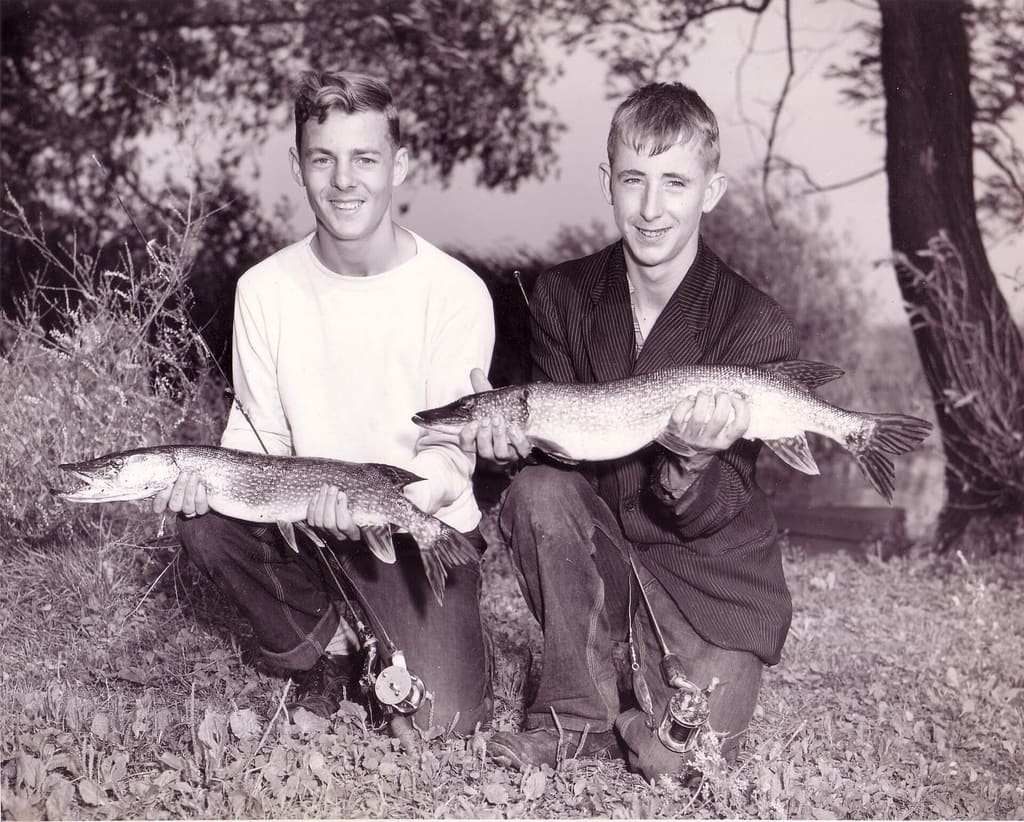
These fish have hundreds of backward-facing teeth and can turn their heads far enough to reach your hand. Do not lip grip them.
The standard hold is the chin or gill-plate grip: slide your fingers under the leading edge of the gill cover from the outside, into the soft V under the jaw, and lift with your fingers pressed against the bony plate — not into the red gill filaments behind it. Your other hand goes under the belly to take the weight and hold the fish horizontal. Big pike and musky should ideally be held in the water and never lifted at all.
Wear a puncture-resistant glove on the gripping hand and use pliers with at least eight to ten inch jaws so your hand never enters the mouth. Cut the hooks out with side cutters if that is faster than working them free — hooks are cheap.
Catfish and bullheads
Channel cats, bullheads and small blues carry stiff, sharp spines in the dorsal fin and in the leading edge of each pectoral fin. In smaller fish these spines carry a mild venom, and a puncture stings and swells well out of proportion to its size.
Hold a small catfish from above with your hand over its back, sliding your palm forward until your thumb sits behind one pectoral spine and your fingers behind the other, with the dorsal spine ahead of your palm. Done right, all three spines are behind your grip and cannot reach you. Larger catfish outgrow that grip — support them under the belly with both hands instead, or leave them in the net.
If you do get spiked, wash it thoroughly and soak it in water as hot as you can tolerate. Puncture wounds from fish spines infect readily, and a wound that reddens, swells or streaks needs a doctor.
Trout, walleye and other slippery fish
Trout should stay in the water where possible; if you must handle one, wet hands, cradle it gently under the belly and behind the pectoral fins, and never squeeze the body. Walleye have both sharp teeth and razor-edged gill covers — hold them across the back behind the head with the dorsal folded down, or use a lip grip with a glove.
Getting the Hook Out
For a hook you can see and reach, the technique is simple and always the same: back the hook out along the exact path it went in. Grip the bend or the shank with pliers, push slightly forward to disengage the barb, rotate, and draw it back out. Pulling straight out against the barb tears a hole; a small push-and-rotate first lets it slip free.
Forceps are better than pliers for small hooks and small mouths — they lock closed, they are thin enough to reach where fingers cannot, and the fine tips grip a size 10 hook that pliers would just slide off. Keep both: forceps for panfish and trout, long pliers for anything with teeth.
A hook-out tool or disgorger — a slotted rod you slide down the line to push the hook shank backward — works well for hooks just out of reach in a smaller fish’s throat. Slide it down the taut line, push firmly to pop the hook free, then withdraw hook and tool together.
Treble hooks
A lure with two or three trebles needs a different order of operations. Only one hook is usually in the fish; the others are loose and dangerous.
- Control the fish completely first — in the net, held down on a wet surface, or lipped if it is a bass.
- Look before you touch and identify which points are buried and which are free.
- Remove the hook nearest your hand first if you can, so a sudden kick does not swing a free hook into you.
- Use pliers on the bend of the buried hook and back it out with the same push-rotate-withdraw motion.
- If the fish is thrashing, stop. Wait for it to settle. Fighting a moving fish tears its mouth and risks your hands.
If a treble is buried in a bad spot and the fish is one you intend to keep, dispatching it quickly is more humane than a long extraction. If you are releasing it, cut the hook with side cutters and remove it in pieces.
When to Cut the Line
Sometimes a fish takes the hook deep into the throat or gullet. This happens most with live bait, because the fish has time to swallow, and it is the reason a lot of experienced bait anglers use circle hooks, which tend to slide to the corner of the jaw rather than being swallowed.
If you can see the hook and reach it with forceps without contacting the gills, remove it. If you cannot — if it is past the throat, or if pulling it would drag it across the gill arches — cut the line as close to the hook as you can reach and release the fish.
This is not giving up. Research on hooking mortality has consistently found that fish released with the hook left in survive at substantially higher rates than fish that have a deep hook forcibly extracted. The damage done digging a hook out of a gullet or gill arch is what kills fish; a hook left alone often works loose or corrodes over time and the wound heals around it.
Two caveats worth knowing. Bronzed and plain steel hooks corrode reasonably quickly in water. Stainless steel hooks do not — if you fish barbed stainless with live bait for fish you intend to release, switch. And “cut the line short” means short: leave as little trailing line as possible, since a long tag can tangle or trail.
If you are keeping the fish anyway, none of this applies — dispatch it promptly and retrieve the hook afterwards. Deciding in advance whether a fish is coming home or going back makes the moment much simpler. The catch and release best practices guide covers the rest of the release, including reviving a tired fish.
Common Questions
Will a hook left in a fish dissolve?
Not dissolve exactly, but non-stainless hooks do corrode and are often shed or encapsulated over weeks to months, and fish frequently survive with them. That is why cutting the line beats digging out a deep hook: the mechanical damage from extraction near the gills or gullet is usually what kills the fish, not the hook itself. Use bronzed or plain steel hooks rather than stainless if you release fish, cut the line as close to the hook as you can safely reach, and accept that leaving it is the better of two imperfect options.
Is it safe to hold a fish by the gills?
No, not if you are releasing it. The red filaments behind the gill covers are the fish’s respiratory surface and are dense with blood vessels; they tear easily and bleed heavily, and a fish with damaged gills often dies even if it swims off strongly. Gripping under the outside edge of the gill plate — the hard bony cover — without your fingers reaching the filaments is a recognised hold for pike and musky, but it takes practice to do without slipping. If you are unsure, support the fish under the belly instead and leave the gills entirely alone.
What do I do if I hook myself?
Small punctures that have not passed the barb come straight back out — clean them well and watch for infection. If the barb is buried, the line-pull method is the common field technique: loop strong line around the hook bend, press down on the hook eye to disengage the barb, and pull the loop sharply along the shank’s path. It works, but it hurts and it is not appropriate everywhere. Anything in a face, eye, joint, hand tendon, or anywhere near a blood vessel goes to a doctor, not to a fishing partner with a pair of pliers. Keep your tetanus shot current if you fish regularly.
Final Thoughts
Good unhooking is unglamorous and almost entirely about preparation. Wet hands, tools within reach, the right grip for the species in front of you, and a decision already made about what happens if the hook is too deep. Do those four things and you will hurt fewer fish, lose fewer hooks, and keep your own hands intact.
The habit worth building above all: minimise time out of water. Everything else — the grip, the pliers, the photo — should be arranged so the fish is exposed for seconds, not minutes. If you are still assembling your kit, a pair of long-nose pliers and a set of forceps belong in the basic beginner gear list well before a second rod does.

_(14762013806).jpg)