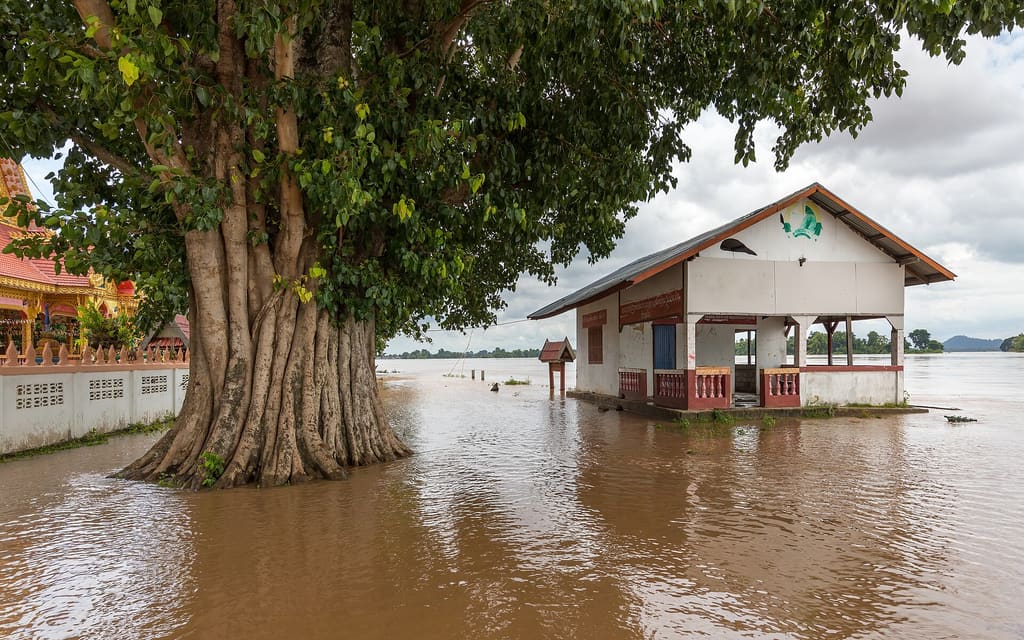
Fishing in the rain is one thing. Fishing the two or three days after a heavy rain is a completely different problem, and it is the one that wrecks more trips. The storm has passed, the sky has cleared, and you arrive to find the lake looking like chocolate milk, the water two feet higher than last week, and every spot you know either flooded or blown out with current.
This is not a lost cause. Fish do not leave the lake because it rained. They relocate, and they relocate in ways that are surprisingly predictable once you understand what runoff actually does to a body of water. A rising, stained lake can produce some of the best shallow fishing of the year — if you stop trying to fish it like it was last week.
What Runoff Actually Does to the Water
Heavy rain does not just add water. It changes four things at once, and each one moves fish.
It adds sediment. Runoff carries clay, silt and topsoil off the banks and out of feeder creeks. Visibility drops from a few feet to a few inches in the worst areas. Fish that hunted by sight now hunt by vibration and silhouette.
It changes temperature. Rain runoff is usually cooler than the lake in summer and can be slightly warmer in early spring, when it has run across sun-warmed ground. A sharp drop of several degrees in a shallow creek arm will push fish out of it. A mild warming trickle in March can pull them in.
It creates current. Water moving into a lake — and water moving out through the dam or the outflow — sets up flow where there was none. Fish position on current the way they position on structure. Current means orientation, and orientation means predictability.
It floods new ground. Rising water covers grass, bushes, brush piles and bank that were dry a week ago. Crayfish, worms, insects and small forage get flushed into that newly submerged zone, and predators follow them in fast.
Put together, that is a lake that has been shuffled. The fish did not vanish. They moved to the edges of these new conditions.
Reading Rising vs. Falling Water
This distinction matters more than the mud does, and most anglers ignore it. Check the lake level or the river gauge before you go — most reservoirs publish current levels and many rivers have public gauge data.
Rising water
Rising water pushes fish shallow, and it pushes them toward the bank, sometimes right into flooded cover you would never fish at normal pool. Fish are aggressive when water is coming up because food is being delivered to them. Target:
- Newly flooded bushes, grass edges and brush
- The backs of pockets and creek arms where the new water is shallowest and warmest
- Any hard cover — a stump, a laydown, a rock — sitting in the new shallow zone
Fish tight. On rising water the strike zone can be inches from a piece of cover, and casting three feet past it means casting past the fish.
Falling water
Falling water does the opposite and does it fast. Fish pull off the bank because they can get stranded, and they stack on the first significant break — the outside grass edge, a drop-off, a channel swing. Falling water usually makes for a tighter, more concentrated but less aggressive bite. Move out, fish the first drop, and slow down.
Finding Fishable Water in a Muddy Lake
A blown-out lake is almost never uniformly muddy. Some water is chocolate, some is stained, and some is nearly clean. Your job is to find the transitions, because fish stack on them.
Mud lines and color seams. Where muddy inflow meets clearer lake water there is a visible edge. Predators sit on the clean side of that seam and ambush anything that drifts out of the murk. This is one of the highest-percentage targets on the entire lake after a rain. Fish parallel to the seam rather than across it.
Main-lake versus creek arms. Feeder creeks blow out first and clear last. The main lake body, especially the lower end near the dam, usually stays far cleaner and recovers days ahead of the backs of creeks. If the whole upper end is unfishable, run down the lake.
Wind-protected pockets. Sheltered coves that no creek drains into often hold decent visibility even when everything around them is stained.
Inflow edges. Culverts, ditches, storm drains and small creek mouths concentrate everything: current, oxygen, washed-in food and the baitfish that gather to eat it. The trick is to fish the edge of the inflow, not the middle of the muddy plume. Sit off to the side where the flow fans out and slows.
How to Adapt Your Presentation
In stained and muddy water, fish find your bait by feel and sound before they see it. Everything about your presentation should get louder and slower.
Go bigger in profile. A bulkier bait displaces more water and is easier to locate. A full-size spinnerbait with a big Colorado blade, a bulky jig with a chunky trailer, or a wide-wobbling square-bill beats a subtle finesse presentation in dirty water almost every time.
Go dark for silhouette. Black, black-and-blue, junebug and dark green are the classics for a reason — they create the strongest silhouette against whatever light filters down. Chartreuse and bright orange also work well as a contrast accent, particularly in that mid-stained range.
Add rattles and vibration. Rattling crankbaits, bladed jigs and Colorado-blade spinnerbaits give fish something to home in on. This is the one condition where noise is genuinely an advantage rather than a liability.
Slow down and stay in the zone. Fish will not chase far in low visibility. Work slower and keep the bait in a tight area, making repeated casts to the same piece of cover. Contact matters — bumping a stump or ticking a rock triggers strikes because it broadcasts your position.
Fish shallower than feels right. In muddy water light penetrates only a foot or two, so the productive zone compresses toward the surface and toward the bank. Fish that were at twelve feet may now be at three.
If the bite is still dead after you have covered stained water thoroughly, it may be worth reviewing the broader picture in our guide to why fish aren’t biting — post-rain conditions often coincide with a passing front, and the two problems compound.
Timing Your Trip After the Rain
The window matters. A rough general pattern for most lakes:
- During and immediately after the rain: often good, especially at inflows, before sediment fully saturates the system.
- Day one after a big event: frequently the toughest. Water is at its dirtiest, temperature has shifted, and fish are still repositioning.
- Days two to four: usually the sweet spot. Water starts to settle and clear at the edges, fish have found their new positions, and rising or stable levels keep them shallow and feeding.
- After the level peaks and starts dropping: the shallow bite fades and the pattern moves out to the first break.
Note that this timeline is approximate and depends heavily on how big the lake is, how steep the watershed is, and whether more rain follows. Small ponds and creeks blow out and recover within a day. Large reservoirs can take a week.
Common Questions
How long after heavy rain should I wait before fishing?
For most lakes, two to four days after the peak of the rain is the strongest window. The first full day after a big storm is often the hardest because visibility is at its worst and fish are still relocating. Small waters recover faster than large reservoirs. If the lake is still rising, you can fish it immediately — rising water usually pulls fish shallow and makes them aggressive even while it is dirty.
Is muddy water bad for fishing?
Muddy water is not inherently bad, it is just different. Fish rely on their lateral line to detect vibration and on silhouette rather than detail, so they still feed effectively. What makes muddy water tough is that the productive zone shrinks — fish hold shallower and tighter to cover, and they will not chase a bait far. Adjust with bigger, darker, noisier baits worked slowly and close to cover, and muddy water can fish very well.
Where do fish go when a lake floods?
They move toward the newly flooded shoreline. Rising water submerges grass, brush and bank that hold crayfish, worms and insects, and predators follow that food in. Look for fish in the backs of pockets, along flooded bushes, and on any hard cover in the new shallow zone. When the water starts falling again they retreat to the first significant depth change — the outside grass line or the nearest drop-off.
What color lure works best in stained water after rain?
Dark colors that create a strong silhouette generally outperform natural ones. Black and blue, junebug, and dark green are reliable starting points. Chartreuse works well as a high-contrast accent, especially in that intermediate stained range where there is still a little light penetration. Combine color choice with vibration — a dark bait with a big thumping blade gives fish two ways to find it.
Final Thoughts
The temptation after a big rain is to stay home or to fish your usual spots harder. Both are mistakes. Post-rain water is a reshuffled lake, not a broken one, and the fish are often shallower, more concentrated and more aggressive than they were before the storm.
Check the level trend first, find your color seams and inflow edges, upsize your profile, darken your colors, and slow your retrieve. Then fish the new shallow zone with more confidence than the water clarity suggests you should. Some of the best days on the water look, from the parking lot, like the worst.
For more on how storms and pressure systems drive the bite in general, see our overview of how weather affects fishing.