You cast, and instead of a clean shot the line jumps off the spool in a wad of coils. Or your lure comes back spinning. Or slack line springs into loops the instant you stop reeling, and one of those loops finds its way into a wind knot that costs you a lure. That’s line twist, and it’s the most common tackle failure in freshwater fishing.
Twist accumulates invisibly. Every trip adds a little, and one day the line is corkscrewed enough that it won’t lie flat on the spool, won’t cast, and won’t hold a knot properly. Most anglers respond by respooling. That works, but it’s expensive and it doesn’t stop it from happening again three trips later.
The causes are few and specific. Fix those, and you go from respooling every month to respooling once a season.
What Line Twist Actually Is
Monofilament and fluorocarbon are single extruded strands with memory - they remember the shape you put them in. Twist them along their length and they hold that spiral even under light tension.
The symptoms follow directly:
- Slack loops. Twisted line wants to coil. The moment tension drops, it springs into loops on the spool.
- Wind knots. Those loops peel off during a cast, tangle in the air, and pull tight.
- Reduced casting distance. Coiled line catches on the spool lip and rod guides instead of flowing.
- Weakened line. A twisted strand under load has stress concentrated unevenly and breaks below its rating.
- Spinning lures. Bad twist can impart rotation to your presentation, which fish notice.
Braid resists twist much better because it’s woven from multiple fibers and has almost no memory. It isn’t immune - it can still develop twist that shows as fuzzing or looping - but it’s dramatically more tolerant. Our guide to fishing line types covers the underlying differences.
Cause 1: Closing the Bail With the Handle
This is the number one cause of twist on spinning reels, and nearly every beginner does it.
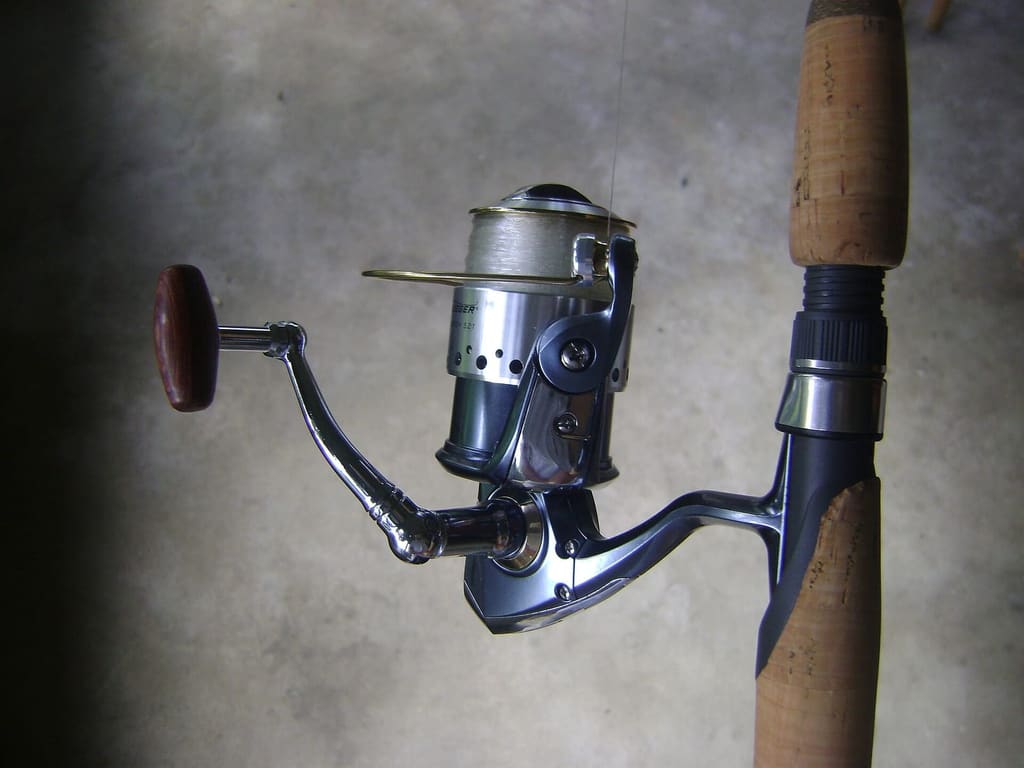
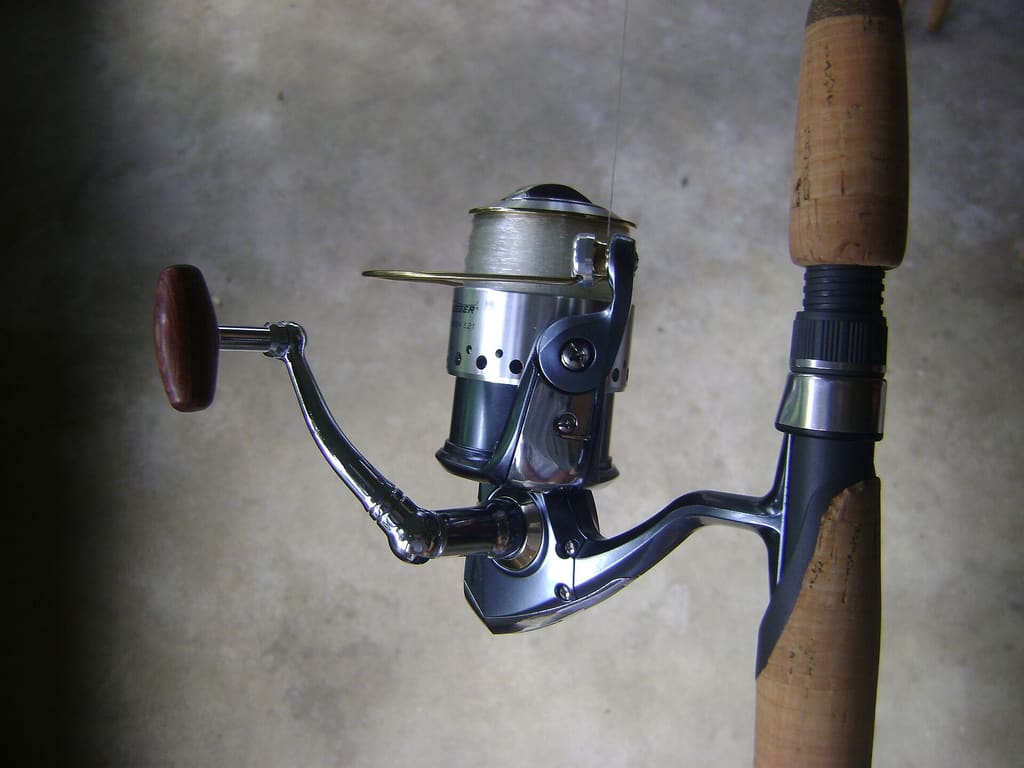
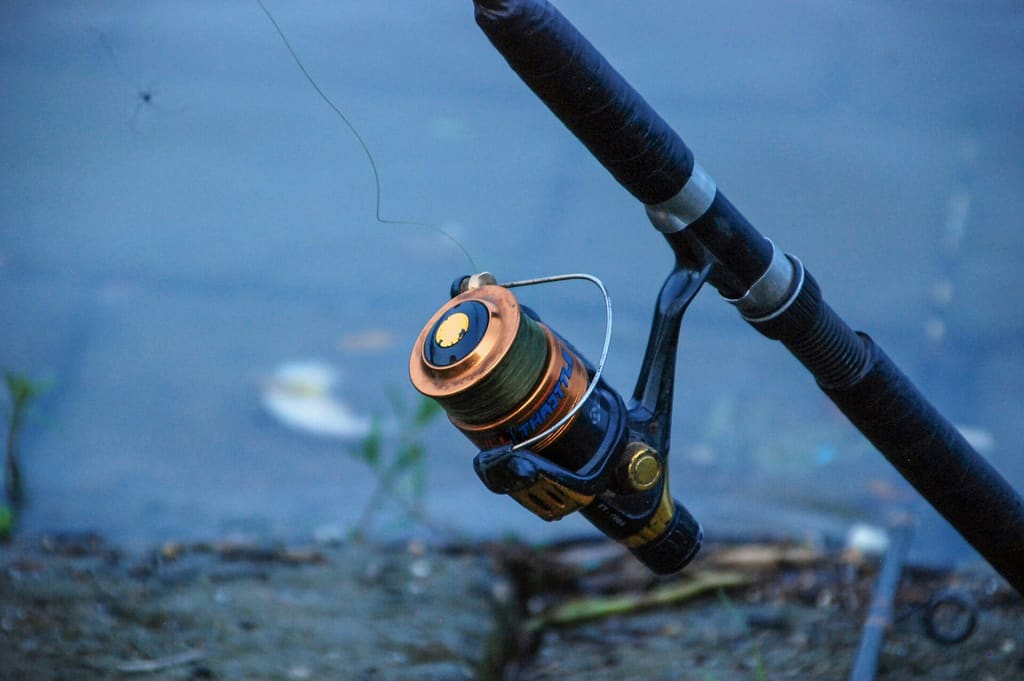
Here’s the mechanism. A spinning reel’s spool is fixed - it doesn’t rotate. Line is laid onto it by the bail roller circling the spool. Every single revolution of the rotor puts exactly one twist into the line. That’s inherent to the design, and normally it’s balanced out by the line untwisting as it peels off during a cast.
The problem comes at the moment you close the bail. If you crank the handle to snap it shut, the rotor spins forward before the line comes tight. Those rotations lay slack line onto the spool with twist that never gets balanced. Do it a hundred times in a day and it adds up fast.
The fix: close the bail by hand. Flip it shut with your finger, then start reeling. It takes half a second and it’s the single most effective anti-twist habit there is.
Cause 2: Reeling Against the Drag
When a fish is taking line and you keep cranking the handle, the spool isn’t gaining line - the drag is letting it out. But the rotor keeps spinning. Every rotation adds a twist to line that is going the wrong direction.
Thirty seconds of cranking against a running fish can put in more twist than an entire day of normal casting. It also does nothing useful, because you’re not gaining line.
The fix: when the drag is slipping, stop reeling. Hold the rod, keep pressure on, let the fish run. Reel when the drag stops. This is also better fish-fighting technique. Pump the rod - lift smoothly, then reel down as you lower it - to gain line, rather than grinding the handle. If you’re not sure your drag is set correctly to begin with, that’s worth fixing first; see our guide on choosing a fishing reel for what makes a drag good.
Cause 3: Lures That Rotate
Some presentations spin by design or by accident, and a rotating lure twists your line continuously for the whole retrieve.
The usual suspects:
- Inline spinners. The blade rotates around the shaft, and the drag of that rotation transmits down the line. These are the worst offenders by a wide margin.
- Spoons. Many wobble rather than spin, but a spoon retrieved too fast will helicopter.
- Improperly rigged soft plastics. A worm or swimbait threaded off-center rolls in the water.
- Live bait on a plain hook in current, particularly minnows and worms that rotate.
The fix: use a swivel, and rig it correctly. More on that below.
For soft plastics, the fix is rigging rather than hardware - make sure the bait sits perfectly straight on the hook. Hold it up and sight down its length. A visible curve means it will roll.
Cause 4: Spooling It On Wrong
Twist can be built in before you ever make a cast. New line comes on a filler spool wound in tight coils. How you transfer it to your reel determines whether that coil becomes twist.
For spinning reels, the filler spool must lie flat on the ground, label facing up, and the line must come off the top. Put a pencil through it and let it spin freely and you’ll induce a twist per revolution - the very thing you’re trying to avoid. Reel about twenty turns, then drop the rod tip and check whether the slack line coils up. If it does, flip the filler spool over and continue. One of the two orientations will be right.
For baitcasting and conventional reels, the opposite applies. The spool rotates on these reels, so the filler spool should also rotate - a pencil through the center works, or have someone hold it with light thumb pressure for tension.
Either way, maintain firm tension while spooling. Run the line between a folded cloth or through your fingers. Line wound on loose will bed into itself under load later, which causes its own problems.
Cause 5: Retrieving Line With No Load
Reeling in fast with nothing on the end - after a missed cast, or while walking between spots - lays line onto the spool with no tension. Slack line stacks unevenly and buries under later wraps. When it comes off, it comes off in bunches.
Slow down on empty retrieves, or pinch the line lightly against the rod blank with your finger as you reel.
How to Remove Twist That’s Already There
If your line is already corkscrewed, you can usually salvage it.
The drag method (moving water). The most effective approach. Cut off your lure and terminal tackle entirely. Let out sixty to a hundred feet of bare line into a current or behind a slowly moving boat. Let it trail for several minutes - the water pulls the line straight and lets the twist unwind out the free end. Reel it back slowly under firm tension. Repeat if needed.
The open-water method (still water). Same principle without current. Strip the line out across a field, a parking lot, or a long dock, keeping it free of snags. Walk back toward the reel and retrieve under tension. Less efficient than moving water but it works.
Removing a small amount. If only the last twenty or thirty feet is twisted - the usual case - just cut it off and retie. Faster than any de-twisting procedure and you were probably due for a fresh knot anyway. Our guide to the Palomar knot covers a reliable one.
When to give up. If the line is heavily twisted through most of its length, has been on the reel for a season or more, or shows any nicks and fuzz, respool. Old mono degrades from UV and takes a permanent set. Fresh line costs less than the fish you’ll lose.
Swivels: What Works and What Doesn’t
A swivel is the standard preventive tool, but only if you understand its limits.
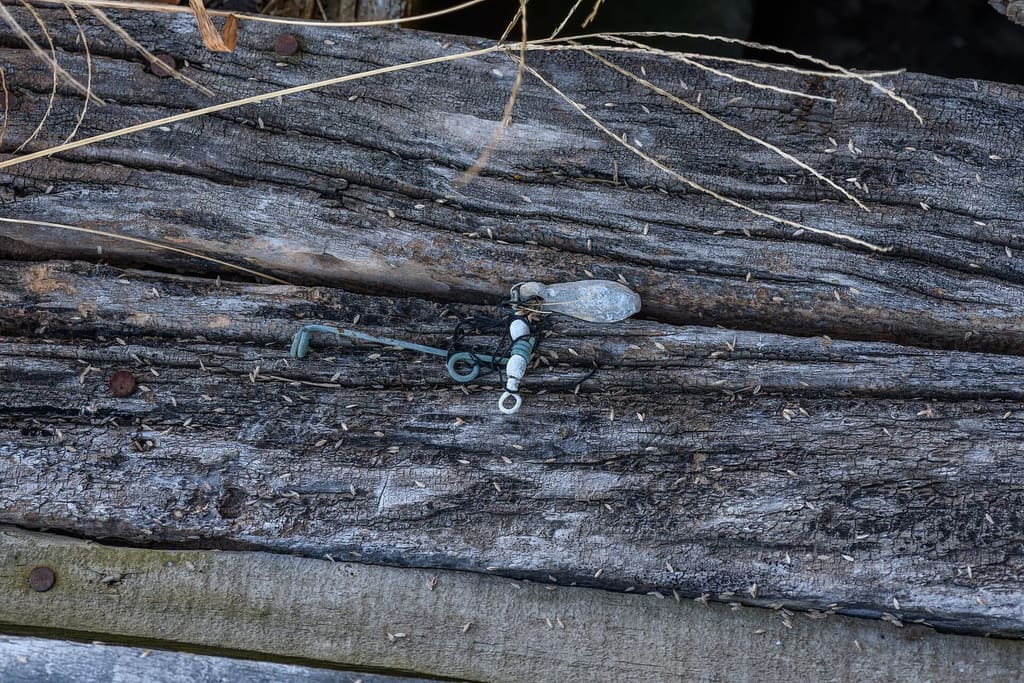
Barrel swivels are the basic type - two eyes joined by a rotating barrel. They work under light load and cost almost nothing. Under real pressure, friction inside the barrel increases and they can stop turning when you most need them to.
Ball bearing swivels use bearings instead of a plain bushing, so they keep rotating under load. They cost several times more and are worth it for inline spinners and any presentation that spins hard.
Snap swivels combine a swivel with a clip for quick lure changes. Convenient, but you’re adding hardware near the lure that can affect action on finesse presentations.
Placement matters more than type. A swivel tied directly to the lure is often too close to spin freely and can hurt the action. The common approach is to place it 12 to 24 inches up the line, with a leader between the swivel and the lure. That gives the swivel room to work and keeps the hardware away from the fish’s view.
A swivel doesn’t need to be on every rig. Crankbaits, jigs, Texas-rigged plastics, and most bottom presentations don’t rotate and don’t need one. Save swivels for the presentations that actually spin.
Common Questions
Does braided line get line twist?
Braid is far more resistant but not immune. Because it’s woven from multiple fibers with essentially no memory, it doesn’t hold a coil the way mono does, so the same amount of rotational input produces far less visible twist. What you’ll see instead on badly twisted braid is fuzzing, a rope-like texture where the weave has tightened or loosened, and occasional loops in slack line. The causes are identical - bail closure, reeling against drag, spinning lures - so the same habits apply. Adding a mono or fluoro leader reintroduces a twist-prone section, so a swivel at the connection is worth considering with spinning lures.
Why does my line twist so much more on a spinning reel than a baitcaster?
It’s the geometry of the two designs. A baitcaster’s spool rotates on the same axis the line travels, so line comes off and goes on without any rotation being imparted. A spinning reel’s spool is fixed and the line is wrapped around it by a rotor circling the spool, which means every handle turn adds one twist by design. That twist normally balances out as line uncoils during a cast, but any operation that spins the rotor without line moving - closing the bail with the handle, cranking against a slipping drag - puts in twist with nothing to cancel it.
Should I put a swivel on every rig to be safe?
No. A swivel is extra hardware in the water: it adds visibility, adds a potential failure point, adds weight at the wrong place, and can dampen the action of finesse baits. Use one when your presentation actually rotates - inline spinners above all, fast-retrieved spoons, and live bait drifting in current. For jigs, crankbaits, Texas rigs, topwaters, and most soft plastics, a swivel adds nothing and costs you a little. Diagnose the twist source first, then add hardware only where it solves a real problem.
Final Thoughts
Line twist isn’t bad luck, it’s accumulated habit. Close your bail by hand, stop reeling when the drag is slipping, put a ball bearing swivel ahead of anything that spins, and spool new line off a flat filler spool with real tension on it.
Those four habits cost nothing and take no extra time. Adopt them and the wind knots, the phantom lost lures, and the mysterious break-offs all get noticeably rarer.