Ask ten anglers how tight their drag should be and you’ll get ten answers, most of them some version of “tight enough to set the hook, loose enough that it doesn’t break.” That is not a setting - it’s a feeling, and feelings are why good fish get lost.
Drag is the only part of your tackle actively protecting your line from a fish that pulls harder than your gear can hold. Set it too loose and you can’t drive a hook home or turn a fish away from cover. Set it too tight and the first hard run snaps your line or pulls the hook clean out. Both failures happen in the same two seconds, which is why most anglers never learn which one got them.
The good news: there’s a real number behind it, and you can measure it in about three minutes with a tool you probably already own.
The Rule: 25 to 33 Percent of Line Breaking Strength
The widely used starting point is to set your drag to release line at roughly one quarter to one third of your line’s rated breaking strength.
On 20 pound line, that means the drag should start slipping somewhere between 5 and 7 pounds of pull. On 10 pound line, between 2.5 and 3.5 pounds. On 50 pound braid, between 12 and 17 pounds.
That sounds shockingly light to most people. It isn’t, and here’s why.
Drag is not the only force on your line. When a fish runs, the pull at the reel is only part of the story. Line drags through water, bends around rod guides, and passes over a loaded rod blank - all of which add resistance beyond your drag setting. A fish pulling against a 6 pound drag through a deep bend and forty yards of line is fighting considerably more than 6 pounds.
Your knot is the real limit. Line rated at 20 pounds does not break at 20 pounds once it’s tied. Even a well-tied knot typically retains somewhere in the 80 to 95 percent range of the line’s strength, and a sloppy one is much worse. Abrasion, sun damage, and nicks push it lower. Setting drag at a third of the rated strength builds in margin for all of that. Tying strong connections matters just as much as the drag setting - see our guide to essential fishing knots.
Sudden loads spike far above steady loads. A headshake or a fish turning at boatside can momentarily double the force on your line. A drag set near the breaking point has nowhere to go.
How to Actually Measure It
Almost nobody does this, and it’s the single highest-value five minutes you can spend on your tackle. The “pull it with your hand and see if it feels about right” method is wildly inconsistent - hand-tested drags are commonly off by double or half.
You need a scale. A digital fish scale works fine; so does a small luggage scale or a spring scale.
- Rig the rod as you’d fish it. Run line through every guide and tie your working knot to the scale hook. Measuring straight off the spool ignores guide friction and gives you a number you can’t use.
- Anchor the scale or have someone hold it. Attach the line.
- Raise the rod to a normal fighting angle - roughly 45 degrees, the way you’d actually hold it against a fish. Do not measure with the rod pointed straight at the scale.
- Pull back smoothly until the drag begins to slip.
- Read the value at the moment line starts moving, not the peak before it.
- Adjust and repeat until you land in your target range.
Once you know what your target drag feels like when you pull line off by hand, you can approximate it on the water. But calibrate against a scale first, at least once per reel, so your hand has something real to reference.
Star Drag vs Lever Drag
Two mechanisms dominate, and they suit different fishing.
Star drag is the star-shaped wheel between the handle and the reel body on baitcasters and conventional reels. Turning it toward the handle tightens. It’s simple, reliable, and cheap to build well. The drawback is that it has no repeatable scale - you can go tighter or looser, but you can’t return to an exact prior setting without a reference mark. Star drags are also easy to bump accidentally.
Lever drag uses a sliding lever that moves through defined positions, typically from free spool through a strike setting to a full setting. Because the lever travels a fixed arc, you can preset your strike position, run a fight there, and push to full only when you need it - then come back to strike precisely. That repeatability is why lever drags dominate offshore trolling and big-game fishing, where a mid-fight adjustment has to be exact.
For most freshwater and inshore fishing, a well-built star drag is entirely sufficient. Lever drag earns its cost when fish are large enough that mid-fight adjustments are routine and errors are expensive.
Front Drag vs Rear Drag on Spinning Reels
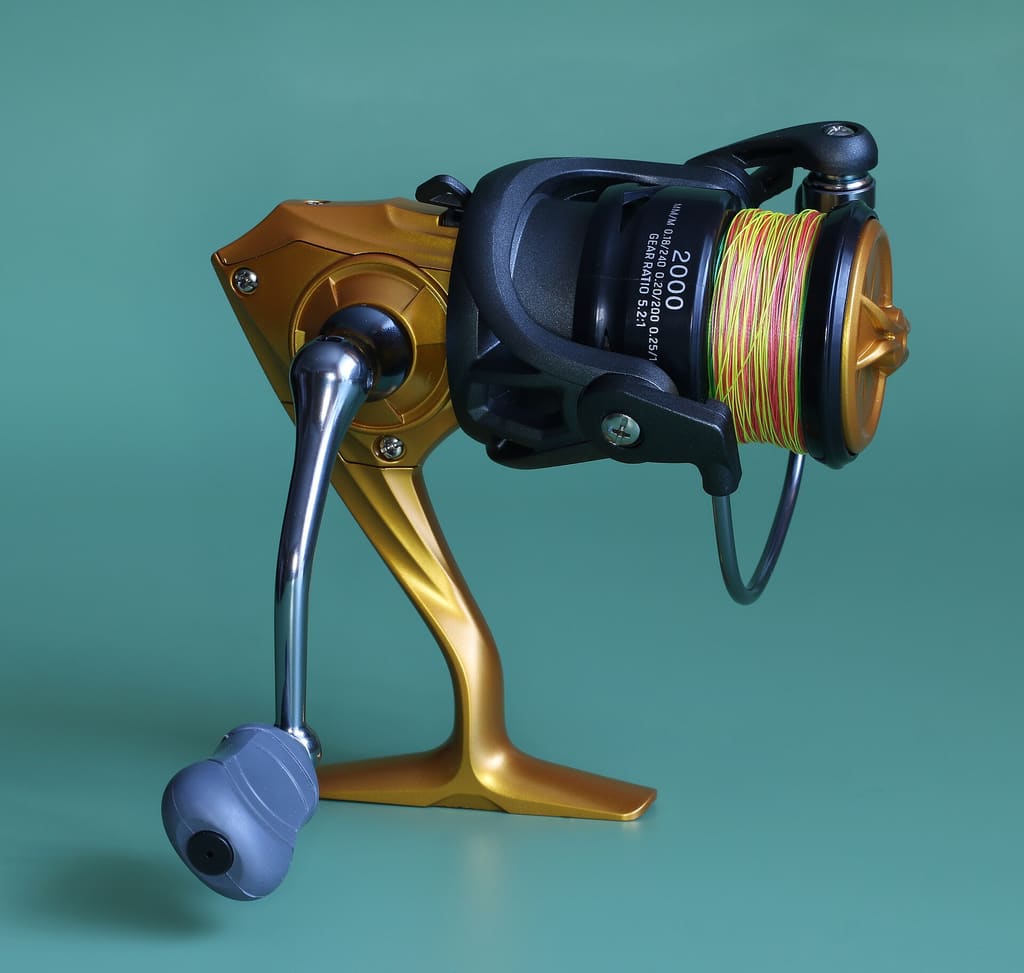
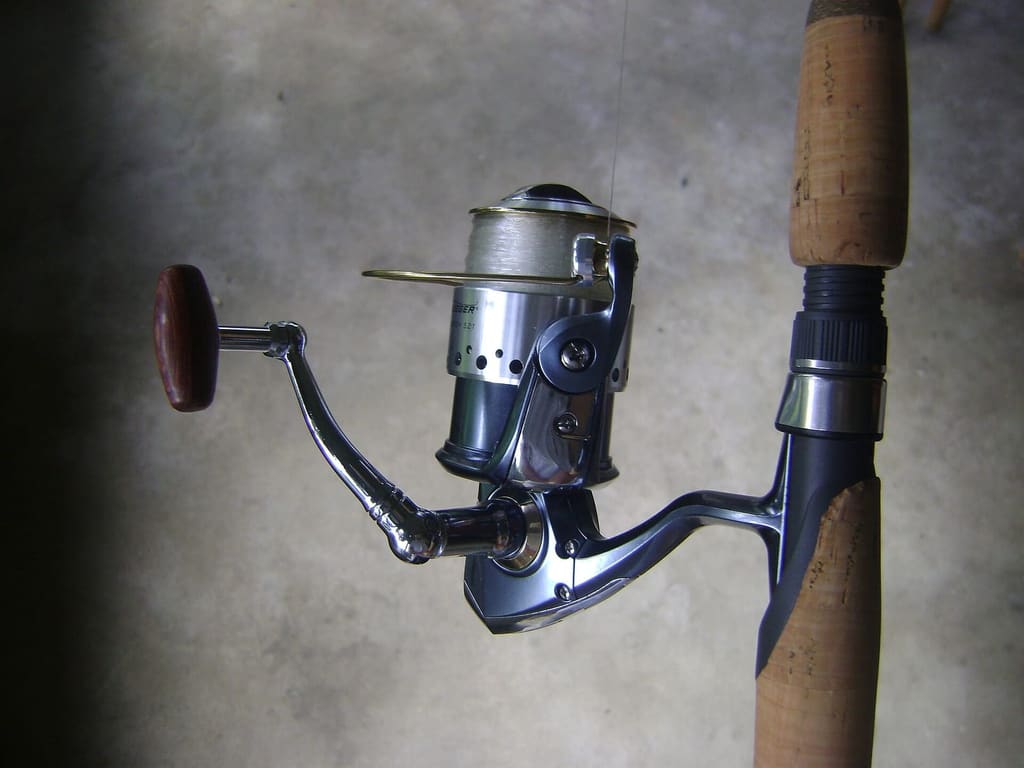
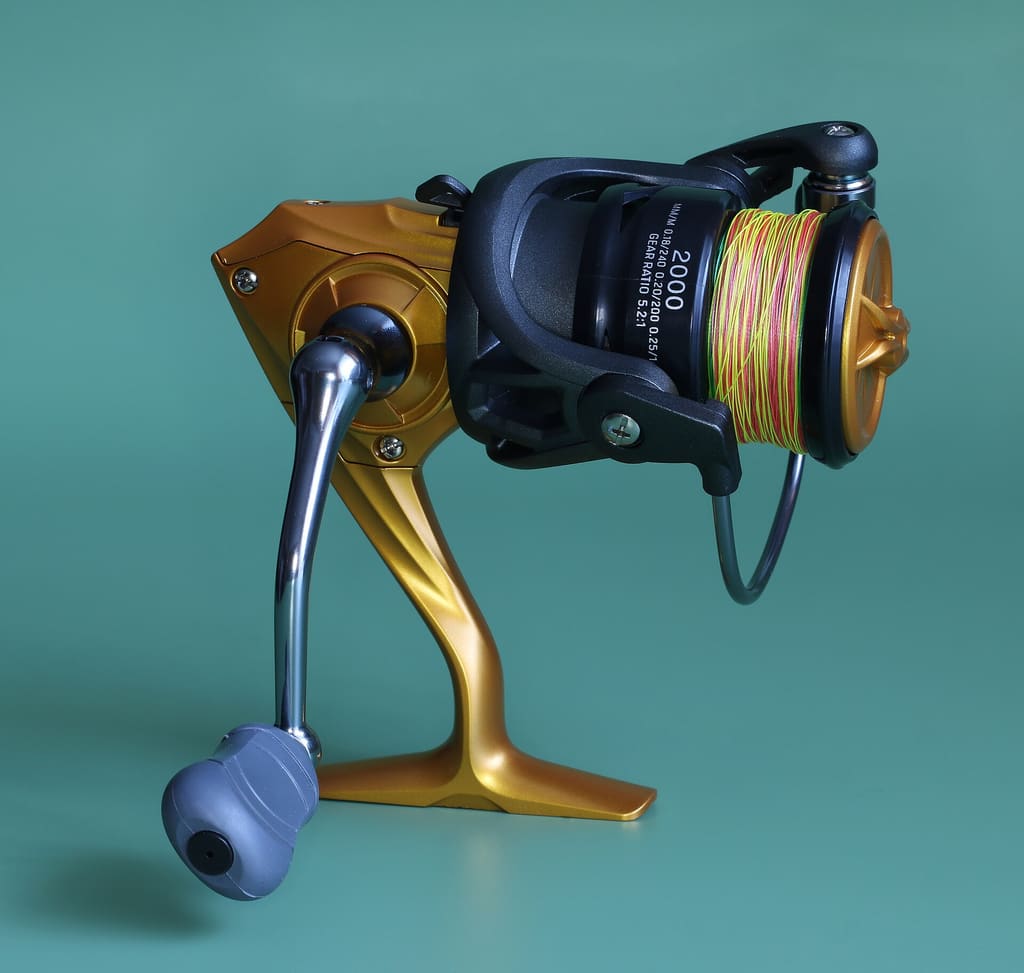
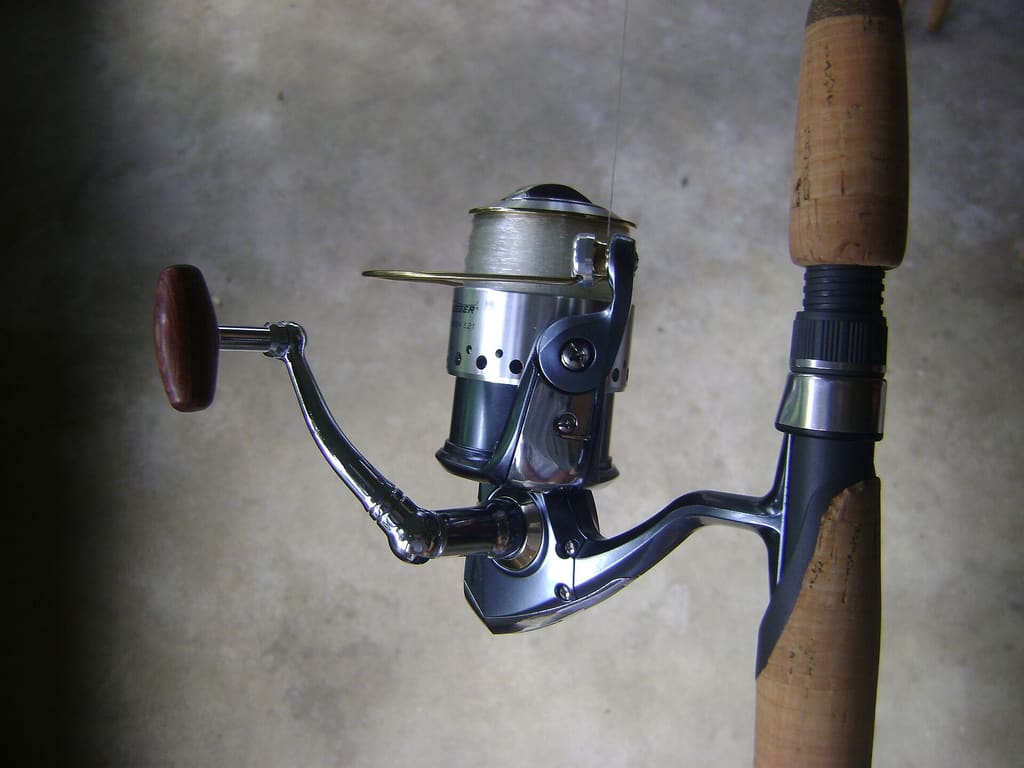
On spinning reels, the drag knob sits either on top of the spool (front drag) or at the back of the body (rear drag).
Front drag presses against a stack of larger washers seated directly in the spool. More surface area and better heat dissipation mean smoother, stronger, more durable performance. Nearly every serious spinning reel uses front drag.
Rear drag puts the adjustment where it’s easy to reach mid-fight, which is genuinely convenient. But the mechanism has to transmit force through the drivetrain to the spool, which usually means smaller washers and a less refined feel. Rear drag reels are fine for panfish and light freshwater work and are not what you want against a fish that makes long runs.
If you’re choosing a reel and drag quality matters, front drag is the default answer. Our guide to choosing a fishing reel covers what else to weigh.
Adjusting Drag During a Fight
Your pre-set drag is a starting point for the fight, not a fixed value for its duration.
Loosen when line leaves the spool. This is the adjustment almost nobody makes and it costs a lot of fish. As a fish takes line, your spool diameter shrinks. A smaller spool radius means the same drag washers apply more effective braking force at the line - the drag effectively tightens itself as the spool empties, sometimes substantially on a long run. If a fish is deep into your backing, back the drag off.
Tighten near the end. Once a fish is played out and close, a small increase helps you control the last few yards - especially steering it away from the motor, an anchor line, or dock pilings.
Ease off at boatside. The last moments are when most fish are lost. A short line has almost no stretch to absorb a surge, and a fish that sees the net often has one violent run left. Backing off a touch as you reach for the net saves fish.
Drag on Braid vs Monofilament
The line you’re using changes what a given drag setting actually does.
Monofilament stretches - meaningfully, often in the range of a quarter of its length under heavy load. That stretch is a shock absorber. It smooths out headshakes, forgives a drag set slightly too tight, and buys you time on a surge. With mono, the upper end of the 25 to 33 percent range is comfortable.
Braid has almost no stretch. Every jolt from the fish arrives at your knot and hook undiminished. That’s why braid gives such good sensitivity and hooksetting power, and it’s also why the same drag setting is far less forgiving. With braid, lean toward the lower end of the range, and treat your drag as the only shock absorber in the system - because it is.
Two practical consequences:
- Braid needs a smoother drag. A drag that stutters or grabs is tolerable with mono’s stretch masking it. On braid, a sticky drag transmits every jerk straight to the hook and pulls it free.
- Braid slips on a bare spool. Because it has no stretch and a slick surface, braid tied straight to an aluminum spool can spin the whole spool under drag pressure - your drag stops mattering entirely. Use a mono backing layer or tape the arbor. Our guide to braided line covers spooling in detail.
Many anglers run a mono or fluorocarbon leader with braid main line, which restores a small amount of stretch near the fish along with abrasion resistance.
Common Questions
How tight should my drag be for bass fishing?
For typical bass fishing on 12 to 17 pound line, that puts you around 3 to 6 pounds of drag pressure - measured, not guessed. The wrinkle is cover: if you’re flipping heavy vegetation or fishing tight to laydowns, a fish that runs is a fish you’ve lost, so many anglers fish a much tighter drag with heavy braid and simply stop the fish. In open water with treble-hooked crankbaits, go lighter than the rule suggests, because trebles tear out of soft mouths under sustained pressure.
Should I loosen my drag when I store my reel?
Yes, back it off to nearly free. Drag washers spend their life compressed between metal plates, and leaving them clamped for months takes a permanent set into the material. Compressed washers lose their ability to slip smoothly and produce the stuttering, grabby drag that costs fish. It’s a two-second habit at the end of a trip, and it meaningfully extends the life of the washer stack - especially on reels with felt or carbon fiber drags.
Why does my drag feel smooth at first and then start jerking?
That’s usually heat, wear, or contamination. During a long run, friction heats the washer stack, and hot washers behave differently from cold ones - a phenomenon anglers on big fish know well. If it’s happening on short fights, the washers are likely worn, dried out, or fouled with salt and grit. Strip the drag stack, clean it, and apply the grease your manufacturer specifies. Using the wrong lubricant, or over-greasing a carbon stack, causes the same symptom.
Final Thoughts
Set your drag to somewhere between a quarter and a third of your line’s rated strength, measure it once with a scale so your hands know what that feels like, and mark the setting on the reel. Loosen as a fish takes line, ease off at the net, and back it off entirely when the rod goes in the rack.
None of that is complicated. It’s just specific - which is exactly what “tight enough but not too tight” never was.