Pound for pound, the smallmouth bass is the meanest fighter in freshwater. Hook one in a current and it will run, jump, and shake its head like a fish twice its size. Anglers who chase them rarely go back to anything else, and the nickname “bronzeback” fits the fish perfectly: a bronze, copper, and olive battler that thrives in clean, cool water from rivers to deep natural lakes.
This profile covers what you actually need to catch them. We will walk through how to identify a smallmouth, where they live across the season, what they eat, and the lures and techniques that consistently produce. The smallmouth is more of a current-and-rock fish than its largemouth cousin, and once you understand that, the rest falls into place.
How to Identify a Smallmouth Bass
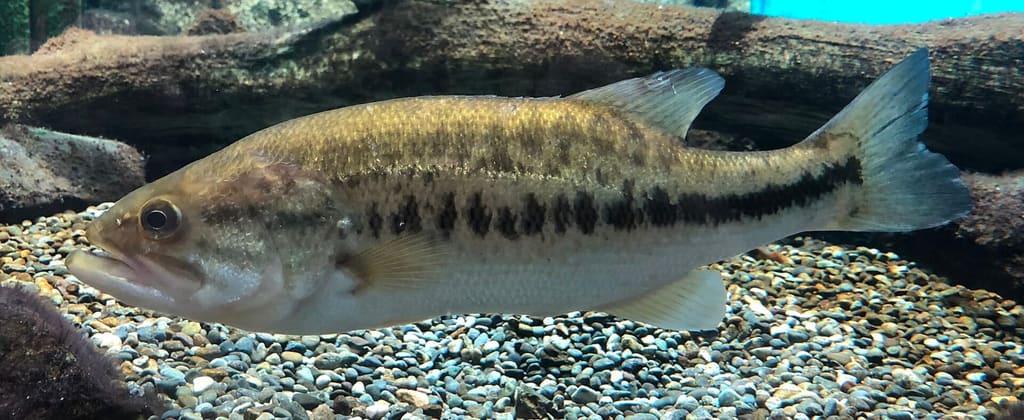
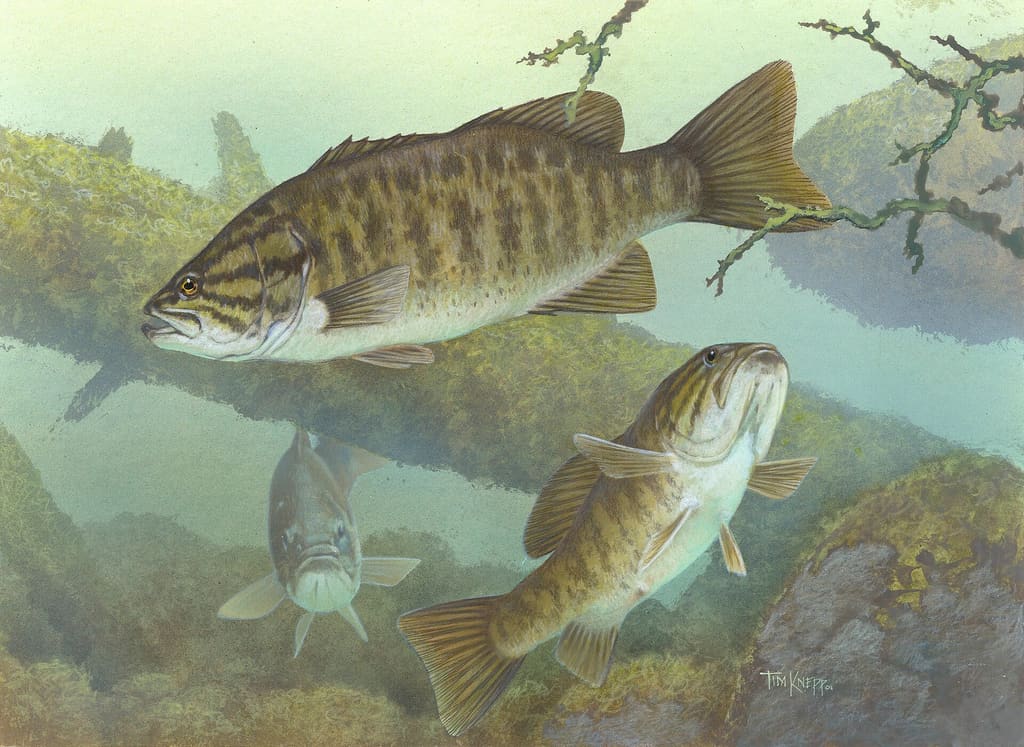
Smallmouth bass (Micropterus dolomieu) are easy to tell apart from largemouth once you know the marks.
- Color: Bronze, brown, or olive sides, often with dark vertical bars rather than the horizontal stripe of a largemouth. Color shifts with water clarity and habitat, so a river fish may look much darker or lighter than a lake fish.
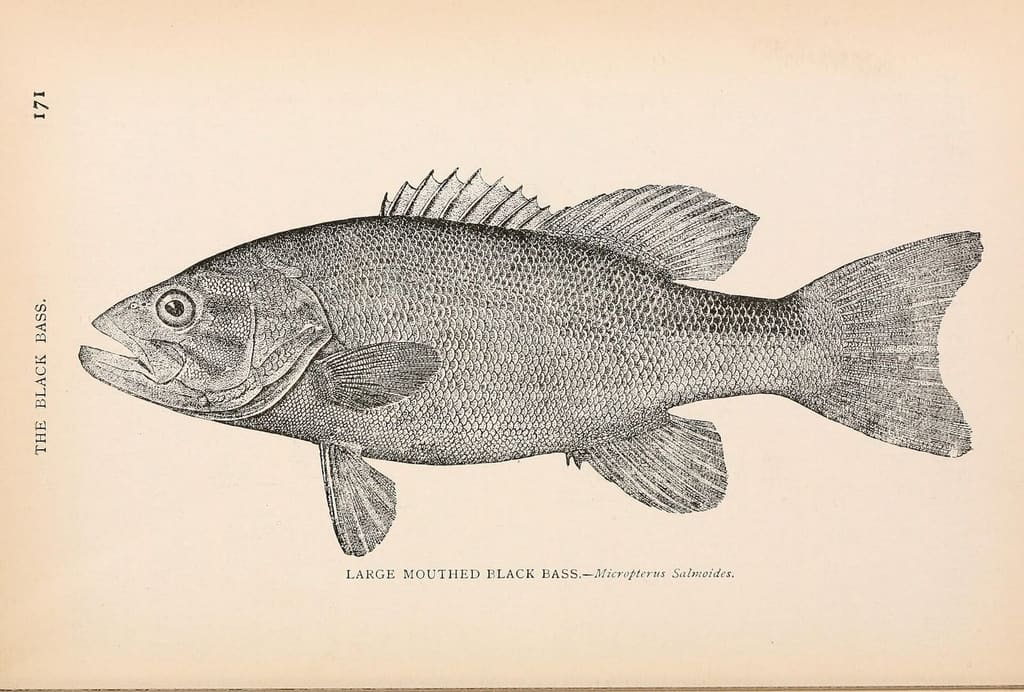
- Jaw: The upper jaw stops at or before the middle of the eye. On a largemouth, the jaw extends past the back of the eye. This is the single most reliable field mark.
- Eyes: Often red or red-tinted, which largemouth rarely show.
- Body: Slightly more streamlined and muscular through the tail, built for current.
Smallmouth also have a more connected dorsal fin and finer scale rows on the cheek, but the jaw and the vertical barring are all you need in the boat.
Range and Habitat
Smallmouth are native to the upper and middle Mississippi basin, the Great Lakes, and the St. Lawrence drainage, but stocking has spread them across most of the United States and parts of southern Canada. They now thrive far outside their original range wherever water stays cool and clean.
What they want is consistent everywhere:
- Clean, cool water. Smallmouth do not tolerate heavy silt and warm, stagnant water the way largemouth do.
- Hard bottom. Rock, gravel, rubble, and chunk rock hold smallmouth. They relate to bottom structure far more than to weeds.
- Current or open water. In rivers they sit behind current breaks; in lakes they roam main-lake points, humps, and rock flats.
In rivers, look for current seams, the slack water behind boulders, the heads and tails of pools, and gravel runs. In lakes and reservoirs, focus on rocky points, offshore humps, bluff walls, and transitions where gravel meets sand or rock meets mud.
What Smallmouth Bass Eat
Smallmouth are opportunistic predators, but their diet leans heavily on two things: crayfish and baitfish. Match those and you are most of the way there.
- Crayfish are the staple in most rocky systems. This is why brown, green-pumpkin, and orange-tinted baits work so well, and why a bait crawled on bottom often beats anything else.
- Baitfish such as shad, shiners, alewives, gobies, and small perch make up the rest. In the Great Lakes, round gobies have become a primary forage and have made bottom-dragging tubes and dropshots deadly.
- Insects and larvae matter for smaller fish and during heavy hatches, which is why fly anglers do well on smallmouth.
When in doubt, fish a crayfish imitation slowly on the bottom. It is the most consistent smallmouth pattern across the country.
Seasonal Behavior and Where They Hold
Smallmouth location is driven by water temperature and the spawn. Here is how the year breaks down for most fisheries.
Spring (pre-spawn and spawn)
As water climbs through the 50s into the low 60s Fahrenheit, smallmouth move from deeper winter haunts toward shallow gravel and rock. Pre-spawn fish stage on the first hard structure near spawning flats and feed aggressively. During the spawn, males guard nests in protected gravel pockets, often in two to ten feet of water. This is the easiest sight-fishing of the year.
Summer
After the spawn, fish recover shallow for a short time, then settle into summer patterns. In lakes they slide out to main-lake structure: humps, deep points, and rock piles in 15 to 30 feet. In rivers they hold in current breaks, deeper pools, and shaded banks. Early morning and evening produce the best topwater action.
Fall
Cooling water triggers an aggressive feed. Smallmouth chase baitfish and will roam, so cover water until you find them. This is one of the best times of year to catch big numbers and big fish on moving baits.
Winter
In cold water, smallmouth go deep and slow down dramatically. They stack on the deepest available structure and feed in short windows. Slow, subtle presentations are the rule.
Best Baits and Lures
A handful of lures will cover almost every smallmouth situation. Build your box around these.
- Tube jigs (3 to 4 inch): The classic smallmouth bait. Rigged on an internal jighead and dragged or hopped on rock, it mimics a crayfish or goby perfectly.
- Dropshot rigs: A finesse soft plastic on a light line for pressured or deep fish. Lethal on offshore structure and when fish are finicky.
- Ned rig: A small mushroom head with a stubby soft plastic. Simple, subtle, and one of the most consistent confidence baits for tough days.
- Jerkbaits: Suspending hard jerkbaits excel in cool, clear water, especially spring and fall.
- Crankbaits: Square-bills around shallow rock and medium-diving cranks on points cover water fast.
- Topwater: Walking baits, poppers, and prop baits draw explosive strikes in low light and over shallow rock.
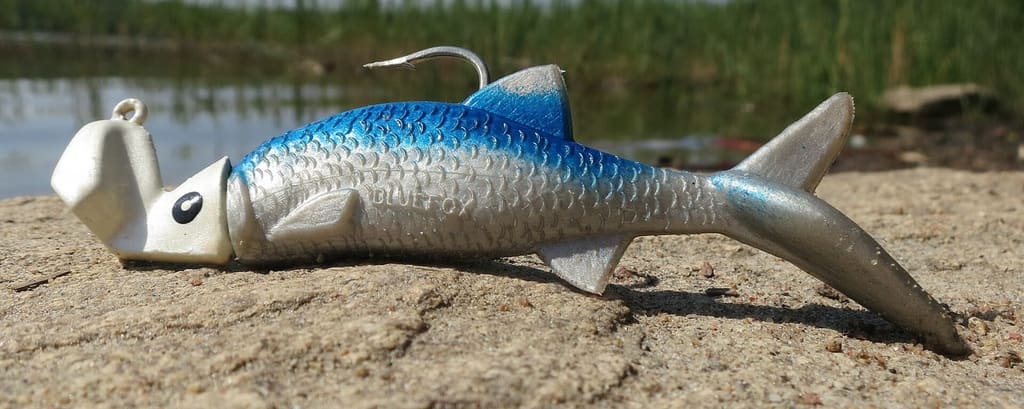
- Spinnerbaits and swimbaits: Great for covering water and targeting baitfish-feeding fish.
Color choice is simple. Use natural crayfish tones (brown, green-pumpkin, orange) over rock and baitfish patterns (silver, white, smelt, goby) when fish are chasing minnows.
Proven Techniques
Technique matters more than lure selection. These approaches catch smallmouth nearly everywhere.
- Drag the bottom. Crawl a tube or Ned rig slowly across rock and gravel, keeping contact with the bottom. Most strikes come on the pause or the slow drag, not on a fast retrieve.
- Fish the current seam. In rivers, cast upstream and let the bait drift naturally into the slack water behind rocks and current breaks. Smallmouth sit there waiting for food to wash to them.
- Use light line and fluorocarbon. Smallmouth live in clear water and have keen eyesight. Six to ten pound fluorocarbon improves bites dramatically on finesse presentations.
- Cover water in fall. When fish are roaming, keep the trolling motor down and fan-cast moving baits until you contact a school, then slow down and pick it apart.
- Sight-fish the spawn responsibly. Where it is legal, target visible bedding fish, but land and release them quickly to protect the nest.
Size and Records
A typical river or lake smallmouth runs one to three pounds, and a four-pounder is a genuine trophy in most waters. Fish over five pounds are the fish of a lifetime for many anglers, and only a handful of fisheries produce them with any regularity.
The all-tackle world record is a smallmouth of 11 pounds 15 ounces, caught in Dale Hollow Lake on the Tennessee-Kentucky border in 1955. That record has stood for decades and is widely considered one of the most untouchable marks in freshwater fishing. The largest smallmouth tend to come from deep, cool, fertile natural lakes and the Great Lakes system, where forage like gobies and alewives helps fish grow heavy.
Final Thoughts
The smallmouth bass rewards anglers who think about clean water, hard bottom, and current. Find the rock, match the crayfish and baitfish, slow down your presentation, and fish the seasonal pattern in front of you. Do that and you will not only catch more bronzebacks, you will hook into the hardest-fighting bass in freshwater. Respect the spawn, check your local rules, and release the big ones so the next angler gets the same thrill.