The muskellunge, or musky, is the apex predator of North American freshwater. Long, lean, and built like a torpedo with a mouthful of needles, it sits at the top of the food chain in the lakes and rivers it calls home. Anglers nickname it the fish of 10,000 casts for a reason: muskies are scarce relative to most gamefish, intelligent, and notorious for following a lure to the boat only to turn away at the last second. Hooking one is hard. Landing one is harder. Doing it repeatedly is the work of a lifetime.
That difficulty is exactly what draws people in. Musky fishing rewards patience, preparation, and attention to detail more than almost any other freshwater pursuit. This profile covers what you need to find, fool, and safely release one of these fish, from identification through seasonal patterns, lure selection, and proven techniques.
Identification
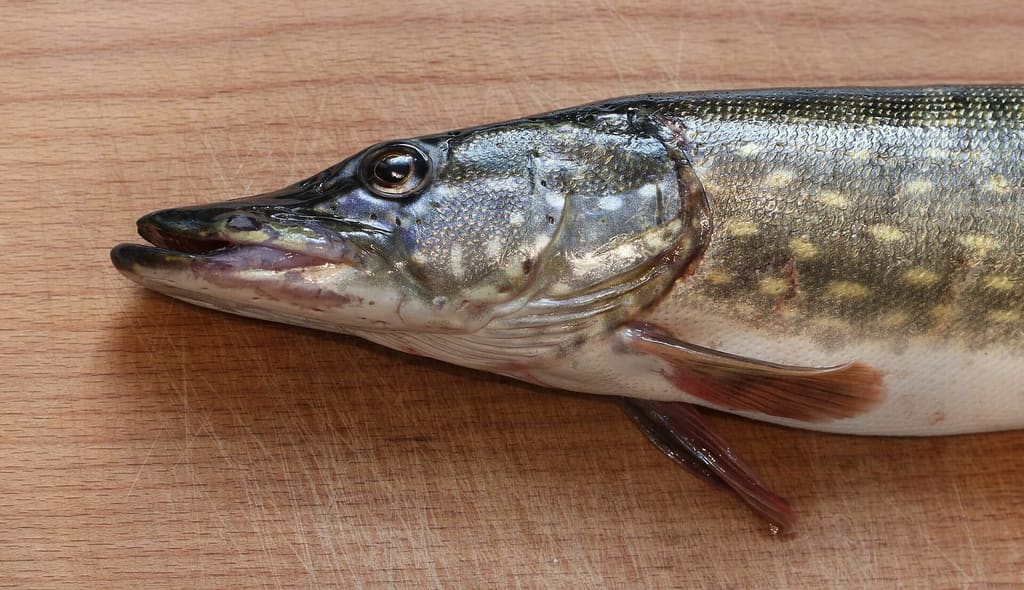
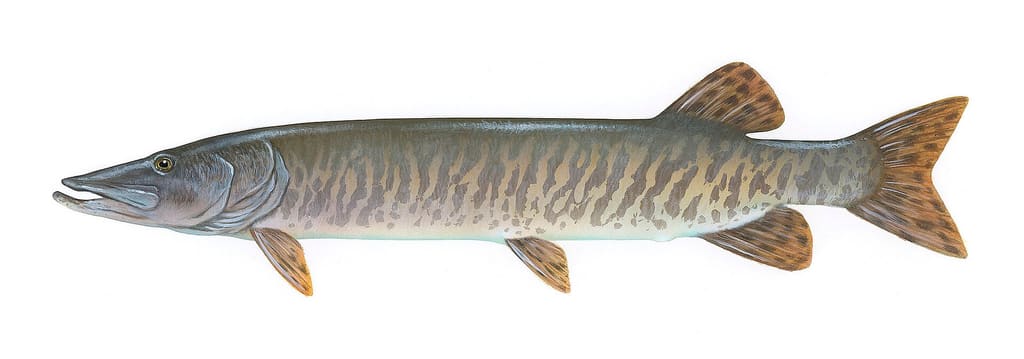
Muskellunge belong to the pike family and share the long body, duck-bill snout, and rear-set dorsal fin of their cousins. The reliable way to tell a musky from a northern pike is to look at markings and pores.
- Color and pattern: Muskies show dark markings on a lighter background, usually vertical bars or spots. Northern pike show the reverse, light bean-shaped spots on a darker body. Some muskies are nearly clear with no pattern at all.
- Cheek and gill cover: A musky has scales only on the upper half of the cheek and gill cover. A pike is fully scaled there.
- Tail: The musky tail is more sharply pointed than the rounded pike tail.
- Pores: Count the sensory pores under the lower jaw. Muskies typically have six or more per side; pike usually have five or fewer.
The tiger musky, a natural and hatchery hybrid of musky and pike, shows bold tiger-stripe barring and is a popular stocked fish in many waters.
Range and Habitat
Muskellunge are native to the Great Lakes basin, the Ohio and upper Mississippi river systems, and much of the northern United States and southern Canada. Strong fisheries exist across Wisconsin, Minnesota, Michigan, Ohio, New York, Pennsylvania, the Tennessee and Virginia highlands, and Ontario. Stocking programs have extended their range well beyond native waters.
They favor clear to lightly stained water with abundant prey and structure. Look for them near:
- Weed edges and large cabbage or coontail flats
- Rock bars, points, and humps
- Drop-offs where shallow flats fall into deeper water
- Wood, timber, and laydowns
- Current breaks and eddies in rivers
Big fish often relate to the deepest, most defined structure on a given body of water, especially in late season.
Diet and Forage
Muskies are ambush predators that eat large meals when they can get them. Their diet is dominated by whatever soft-rayed baitfish is most abundant locally, which is why lure choice should mimic the local forage base.
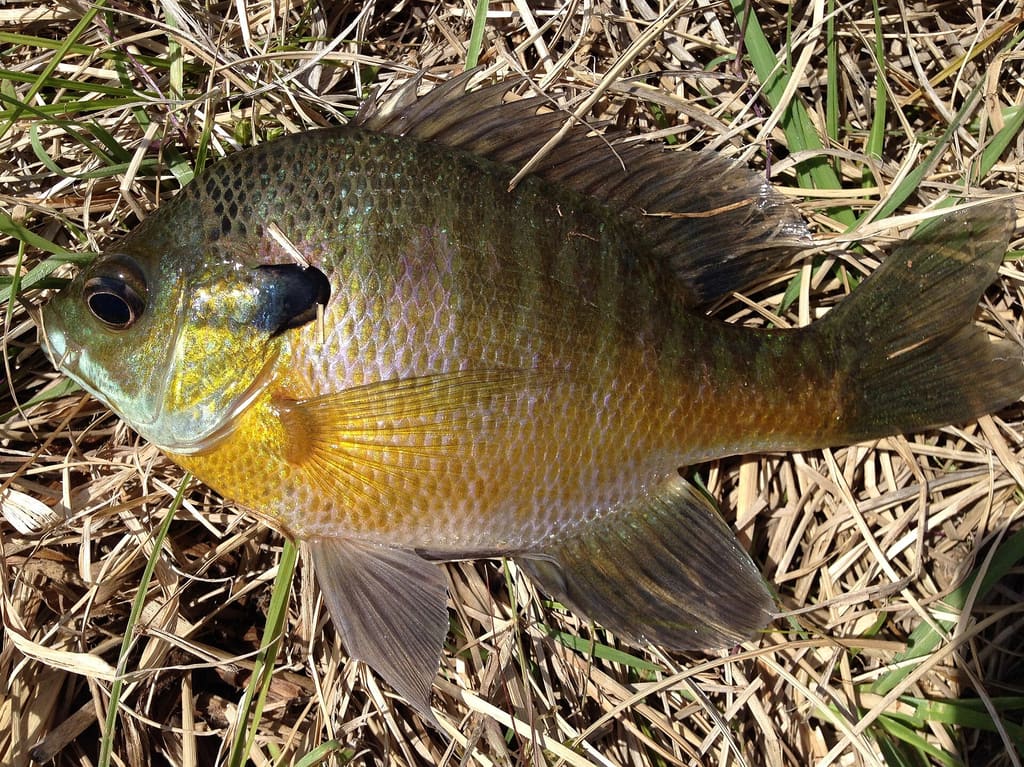
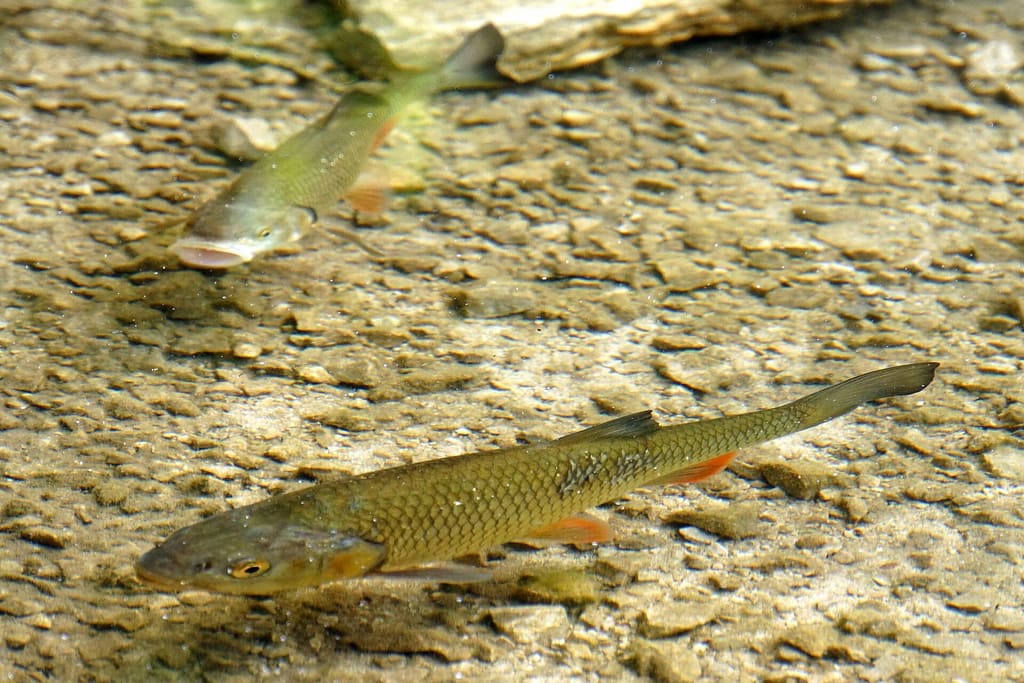
Common forage includes suckers, ciscoes and whitefish, yellow perch, walleye, panfish, and other muskies. They also take frogs, crayfish, ducklings, muskrats, and small mammals that fall into the water. A musky can attack prey a third to a half of its own length, which is why oversized lures consistently produce.
Seasonal Behavior and Where They Hold
Muskies move predictably through the year, and finding active fish is most of the battle.
Spring
After a spawn in shallow bays in early spring, fish are sluggish and stay shallow as water warms. Target the first weed growth, dark mud-bottom bays that warm fastest, and shallow wood. Smaller and mid-size lures worked slowly tend to outproduce huge baits this time of year.
Summer
Summer offers the most consistent action. Fish spread across weed edges, rock structure, and main-lake basins. Many of the biggest fish suspend over open water following pelagic baitfish like ciscoes, which is when trolling and long casting over deep water pay off. Early morning, late evening, and major and minor moon periods are prime windows.
Fall
Fall is trophy season. As water cools, big females feed heavily to build reserves for winter. Fish slide toward deep structure, sharp breaks, and large bait schools. This is the classic time for slow-rolled big rubber baits and live or artificial suckers fished near bottom.
Winter
Where legal and open, deep basins and steep structure hold fish. Ice fishing for musky is allowed only in some regions and is tightly regulated, so confirm the rules before targeting them through the ice.
Best Baits and Lures
A complete musky box covers several presentation depths and actions. Carry these categories:
- Bucktails and inline spinners: The backbone of musky casting. Fast, easy to cover water, and deadly in summer. Sizes 8 and up.
- Rubber baits: Large soft-plastic swimbaits and creature baits that can be slow-rolled, glided, or burned. Top fall producers.
- Glide baits: Jerkbaits that dart side to side. The erratic action triggers reaction strikes and can turn followers into biters.
- Crankbaits: Wide-wobbling deep divers for trolling and for fishing deep weed and rock edges.
- Topwater: Walking baits, prop baits, and tail-spinners for low light and warm water. Few things rival a surface blowup.
- Live or sucker rigs: Large suckers under a quick-strike rig are a proven cold-water tactic when fish go negative.
Natural baitfish colors are reliable in clear water, while chartreuse, orange, and black silhouettes earn their keep in stained water and low light.
Proven Techniques
Musky fishing is a discipline. These habits separate anglers who catch fish from those who just cast.
- Throw the figure-eight on every cast. Muskies follow lures to the boat constantly. As your lure nears the rod tip, plunge it into the water and sweep a wide, deep figure-eight with speed and direction changes. A large share of muskies are caught in those final seconds.
- Cover water, then slow down. Use fast-moving baits to locate active fish, then work an area thoroughly with slower presentations once you find activity.
- Fish moon and light windows. Dawn, dusk, and major and minor moon periods concentrate feeding activity. Plan effort around them.
- Troll open water in summer and fall. Long-line trolling with deep crankbaits and large rubber covers suspended fish that casting cannot reach.
- Sharpen and check hooks. Musky jaws are bony. Dull factory hooks cost fish. Replace and sharpen often.
- Use the right gear. A heavy-power rod, a strong reel, 80 to 100 pound braid, and a fluorocarbon or wire leader are standard. The leader is non-negotiable; those teeth slice through line instantly.
Handling, Size, and Records
Muskies are a low-density, slow-growing trophy species, and the fishery depends on careful catch and release. A fish over 50 inches is the mark of a true giant and the goal of most serious musky anglers. Most adult fish run in the high 30-inch to mid-40-inch range, with weight varying widely by water and season.
Keep fish in the water, support the body horizontally, minimize air exposure, and revive the fish fully before release. Use a large net as a holding pen while you ready your tools and camera.
The world-record muskellunge is a long-debated subject, with the most commonly cited fish weighing around 67 to 70 pounds and caught in the mid-twentieth century. Because several historical claims remain disputed, treat any single number as approximate and focus on your own personal-best goals rather than chasing record figures.
Final Thoughts
Muskellunge fishing is a long game. You will make thousands of casts, work the figure-eight until your shoulders ache, and watch fish follow and vanish more often than they bite. But the payoff is real: a single 40-plus-inch musky boatside makes every blank trip worth it. Learn your water, match the forage, fish the prime windows, and handle every fish with care so the next angler gets a shot too. Do that consistently, and the fish of 10,000 casts becomes a fish you can find on purpose.