A spinning reel is the easiest casting tool in fishing, which is exactly why almost everyone starts there. The line comes off a fixed spool, so there is no spool to overrun and no bird’s nest waiting to punish a bad release. But easy to use is not the same as easy to use well. Plenty of anglers who have owned a spinning rod for years still slap the water, fight the wind, and wonder why the person next to them puts a lure under a dock they cannot reach.
The difference is almost never strength. It is timing, finger position, and rod loading. Once you understand what the rod is actually doing during a cast, distance and accuracy arrive together, and casting stops being something you think about at all.
This guide covers the grip, the three casts that handle nearly every situation on the water, the faults that cost you fish, and a practice routine you can run on a lawn in twenty minutes.
Grip and Finger Position
Everything starts with how you hold the rod, and most beginners hold it wrong in a way that quietly caps their casting forever.
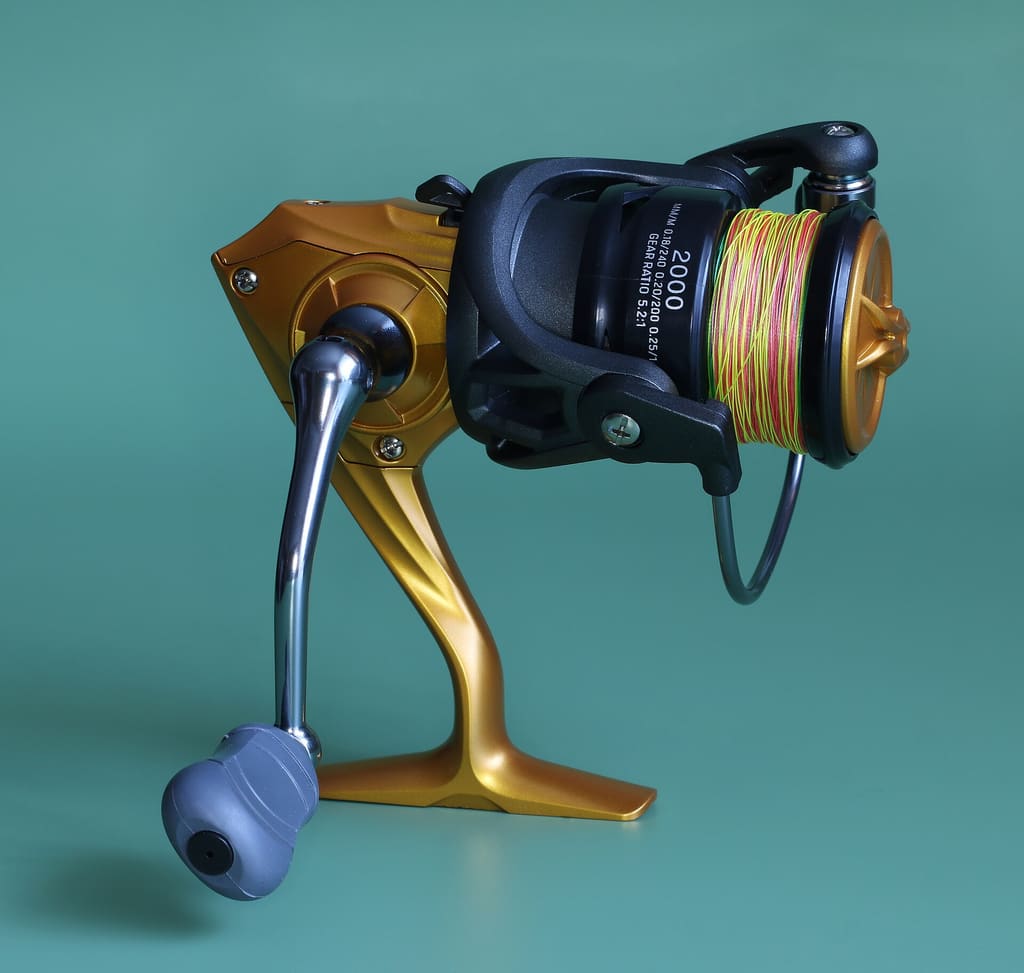
Straddle the reel stem with your fingers: two fingers ahead of the stem, two behind it, with the reel hanging below the rod. Your thumb runs along the top of the rod handle, pointing at your target. This grip puts the rod’s axis in line with your forearm, which is what lets you cast with a flick of the wrist instead of a heave of the shoulder.
Now the important part. Reach forward with your index finger and pick up the line where it comes off the spool, pulling it back against the underside of the rod blank or the reel body. The line rests on the pad of your finger, not hooked in the crease of the joint. You want to be able to straighten that finger and let the line go instantly and cleanly.
Before you open the bail, reel the lure up so it hangs six to twelve inches below the rod tip. That hanging distance is your load. Too short and the rod never flexes; too long and the lure swings unpredictably.
Now flip the bail arm open with your other hand. The lure is held only by your index finger. You are ready to cast.
The Overhead Cast
This is your default. It gives the most distance, the most control, and it works from a bank, a boat, or a pier as long as you have room behind you.
- Face your target with your feet roughly shoulder width apart, rod hand forward. Point the rod tip at the spot you want to hit.
- Load the rod. Bring the rod smoothly back over your casting shoulder until the tip is at about the 1 o’clock position, or just past vertical. Do not stop dead — let the weight of the lure keep flexing the tip backward for a fraction of a second. That flex is stored energy.
- Sweep forward. Drive the rod forward with your forearm and wrist, accelerating rather than yanking. Think of it as pushing the rod tip toward the target, not chopping down at the water.
- Release. When the rod reaches roughly 11 o’clock — still well above horizontal — straighten your index finger and let the line go.
- Follow through and feather. Lower the rod tip to track the lure. As the lure approaches your target, lightly touch the edge of the spool with your index finger. This is called feathering, and it kills excess line so the lure lands softly and exactly where you aimed.
- Close the bail by hand. Flip it over with your free hand rather than cranking the handle.
The single most common correction: release earlier than feels right. A late release drives the lure down into the water twenty feet in front of you. If your casts are landing short and hard, move your release point higher.
The Sidearm Cast
Sidearm is the cast for low ceilings: overhanging willows, bridge undersides, boat docks with a low roof, or anywhere a vertical backcast would hang up in a tree.
The motion is the same as overhead, rotated ninety degrees. Keep the rod roughly parallel to the water, sweep it back to the side, and bring it through in a flat horizontal arc. The release point is when the rod passes in front of your body and points at the target.
Sidearm gives a flat, low trajectory that skims under obstructions and cuts through wind better than a high looping overhead cast. The trade-off is that your hook is traveling at head height in a horizontal plane, so it demands real awareness of who and what is beside you. In a boat with a partner, sidearm casts get called out before they get thrown.
The Underhand Pitch
Pitching is the short-range accuracy cast. It puts a lure under a dock, into a pocket in the weeds, or against a laydown at ten to thirty feet, and it does it quietly.
- Let out enough line that the lure hangs level with the reel, and hold the lure lightly in your free hand.
- Point the rod tip low, at or just below the target.
- Drop the rod tip slightly to load, then lift it in a smooth upward motion while releasing the lure from your hand.
- Let the line go off your index finger as the lure swings forward and out.
- Feather the spool hard as the lure reaches the target so it enters the water with almost no splash.
The lure travels on a low, flat path just above the surface, which is what lets it slide into places a lobbed cast could never reach. Do not grab a treble-hooked lure to pitch it — hold the line just above it instead. Pitching is most natural with a single-hook bait like a jig or a Texas-rigged soft plastic.
Common Faults and How to Fix Them
The lure slaps the water hard and short. You are releasing too late and casting downward. Raise your release point and finish with the rod tip high, then lower it.
No distance even with a hard swing. You are not loading the rod. Muscle does not cast — the flexing blank does. Slow the whole motion down, let the tip bend back before you come forward, and check that your lure is heavy enough for the rod’s rating. A quarter-ounce lure on a heavy rod will never cast well.
Wind knots. These are not really caused by wind. They form when slack line comes off the spool in loops and catches on itself, usually because you closed the bail with the handle, because you started reeling before the lure landed, or because the spool is overfilled. Fill the spool to about an eighth of an inch below the rim, close the bail by hand, and keep light tension on the line as you reel. If line is twisting badly, let out fifty feet behind a moving boat or in current with no lure attached and let it untwist.
Line jumping off the spool in coils. The spool is overfilled, or the line has too much memory. Monofilament that has sat on a spool for years develops permanent coils. New line fixes it.
Accuracy is fine at short range, terrible long. Normal. Distance amplifies small errors in release timing. Work on hitting a target at twenty feet before you chase sixty.
Practice on Grass
Twenty minutes on a lawn will do more for your casting than a whole season of fishing, because you get feedback on every cast without weeds, snags, or fish distracting you.
Cut the hooks off an old lure or tie on a rubber casting plug — never practice with hooks. Set out three targets at different distances: a bucket at fifteen feet, a hula hoop at thirty, a towel at fifty. Make ten casts at each with the overhead cast, then ten sidearm, then work the pitch into the closest bucket.
Score yourself honestly. The goal is not to reach the far target, it is to land inside the near one repeatedly. Accuracy is worth far more than distance in real fishing, because fish sit next to cover, and cover is what you have to hit.
If you are still assembling your kit, make sure the rod and line are matched to what you are throwing — see choosing a fishing rod and how to set up a fishing rod before you spend an afternoon fighting equipment instead of learning technique.
Common Questions
Why does my line keep tangling on a spinning reel?
Almost always slack, not wind. Spinning reels lay line onto a fixed spool in coils, and any slack line that comes off in a loose loop will grab a neighbouring coil and knot. The three fixes that solve most cases: fill the spool no higher than an eighth inch below the rim, close the bail with your hand rather than the reel handle, and keep light tension on the line the whole time you retrieve. Old monofilament with heavy memory makes all of this worse, so if the line looks like a spring when you strip it off, replace it.
How far should I be able to cast a spinning rod?
With a typical 6 to 7 foot medium spinning combo and a quarter to three-eighths ounce lure, seventy to a hundred feet is a normal working cast, and experienced anglers reach further with lighter line and longer rods. But distance is the wrong thing to chase early. Most freshwater fish are caught within forty feet of the angler, tight to cover, so a cast you can place inside a two-foot circle at thirty feet catches far more than a wild ninety-foot heave. Build accuracy first and distance follows on its own as your rod loading improves.
Do I need a heavier lure to cast farther?
Up to a point, yes — a rod only loads if there is enough weight to flex it, so a lure at the light end of your rod’s rating will always cast poorly. Check the rating printed just above the handle and stay in the middle of that range. Beyond that, going heavier stops helping and starts costing you: an overweight lure overloads the blank, kills accuracy, and risks breaking the tip. Match the lure to the rod rather than upsizing to compensate for technique.
Final Thoughts
Casting a spinning rod well comes down to a short list: straddle grip with the line on your index finger pad, bail open only after the line is trapped, a smooth loading stroke, an early release, and a feathered landing. Nothing on that list requires strength or expensive gear.
Spend one session on a lawn with a hookless plug and three targets. You will feel the rod start doing the work instead of your arm, and that is the moment casting turns from a chore into the part of fishing you barely notice. From there, get on the water and start putting baits where fish actually live — bank fishing from shore is a good place to test whether your new accuracy holds up.