Most water in a lake is empty. That is the single most useful thing a new angler can internalise: fish are not spread evenly, they are concentrated, and the places they concentrate are predictable. Docks are the most obvious of those places, and on a lot of lakes they hold a disproportionate share of the catchable fish.
They are also the most under-fished obvious spot, because fishing them properly requires putting a lure somewhere awkward. Anglers who cast alongside a dock catch occasional fish. Anglers who get a bait four feet back under the walkway, into the dark, catch the ones that live there.
Before going further, a distinction worth having straight, because the two words get used interchangeably and they are not the same thing. Structure is the shape of the bottom — points, humps, ledges, channel bends, drop-offs. Cover is objects fish hide in and around — docks, laydowns, weed beds, rock, brush. Structure is where fish live at a given season and depth; cover is what they position against once they get there. The best spots are both at once, and that principle drives everything below.
Why Docks Hold Fish
A dock stacks several advantages in one small footprint.
Shade and overhead cover. Fish have no eyelids and cannot dilate away bright light. On a sunny day, shade is genuinely more comfortable, and more importantly it gives an ambush predator a visual advantage — a bass sitting in the dark sees prey silhouetted against bright water and is nearly invisible until it moves. This is why shade lines get sharper and more productive as the sun climbs.
Vertical structure. Pilings, posts and floats give fish something to relate to. Baitfish school around vertical objects, and predators use them as ambush corners. A piling is a place a bass can pin a shad against.
Food. Algae grows on posts and floats. Invertebrates graze the algae. Small baitfish graze the invertebrates. Bluegill and other panfish eat the baitfish, and bass eat the bluegill. A dock is a working food chain in a twenty-foot square, and it runs whether or not the dock owner ever fishes.
Depth transition. Most docks are built out from shore into deeper water, which means they naturally cross a depth change. A fish can move from shallow feeding water to deeper resting water without ever leaving cover.
Additional cover. Many dock owners sink brush piles, Christmas trees, or old structure under and around their docks specifically to attract fish. These are often invisible from the surface and are the difference between a good dock and a great one.
Which Docks Are Actually Best
Given a lake with two hundred docks and an afternoon, you need a filter. Not all docks are equal, and the differences are consistent enough to be worth learning.
Deep water access wins. The single best predictor of a productive dock is proximity to deeper water. A dock on a flat with three feet of water for a hundred yards in every direction may hold fish for a few weeks in spring and then go dead. A dock built out over a channel swing, a point, or a fast-dropping bank holds fish year-round, because the fish can adjust depth without relocating. Look for docks where the outer posts sit in noticeably deeper water than the inner ones.
Older wooden docks over newer floating ones. Old wood has been in the water long enough to grow algae and host invertebrates, and its permanent pilings hold cover from top to bottom of the water column. Modern floating docks on plastic barrels have minimal below-surface structure — they cast good shade but offer nothing to hold to at depth. Given the choice, fish the old, weathered, slightly disreputable dock.
Docks with added brush. If you can see brush, or your electronics show it, that dock jumps to the top of the list. Brush concentrates fish tighter than the dock itself does.
Docks with boat lifts, ladders and multiple levels. More metal and wood in the water means more edges, more shade, more ambush points.
Position on the lake. Docks near the mouths of creeks, on main-lake points, or on a channel swing intercept fish moving between spawning and summer areas. A dock tucked at the very back of a shallow, silty pocket is a spring spot and little else.
Skipping: Getting Under the Dock
The fish that matter are usually in the deepest shade, which means back under the walkway where a normal cast cannot go. Skipping is how you get there — throwing a bait low and flat so it bounces off the water’s surface like a flat stone and slides into the dark.
The mechanics:
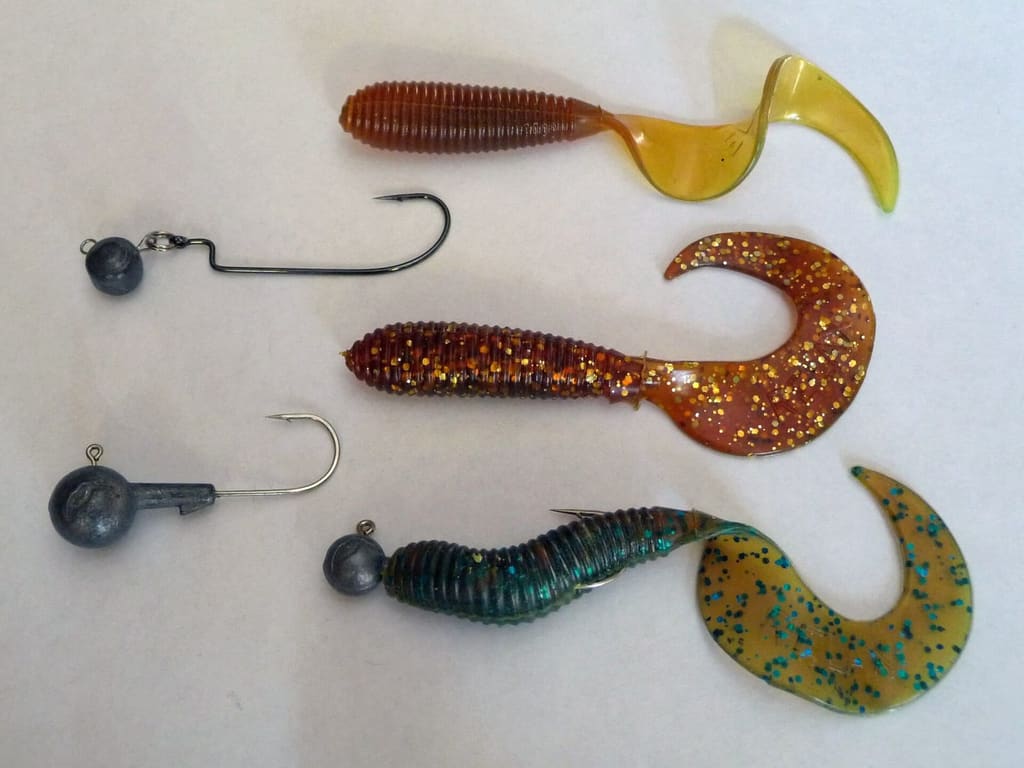
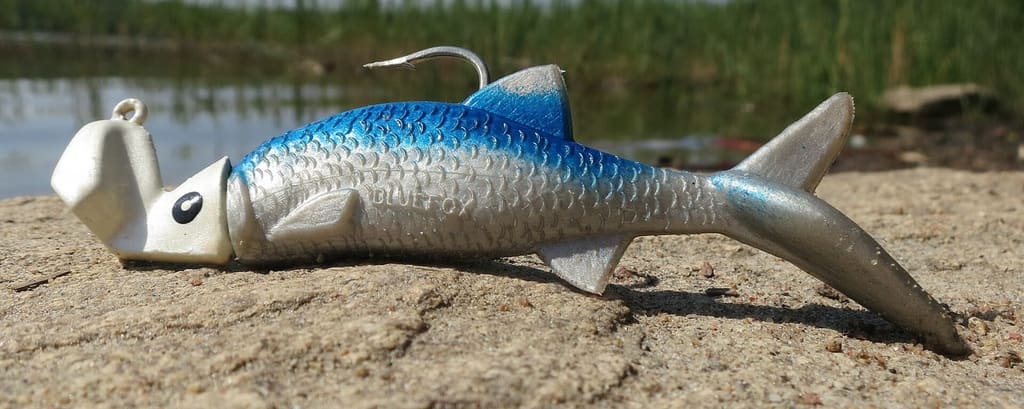
- Use a bait that skips. Flat, compact, weedless baits work: a wacky-rigged or Texas-rigged soft stickbait, a skirted jig with a flat-bottomed head, a soft plastic swimbait, or a tube. Treble-hooked crankbaits do not skip and will hang up on the first post.
- Get the rod low. Rod tip near the water, roughly parallel to it. A high rod sends the bait up, not along.
- Cast sidearm and flat, aiming at the water surface a few feet short of the dock’s edge rather than at the gap itself.
- Accelerate on release. A skip needs speed to bounce. A gentle lob just plops.
- Feather the spool as the bait travels so line does not overrun once the bait decelerates under the dock.
Learn it on open water first. Pick a spot with no dock, low a rod tip, and just work on making the bait skip three or four times. When you can do that reliably, aim at real targets.
A short lesson that saves frustration: skipping puts your bait in the worst place to set a hook and the worst place to fight a fish. Use line heavier than you think you need — braid or heavy fluorocarbon — because a hooked fish will run straight for a piling.
Approach and Positioning
Where you put yourself matters as much as where you put your bait, and most anglers get too close too fast.
Fish the outside first. The outer posts, the corners, and the shade line on the outside edge often hold the most active fish. Fish them from a distance before you move in and spook them by working the interior. Working from the outside in is the general rule for any piece of cover.
Approach quietly. Trolling motor on low and steady rather than in bursts. Sudden thrust changes push a pressure wave. Do not bang tackle boxes, drop lids, or drag anchors. In shallow, clear water, fish notice.
Cast past the target, not at it. Land the bait beyond the piling and bring it through, so the fish sees the bait before it sees the splash.
Angle the boat to open the gap. A dock’s under-space is only reachable from certain angles. Rather than sitting perpendicular to the dock, position at a shallow angle to the walkway so your skip has a clear runway down the length of the shade rather than into a post.
Sun angle. Position so you are not casting a shadow across the water you are about to fish, and so you can see into the shade rather than into glare. Polarized sunglasses are genuinely equipment here, not an accessory.
From the bank, the same principles hold with more constraint — approach low, stay off the skyline, and work the far edges before you stand over the near ones. Bank fishing from shore covers making the most of limited angles.
Lure Selection
Match the lure to how the fish are behaving, not to the dock itself.
Active, feeding fish on the outside edges: a squarebill crankbait bumped off the outer pilings, a spinnerbait run parallel to the shade line, a swim jig, or a topwater walking bait early and late. These cover water fast and let you check many docks quickly. On calm mornings topwater fishing around dock edges can be spectacular.
Fish tucked into shade and less willing: slow down and go in after them. A wacky-rigged stickbait falling on slack line, a Texas-rigged creature bait, a compact skirted jig with a craw trailer, or a drop shot for suspended fish around pilings.
Deep pilings and brush: a jig or Texas rig fished vertically down the posts, a drop shot, or a football jig dragged along the bottom edge where the dock meets deeper water.
The most reliable single answer for docks is a soft plastic stickbait rigged wacky or weightless. It skips beautifully, falls with a subtle horizontal shimmy that pressured fish tolerate, and it is close to weedless.
Colour matters less than most tackle marketing suggests. Natural greens and browns in clear water, darker or brighter in stained water, and let the presentation do the work.
Common Questions
What is the difference between structure and cover?
Structure is the bottom contour — points, ledges, humps, drop-offs, channel bends — and it determines where fish are at a given season and depth. Cover is the physical objects fish relate to once they are there: docks, brush, laydowns, weeds, rock. Fish use structure to travel and to choose a depth, then position tightly against cover to ambush and to hide. The reason a dock over a channel swing outproduces an identical dock on a flat is that the first one is cover sitting on structure, and the second is cover sitting on nothing.
Do I need a boat to fish docks effectively?
No, though it opens up more options. Plenty of docks are reachable from the bank, from a public pier, or from a kayak, and shore anglers can often approach more quietly than a boat can. The constraint is angle: from the bank you may only be able to reach the near side and the outer corner, which are often the most productive parts anyway. A kayak is the real sweet spot for dock fishing — quiet, shallow, and able to sit at any angle you like. What you lose from shore is the ability to check twenty docks in an afternoon, so choose your spots more carefully and fish each one thoroughly.
When is the best time of day to fish docks?
Docks fish well all day, which is unusual and is a large part of their value. Early and late, fish move out from under them onto the edges and feed actively, so fast-moving baits along the outside work. As the sun climbs and the shade line sharpens, fish tuck back underneath — that is when skipping earns its keep and when a dock can be the best water on the lake while open banks go quiet. A bright, still, hot midday that ruins most fishing is precisely when docks concentrate fish hardest.
Final Thoughts
Fishing docks well is mostly a selection problem followed by a delivery problem. Pick docks with deep water access, older permanent pilings, and added brush, ideally isolated rather than in a long row. Then get a bait genuinely underneath them rather than alongside, which means learning to skip and using line heavy enough to pull a fish out of the posts.
Work from the outside in, approach quietly, and angle the boat so the shade has an open runway. Do that and docks stop being scenery you cast past and become the most reliable water on the lake — the place you can go on a bluebird afternoon in August and still expect a bite.